
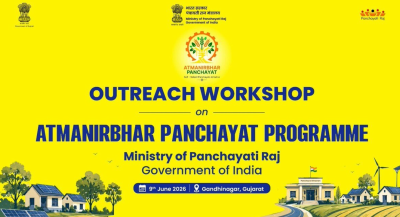
The Ministry of Panchayati Raj is expanding the outreach of its Atmanirbhar Panchayat Programme to Gujarat through a dedicated workshop in Gandhinagar. Conducted in a hybrid format, this initiative connects regional administrators, village leaders, block functionaries, and financial institutions like NABARD and HUDCO. Anchored under the Rashtriya Gram Swaraj Abhiyan, the program introduces a structural mechanism to transition rural local bodies from passive fiscal dependents into self-reliant economic entities. The framework focuses on commercializing underutilized local assets to build grassroots financial capability.
Core Structural Framework and Eligibility
Transparent National Challenge Process
The program runs a challenge-based selection model where Panchayats submit innovative proposals for revenue-generating local projects. The Ministry of Panchayati Raj evaluates the feasibility of these ideas, selecting viable plans to receive specialized technical assistance. This handholding process converts basic community concepts into professional, bankable project reports ready for financial closure.
Strict Eligibility Thresholds
To ensure the sustainability of commercial interventions, the Ministry mandates specific baseline entry criteria for participating rural local bodies.
- Gram Panchayats: Must demonstrate a minimum baseline Own Source Revenue of Rs. 50 lakh.
- Block Panchayats: Must demonstrate a minimum baseline Own Source Revenue of Rs. 1 crore.
- Tenure Requirement: Both tiers must possess at least three years of remaining elected tenure to maintain administrative continuity during project setup.
Financing Mechanisms and Institutional Support
Multi-Channel Funding Mix
Instead of relying solely on traditional fiscal devolution or direct ministry grants, the program blends multiple capital channels to fund approved village ventures.
| Financing Capital Route | Operational Execution Mode |
| Public-Private Partnerships (PPP) | Joint ventures with rural enterprises to manage community assets. |
| Corporate Social Responsibility (CSR) | Channelling mandatory corporate developmental funds into village infrastructure. |
| Institutional Credit | Facilitating commercial bank financing and low-interest rural development loans. |
| Scheme Convergence | Layering existing infrastructure funds from Central and State budgetary allocations. |
Institutional Alliances
The National Bank for Agriculture and Rural Development (NABARD) and the Housing and Urban Development Corporation Limited (HUDCO) provide institutional backing. These entities offer project development expertise, technical appraisal of village proposals, and direct credit lines. This financial structure ensures that the commercial assets created can survive market fluctuations without draining standard rural local body administrative budgets.
Grassroots Governance and Implementation
Mandatory Gram Sabha Oversight
Community ownership remains central to preventing top-down bureaucratic project execution. The operational guidelines require mandatory Gram Sabha consultation and explicit consent at every operational milestone. Local citizens deliberate on asset usage during planning, construction, and monetization phases, which ensures that financial ventures align directly with immediate regional requirements.
Technical Infrastructure
The implementation relies on the dedicated Atmanirbhar Panchayat Portal. This digital system handles the complete project lifecycle, from initial online proposal registration and competitive scoring to real-time fund tracking and transparent performance audits.
IASPOINT Booster Facts for UPSC
- Constitutional Basis of OSR: Article 243H of the Constitution empowers State Legislatures to authorize Gram Panchayats to levy, collect, and appropriate specific taxes, duties, tolls, and fees to build their Own Source Revenue.
- 16th Finance Commission Links: The 16th Finance Commission recommends linking 20% of rural local body allocations to performance grants. Half of this performance component (10%) is tied directly to a verifiable annual increase in a Panchayat’s Own Source Revenue.
- Rashtriya Gram Swaraj Abhiyan (RGSA): Re-vamped as a Centrally Sponsored Scheme, RGSA focuses primarily on capacity building and training of Panchayati Raj Institution elected representatives to achieve Sustainable Development Goals in rural areas.
- Devolution Index Realities: Historically, Indian Panchayats rely on upper tiers for over 80% of their finances, primarily via tied and untied grants, making the generation of independent revenue critical for true decentralization.