
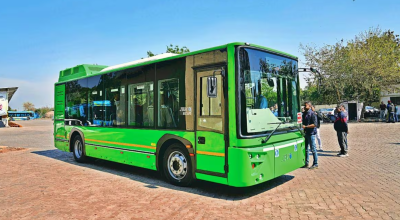
The Delhi government announced the upcoming induction of 2,800 air-conditioned low-floor electric buses under the Central Government’s PM E-DRIVE scheme on June 7, 2026. This large-scale induction aims to strengthen the public transport grid in the National Capital Territory while advancing sustainable urban mobility. The specialized fleet allocation balances high-density transit corridors with neighborhood connectivity, focusing heavily on peripheral and underserved sectors. This expansion will scale Delhi’s existing public transport network toward its long-term decarbonization targets.
Fleet Restructuring and Operational Strategy
Dual-Category Procurement Modality
The upcoming 2,800 electric bus fleet is split equally into two distinct vehicle design profiles to handle separate transit demands across the city:
- 1,400 Nine-Metre Midi Electric Buses: These mid-sized units provide high maneuverability on narrow roads. They are assigned primarily to feeder services, residential colonies, rural pockets, and metro station transit links.
- 1,400 Twelve-Metre Standard Electric Buses: These full-sized units feature high passenger carrying capacities. They are deployed across primary high-demand corridors to handle trunk route traffic.
Long-Term Fleet Expansion Trajectory
Delhi currently operates nearly 4,300 electric buses, representing one of the largest municipal electric bus networks globally. The transport department intends to scale this number to approximately 7,500 electric buses by the end of 2026. This phased procurement supports the strategic blueprint to push Delhi’s cumulative public transport bus fleet to roughly 14,000 operational units by the fiscal year 2028-29.
Institutional Framework: The PM E-DRIVE Scheme
Central Mandate and Administration
The PM Electric Drive Revolution in Innovative Vehicle Enhancement (PM E-DRIVE) scheme is a flagship initiative administered by the Ministry of Heavy Industries (MHI), Government of India. Launched to replace the FAME (Faster Adoption and Manufacturing of Hybrid and Electric Vehicles) framework, the scheme has a total financial outlay of ₹10,900 crore.
Financial and Capital Sub-Allocations
| Program Vertical Component | Fiscal Allocation Outlay | Target Deliverable Metric |
|---|---|---|
| Public Transport E-Buses | ₹4,391 crore | Procurement support for 14,028 electric buses across major State Transport Undertakings (STUs). |
| EV Charging Infrastructure | ₹2,000 crore | Deployment of 22,100 fast chargers for e-4Ws, 1,800 for e-buses, and 48,400 for e-2Ws/3Ws. |
| Vehicle Subsidies & Demand Incentives | ₹3,679 crore | Financial support via e-Vouchers for electric two-wheelers, three-wheelers, and commercial vehicles. |
| Electric Ambulances | ₹500 crore | Deployment of energy-efficient emergency medical transit units. |
Regional Integration and Infrastructure Upgradations
Power Sub-Station and Depot Upgrades
The integration of 2,800 additional electric buses necessitates heavy upstream power grid augmentation at state-owned transport depots. The Delhi Government is developing high-tension electrical loops, automated battery health diagnostic tools, and dedicated fast-charging bays. This infrastructure ensures minimum turnaround times for fleet operations.
PM E-DRIVE Phase-II Planning
The Transport Department is simultaneously pursuing an additional allocation of 3,330 electric buses under the Phase-II framework of the PM E-DRIVE scheme. This upcoming projection includes a specialized batch of 500 seven-metre mini electric buses designed specifically to negotiate heavily congested, narrow lanes in historical urban clusters where standard midi-buses face operational challenges.
IASPOINT Booster Facts for UPSC
- Target Demographics for E-Buses: Under the PM E-DRIVE scheme, target allocations for public transit e-buses focus on nine major metropolitan cities boasting human populations exceeding 40 lakh: Delhi, Mumbai, Kolkata, Chennai, Ahmedabad, Surat, Bangalore, Pune, and Hyderabad.
- State Performance Allocation: In the initial unified procurement tenders managed for the scheme, Bangalore secured the largest single state allocation of 4,500 e-buses, followed by Hyderabad with 2,000 units.
- The E-Voucher Mechanism: To streamline the distribution of demand incentives for eligible commercial and private buyers, the PM E-DRIVE scheme introduced an Aadhaar-authenticated e-Voucher platform that eliminates physical paperwork processing delays.
- Subsidy Metric Calculations: Financial grants allocated for municipal public transit standard e-buses are capped at a max threshold of ₹35,000 per kWh of battery capacity, or a flat upper limit of ₹35 lakh per standard bus unit.
- Testing and Certification Agencies: To claim financial grants under PM E-DRIVE, all newly manufactured vehicle designs must secure mandatory eligibility assessment certificates from accredited central institutions like the Automotive Research Association of India (ARAI) or the International Centre for Automotive Technology (ICAT).