
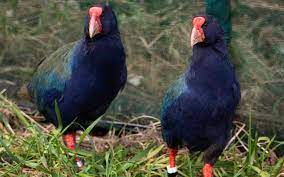
In an ongoing bid to prevent the extinction of some of the world’s rarest birds, two flightless takahē, Waitaa and Bendigo, were released at Zealandia in Wellington, New Zealand. These plump, brightly feathered birds are a cultural treasure to the indigenous Māori people and have a unique significance. Efforts to protect the takahē include establishing populations in the wild and within predator-exclusion sanctuaries. Their population has risen to around 500 due to conservation initiatives combating predation by introduced species. Despite progress, challenges persist in expanding their habitats and ensuring long-term survival for these distinctive avian treasures.
Facts/Terms for UPSC Prelims
- Takahē: Flightless birds endemic to New Zealand, characterized by their plump build, colorful feathers, and cultural significance to the Māori people. They are prone to predation by introduced land predators.
- Predator-Exclusion Sanctuary: A protected area enclosed by barriers, often fences, designed to keep out introduced predators and provide a safe environment for native species to thrive.
- Cultural Significance: The importance of takahē to the Māori goes beyond their ecological value; they are considered taonga, representing a cultural treasure that holds spiritual meaning.
- Conservation Efforts: Initiatives aimed at protecting and increasing the population of endangered or threatened species, including predator control, habitat restoration, and population monitoring.
- Endangered Status: The International Union for Conservation of Nature (IUCN) designates the South Island takahē as endangered, signifying a high risk of extinction. The North Island takahē is classified as extinct, emphasizing the urgency of conservation actions.