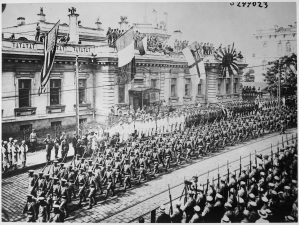
The Russian Revolution of 1917 marked a pivotal point in world history, bringing about significant changes in Russia's socio-political landscape. The revolution saw the overthrow of the Tsarist...
The Russian Revolution of 1917 marked a significant turning point in the history of political upheaval. It was a groundbreaking event that reshaped the Marxist ideology, proving that...
In the wake of the Russian Revolution, the world witnessed a tenuous period where the future of Russia hung in the balance. The Allied powers, concerned with their...
The period following World War I was marked by widespread disaffection across Western industrialized societies. Germany, in particular, experienced this disaffection more intensely due to a combination of...
Nazism remains one of the most studied and debated ideologies in history, particularly due to its impact on the world during the first half of the 20th century....
The rise and consolidation of Nazi power in Germany is a complex historical phenomenon that was influenced by a variety of factors, including the philosophical underpinnings of its...
The rise of Adolf Hitler and the Nazi Party in Germany is a significant chapter in world history, marked by rapid growth and widespread influence. Initially, when Hitler...
World War II was a period of intense conflict and geopolitical shifts. Among the key figures of this era was Benito Mussolini, the Italian dictator whose ambitions led...
Italy's quest for colonial expansion in the early 20th century was driven by a desire to enhance its national prestige and address domestic pressures stemming from a growing...
After the end of World War I, the Versailles Peace Conference was a pivotal moment in determining the geopolitical landscape of Europe. Italy, an ally during the war,...