
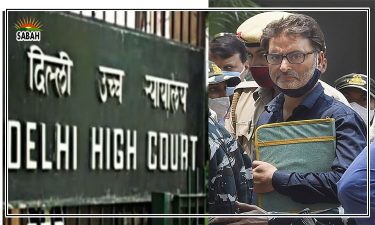
In legal development, the Supreme Court addressed the Central Bureau of Investigation’s (CBI) plea regarding the trial of separatist Yasin Malik. The case involves serious charges, including the murder of Indian Air Force personnel and the kidnapping of Rubaiya Sayeed. Malik’s current life sentence for terror funding complicates the matter. The court’s deliberations highlight the balance between a fair trial and national security concerns.
Context of the Case
Yasin Malik is accused of involvement in two high-profile cases from the late 1980s and early 1990s. He is currently imprisoned in Tihar Jail, Delhi. The CBI opposes his in-person appearance at the Jammu court due to potential risks. They argue that his presence could threaten witnesses and disrupt peace in Jammu and Kashmir.
Arguments for and Against In-Person Appearance
Malik has expressed a desire to attend the trial in person. His legal team argues that this is essential for a fair trial. However, the CBI maintains that his appearance poses security risks. Solicitor General Tushar Mehta contends that transporting Malik could destabilise the region. He also suggests that Malik is manipulating the situation to his advantage.
Judicial Considerations
The Supreme Court, represented by Justice AS Oka and Justice AG Masih, is weighing the implications of a fair trial against security concerns. Justice Oka referenced the precedent of Ajmal Kasab’s case, which emphasised the importance of ensuring justice. However, he also acknowledged the challenges posed by Jammu’s poor internet connectivity for video conferencing.
Proposed Solutions
To address the conflict, the bench proposed setting up a court within Tihar Jail. This would allow for a secure environment while ensuring that Malik can participate in his trial. The court has requested detailed plans for witness security and logistics for the trial setup.
Future Proceedings
The matter has been adjourned for further hearing next Thursday. The Supreme Court’s decision will have important implications for the judicial process in high-profile terrorism cases. It reflects the ongoing struggle to balance justice and security in sensitive legal matters.
Questions for UPSC:
- Examine the implications of fair trial rights in terrorism cases in India.
- Critically discuss the role of the judiciary in maintaining law and order in cases involving separatists.
- Discuss in the light of historical cases, how legal precedents influence current judicial decisions.
- With suitable examples, discuss the challenges of conducting trials in sensitive regions like Jammu and Kashmir.
Answer Hints:
1. Examine the implications of fair trial rights in terrorism cases in India.
- Fair trial rights are enshrined in the Constitution, ensuring justice and due process.
- In terrorism cases, these rights often conflict with national security concerns.
- Judicial precedents, like Ajmal Kasab’s case, emphasize the necessity of fair trials even for terrorists.
- Public sentiment and media scrutiny can influence the perception of fairness in such trials.
- Balancing rights of the accused with victims’ rights and societal safety remains a critical challenge.
2. Critically discuss the role of the judiciary in maintaining law and order in cases involving separatists.
- The judiciary acts as a neutral arbiter, ensuring that laws are upheld impartially.
- Judicial decisions can influence public order by either calming tensions or exacerbating conflicts.
- Judges must consider the broader implications of their rulings on national security and social stability.
- Cases involving separatists often require careful navigation to uphold democratic values while addressing security concerns.
- Judicial independence is crucial for maintaining public trust in the legal system amidst politically sensitive cases.
3. Discuss in the light of historical cases, how legal precedents influence current judicial decisions.
- Legal precedents provide a framework for judges to make consistent and fair decisions.
- Cases like the 2008 Mumbai attacks (Ajmal Kasab) set standards for handling terrorism-related trials.
- Judicial interpretations of laws evolve based on past rulings, impacting future cases .
- Precedents can either strengthen or weaken legal arguments depending on their context and application.
- Judges often reference historical cases to justify their decisions, ensuring continuity in legal reasoning.
4. With suitable examples, discuss the challenges of conducting trials in sensitive regions like Jammu and Kashmir.
- Poor infrastructure, such as inadequate internet connectivity, complicates remote proceedings.
- Security threats to witnesses and judges can hinder the trial process .
- Political tensions in the region can influence public perception and the overall atmosphere of trials.
- Logistical issues, including transportation of accused and witnesses, pose practical challenges.
- Historical unrest in the region can lead to heightened scrutiny and pressure on the judiciary to deliver swift justice.