
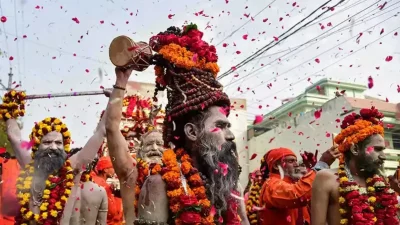
The Maha Kumbh 2025, set to be held in Prayagraj, Uttar Pradesh, is expected to attract approximately 40 to 45 crore devotees. This grand event is not only for its spiritual importance but also for its innovative use of technology. The Uttar Pradesh government aims to implement the world’s largest AI-powered headcount to accurately monitor and manage the massive influx of pilgrims.
Event Overview
The Maha Kumbh is a major Hindu pilgrimage that occurs every 12 years. The next event will commence on January 13, 2025, and conclude on February 26, 2025. Key bathing dates include January 14, January 29, and February 3. The Triveni Sangam, where the Ganga, Yamuna, and Saraswati rivers converge, serves as the central location for this event.
AI Technology Implementation
The Uttar Pradesh government is leveraging advanced artificial intelligence to conduct a precise headcount of attendees. The use of AI technology marks shift from previous Kumbh events, where attendance was estimated rather than accurately counted. This initiative aims to enhance crowd management and safety.
Monitoring Infrastructure
Over 744 temporary CCTV cameras and 1,107 permanent cameras have been installed at strategic locations. Additionally, 720 cameras will monitor vehicle parking zones. These cameras will facilitate real-time tracking of crowd density and movements.
Integrated Command and Control Center
An Integrated Command and Control Center (ICCC) will serve as the operational hub for monitoring the event. This centre will relay live data and generate instant alerts to manage crowd dynamics effectively. Viewing centres will be established in key areas to support this initiative.
Crowd Management Techniques
The AI system will operate during peak bathing hours, updating data every minute. A unique “turnaround cycle” will calculate the average time each pilgrim spends at the ghats. This method helps prevent double counting of attendees.
Advanced Tracking Methods
Three primary methods will be employed for tracking attendees – 1. Attribute-Based Search – Advanced cameras will identify individuals based on physical characteristics. 2. RFID Wristbands – Each visitor will receive a wristband embedded with RFID technology to monitor their movements. 3. Mobile App Tracking – A GPS-enabled mobile app will provide location updates with user consent.
Accuracy and Reliability
The AI-powered systems are designed to achieve an accuracy rate of approximately 95%. This level of precision was successfully tested during the Magh Mela, showcasing the reliability of the technology for large-scale events.
Future of Event Management
The implementation of AI in managing the Maha Kumbh represents a new era in event management. It sets a precedent for future large-scale events, where technology can enhance safety and efficiency.
Questions for UPSC:
- Examine the role of artificial intelligence in managing large-scale public events.
- Critically discuss the significance of the Maha Kumbh in Hindu culture and its impact on local economies.
- Analyse the challenges faced in crowd management during religious events and propose solutions.
- Estimate the potential benefits of using RFID technology in public gatherings. How does it compare to traditional methods?
Answer Hints:
1. Examine the role of artificial intelligence in managing large-scale public events.
- AI enhances accuracy in attendee counting, moving from estimates to precise data.
- Real-time monitoring improves crowd management, reducing risks of overcrowding.
- AI algorithms can predict crowd behavior, facilitating better resource allocation.
- Integration with other technologies (like CCTV and mobile apps) increases overall efficiency.
- Success in previous events (e.g., Magh Mela) demonstrates reliability and effectiveness.
2. Critically discuss the significance of the Maha Kumbh in Hindu culture and its impact on local economies.
- Maha Kumbh is a major spiritual pilgrimage, embodying religious beliefs and practices.
- It encourages community bonding and cultural exchange among millions of devotees.
- The event boosts local economies through tourism, hospitality, and trade.
- Infrastructure development for the event leads to long-term benefits for the region.
- Spiritual significance encourages charitable activities and social cohesion.
3. Analyse the challenges faced in crowd management during religious events and propose solutions.
- High attendance can lead to overcrowding and safety hazards.
- Inadequate infrastructure may struggle to support large crowds, causing logistical issues.
- Communication breakdowns can hinder effective crowd control and emergency response.
- Solutions include deploying AI for real-time data, enhancing infrastructure, and improving communication systems.
- Training volunteers and staff in crowd management techniques can mitigate risks.
4. Estimate the potential benefits of using RFID technology in public gatherings. How does it compare to traditional methods?
- RFID technology allows for accurate tracking of individuals, enhancing security and safety.
- It reduces waiting times at entry and exit points, improving attendee experience.
- RFID can provide real-time data on crowd density and movement patterns.
- Compared to traditional methods (like manual counting), RFID offers higher accuracy and efficiency.
- It facilitates better resource allocation and crowd management strategies during events.