
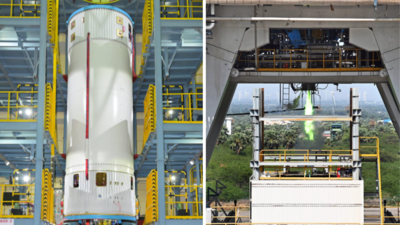
The Indian Space Research Organisation (ISRO) has made strides in its space exploration efforts. On April 24, 2025, ISRO conducted a successful hot test of its semicryogenic engine at the ISRO Propulsion Complex in Mahendragiri. This test follows an earlier successful ignition test on March 28, 2025. These tests are critical for the development of advanced propulsion systems for future launch vehicles.
Semicryogenic Engine Testing
The semicryogenic engine is designed to enhance ISRO’s launch capabilities. The recent hot test lasted 3.5 seconds. It validated the engine start-up sequence and achieved 60% of its rated power. This performance indicates stable and controlled operation, which is essential for future missions. The tests assess the integrity of various subsystems, including turbo pumps and control systems. Further qualification tests are planned to ensure the engine’s readiness for operational use.
Significance of the Hot Test
The hot test is a major milestone in ISRO’s semicryogenic engine programme. It confirms the engine’s design and functionality. The results will inform the operational sequencing necessary for full engine deployment. This engine is expected to play important role in future ISRO launch vehicles, increasing payload capacity and efficiency.
NISAR Satellite Launch Campaign
In addition to the engine tests, ISRO is preparing for the launch of the NASA-ISRO Synthetic Aperture Radar (NISAR) satellite. The launch campaign activities have already begun at Sriharikota. The GSLV-F16 launch vehicle’s second stage was flagged off on March 24, 2025. This collaboration between NASA and ISRO aims to enhance Earth observation capabilities.
Collaboration with NASA
The NISAR project represents partnership between India and the United States in space technology. The satellite will provide critical data for monitoring Earth’s ecosystems and natural disasters. This collaboration marks the importance of international partnerships in advancing space exploration and scientific research.
Future Prospects
ISRO’s ongoing tests and the impending launch of NISAR tell its commitment to expanding its capabilities. The successful development of the semicryogenic engine will enable more ambitious missions. This includes potential exploration of deeper space and enhanced satellite deployment.
Technological Innovations
The advancements in propulsion technology reflect ISRO’s focus on innovation. The semicryogenic engine is a step towards more powerful and efficient launch systems. It represents a shift in how ISRO approaches space missions, aiming for greater reliability and performance.
ISRO’s Strategic Goals
ISRO aims to enhance its global position in space technology. By developing advanced engines and collaborating with international agencies, ISRO is positioning itself as a leader in space exploration. The successful implementation of these technologies will contribute to India’s scientific and technological advancements.
Questions for UPSC:
- Examine the significance of the semicryogenic engine in enhancing India’s launch capabilities.
- Discuss the implications of the NASA-ISRO collaboration on global space research.
- Analyse the role of advanced propulsion systems in modern space exploration.
- With suitable examples, discuss the impact of international partnerships in technological advancements in space exploration.
Answer Hints:
1. Examine the significance of the semicryogenic engine in enhancing India’s launch capabilities.
- The semicryogenic engine offers higher efficiency and increased payload capacity compared to traditional engines.
- It supports the development of advanced launch vehicles, enabling ISRO to undertake more ambitious missions.
- The successful hot tests validate critical subsystems, ensuring reliability and performance for future launches.
- This engine is crucial for India’s strategic goals in space exploration and satellite deployment.
- Enhanced capabilities can lead to greater competitiveness in the global space market.
2. Discuss the implications of the NASA-ISRO collaboration on global space research.
- The collaboration enhances data sharing and technological exchange between two leading space agencies.
- NISAR will provide critical data for Earth observation, contributing to global environmental monitoring efforts.
- This partnership encourages innovation and accelerates advancements in space technology.
- It strengthens international relations and promotes collaborative scientific research.
- The success of this collaboration could pave the way for future joint missions and projects.
3. Analyse the role of advanced propulsion systems in modern space exploration.
- Advanced propulsion systems improve efficiency, allowing for longer missions and deeper space exploration.
- They enable heavier payloads and more complex spacecraft designs, expanding mission possibilities.
- Innovations in propulsion technology lead to reduced launch costs and increased access to space.
- These systems are essential for the development of reusable launch vehicles, enhancing sustainability in space travel.
- They support the growing demand for satellite deployment and space-based services.
4. With suitable examples, discuss the impact of international partnerships in technological advancements in space exploration.
- NASA and ISRO’s NISAR project exemplifies successful collaboration resulting in enhanced Earth observation capabilities.
- The International Space Station (ISS) showcases how global partnerships can lead to advancements in scientific research.
- Joint missions, like the Mars Orbiter Mission (Mangalyaan) and NASA’s MAVEN, demonstrate shared expertise and resources.
- Collaborations encourage innovation, as seen in shared technology development for satellite systems and launch vehicles.
- These partnerships help in addressing global challenges, such as climate change and disaster management, through shared data and research.