
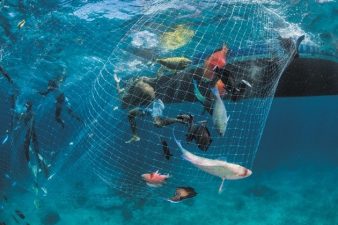
The recent report from the World Resource Centre marks the urgent need for marine biodiversity protection. Despite over 2,600 commitments made between 2014 and 2024, only 43 per cent have been fulfilled. This report was presented at the ‘Our Ocean Conference’ in Busan, South Korea, which focuses on international cooperation for ocean conservation. The oceans, covering more than 70 per cent of the Earth, face threats from pollution, overfishing, and climate change.
Current Status of Marine Commitments
The report indicates that 38 per cent of commitments are still in progress, while 18 per cent have not yet begun. This slow progress is concerning given the urgency of marine threats. The financial requirement for ocean protection is estimated at 175 billion annually by 2030.</p> <h4>Challenges in Marine Biodiversity Protection</h4> <p>The implementation of the <a href = "https://iaspoint.com/kunming-montreal-global-biodiversity-framework-gbf/" target = "blank" rel = "noopener">Kunming-Montreal Global Biodiversity Framework</a> is critical. However, funding for Marine Protected Areas (MPAs) is disproportionately low. MPAs received only6.7 billion compared to 86.6 billion allocated for ocean climate initiatives. Without adequate funding, vital ecosystems like coral reefs and mangroves are at risk.</p> <h4>Disparities in Global Commitments</h4> <p>Smaller nations, particularly Small Island Developing States (SIDS) and Least Developed Countries (LDCs), have made minimal commitments. They account for only 13 per cent and 7 per cent of total pledges. Indigenous communities are also underrepresented, comprising just five per cent of commitments.</p> <h4>Financial Pledges and Their Utilisation</h4> <p>Despite numerous financial pledges, approximately25 billion remains unspent. Regions like Europe and North America dominate the commitments, while areas such as the Indian Ocean and polar regions lag behind. Some successful initiatives have unlocked 23.8 billion for marine projects, showing that progress is possible.</p> <h4>The Need for Stronger Governance</h4> <p>The report emphasises that voluntary commitments are insufficient. Stronger laws and better tracking mechanisms are necessary. Inclusion of indigenous people and women in ocean governance is vital for effective conservation efforts.</p> <h4>Rapid Deployment Mechanism</h4> <p>A new initiative, the Rapid Deployment Mechanism, was introduced at the conference. This grant system will provide small, fast-track grants to developing countries. The aim is to assist in achieving the 30×30 target for biodiversity. Initial funding will support training, mapping, and policy drafting.</p> <h4>Future Directions in Ocean Conservation</h4> <p>With only 8.4 per cent of the ocean currently protected, urgent action is required. The Rapid Deployment Mechanism is part of a broader strategy to enhance biodiversity action. It aims to create pathways for larger investments and partnerships in marine conservation.</p> <h4>Questions for UPSC:</h4> <blockquote> <ol> <li>Discuss the impact of marine pollution on global biodiversity.</li> <li>Critically examine the role of indigenous communities in ocean governance and conservation efforts.</li> <li>What are the main challenges faced in the implementation of the Kunming-Montreal Global Biodiversity Framework? Explain.</li> <li>What is the significance of Marine Protected Areas in biodiversity conservation? Discuss their funding status and challenges.</li> </ol> </blockquote> <h4>Answer Hints:</h4> <h5>1. Discuss the impact of marine pollution on global biodiversity.</h5> <ol> <li>Marine pollution leads to habitat degradation, affecting species survival and reproduction.</li> <li>Plastic waste causes ingestion and entanglement in marine animals, leading to injury or death.</li> <li>Pollutants like heavy metals and chemicals disrupt marine food chains and ecosystems.</li> <li>Coral reefs, crucial for biodiversity, are particularly vulnerable to pollution, leading to bleaching.</li> <li>Overall, pollution contributes to the loss of biodiversity, threatening ecosystem services and human livelihoods.</li> </ol> <h5>2. Critically examine the role of indigenous communities in ocean governance and conservation efforts.</h5> <ol> <li>Indigenous communities possess traditional ecological knowledge vital for sustainable resource management.</li> <li>They often have a deep cultural connection to marine environments, promoting stewardship of ecosystems.</li> <li>Inclusion of indigenous voices in governance can enhance conservation outcomes and policy effectiveness.</li> <li>However, indigenous representation in marine commitments is low, comprising only five percent of pledges.</li> <li>Empowering indigenous communities can lead to more equitable and effective conservation efforts.</li> </ol> <h5>3. What are the main challenges faced in the implementation of the Kunming-Montreal Global Biodiversity Framework? Explain.</h5> <ol> <li>Insufficient funding, with gap in financing for biodiversity initiatives, is a major hurdle.</li> <li>Slow ratification of international treaties, like the high seas treaty, hampers global cooperation.</li> <li>Limited tracking and accountability mechanisms make it difficult to monitor progress effectively.</li> <li>Disparities in commitments from developed and developing countries create inequities in implementation.</li> <li>Lack of political will and prioritization of biodiversity issues often leads to insufficient action.</li> </ol> <h5>4. What is the significance of Marine Protected Areas in biodiversity conservation? Discuss their funding status and challenges.</h5> <ol> <li>Marine Protected Areas (MPAs) are crucial for conserving marine ecosystems and protecting species.</li> <li>MPAs help restore fish populations and habitats, supporting biodiversity and fisheries sustainability.</li> <li>Funding for MPAs is disproportionately low, receiving only6.7 billion compared to $86.6 billion for climate projects.