
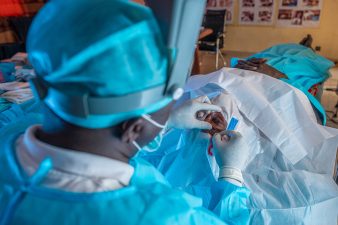
Senegal has been officially declared free of trachoma by the World Health Organization (WHO) in July 2025. This marks a major public health milestone for the country. Senegal is now the 25th nation globally and the 9th in Africa to eliminate trachoma as a public health problem. This achievement follows decades of sustained efforts by the Senegalese government, WHO and international partners. However, recent funding cuts threaten progress against other neglected tropical diseases (NTDs) in Senegal and beyond.
About Trachoma
Trachoma is a contagious bacterial infection caused by “Chlamydia trachomatis”. It affects the eyes and is a leading cause of preventable blindness worldwide. The disease spreads mainly in poor rural areas with limited access to water and sanitation. It causes scarring of the inner eyelid, which can lead to blindness if untreated. Globally, trachoma causes blindness or visual impairment in about 1.9 million people, representing 1.4 per cent of all blindness.
Senegal’s Journey To Elimination
Trachoma has been a health concern in Senegal since the early 1900s. Surveys in the 1980s and 1990s confirmed it as a major cause of blindness. Senegal joined the WHO Alliance for the Global Elimination of Trachoma in 1998. The country conducted national surveys starting in 2000 and completed full mapping by 2017 with support from the Global Trachoma Mapping Project. The government integrated trachoma control into national eye health programmes, ensuring sustained focus on elimination.
Implementation Of The SAFE Strategy
Senegal adopted the WHO-recommended SAFE strategy to combat trachoma. SAFE stands for Surgery, Antibiotics, Facial cleanliness and Environmental improvement. Surgery treats advanced trachoma cases to prevent blindness. Mass drug administration of azithromycin was carried out for infected communities. Public health campaigns promoted facial hygiene. Efforts to improve water supply and sanitation helped reduce transmission. This comprehensive approach reached 2.8 million people across 24 districts.
Significance And Regional Context
Senegal is the 25th country worldwide and 9th in Africa to eliminate trachoma. Other African countries that achieved this include Gambia, Mali and Ghana. Africa bears the highest burden of trachoma globally. Senegal’s success marks the impact of sustained political will and international cooperation. It follows the elimination of Guinea-worm disease in Senegal in 2004, making trachoma the second NTD eliminated in the country.
Threats To Continued NTD Control
Despite progress, efforts to combat other NTDs in Senegal face challenges. Recently, the US government froze $114.5 million in funding for USAID’s Neglected Tropical Diseases Program. This suspension affects 26 countries including Senegal. The funding cut threatens mass drug administration campaigns and community outreach for diseases like lymphatic filariasis, onchocerciasis and schistosomiasis. Senegal remains committed to WHO’s 2021-2030 roadmap for NTD elimination but requires stable funding to sustain gains.
Broader Lessons From Senegal’s Success
Senegal’s achievement demonstrates the importance of integrated health programmes. Combining surgery, antibiotics, hygiene promotion and environmental improvements is effective. Community engagement and data-driven mapping are critical. Political commitment and international partnerships enable resource mobilisation and technical support. The model offers valuable insights for other countries battling NTDs and preventable blindness.
Questions for UPSC:
- Discuss in the light of global health initiatives how political commitment and international cooperation influence the elimination of neglected tropical diseases.
- Critically examine the role of the WHO SAFE strategy in controlling trachoma and its applicability to other infectious diseases.
- Explain the impact of funding disruptions on public health programmes in developing countries and suggest measures to mitigate such risks.
- With suitable examples, discuss the challenges and strategies for eliminating neglected tropical diseases in Africa and their socio-economic implications.