
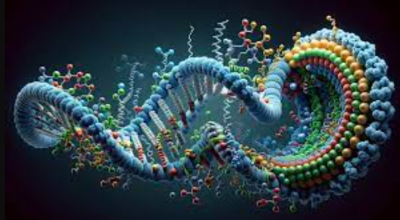
Recent research from University College London has shed light on a key mystery in the origin of life – how proteins began to form using RNA instructions without the help of enzymes. Scientists have long puzzled over the chicken-and-egg problem where enzymes, which are proteins, are needed to load amino acids onto RNA, yet enzymes themselves require proteins to exist. This new study shows that simple molecules called aminoacyl-thiols can link amino acids directly to RNA in water, a process that could have occurred on early Earth.
RNA and Protein Partnership
Life depends on RNA storing genetic information and proteins performing cellular functions. Today, ribosomes build proteins by linking amino acids in the order specified by RNA. This process requires enzymes to attach amino acids to RNA adapters first. The origin of this enzyme-dependent step has been unclear.
Aminoacyl-Thiols Enable Direct Attachment
The study found aminoacyl-thiols can join amino acids to RNA without enzymes. These molecules act like beads (amino acids) fastening themselves onto threads (RNA) under simple conditions, such as water at neutral pH. This reaction shows unexpected selectivity for RNA over other molecules, which surprised researchers.
Significance of Selectivity
The selectivity means RNA is chemically favoured to bind amino acids. This is unusual because RNA is relatively unreactive compared to other molecules present. The reaction mimics how amino acids attach to RNA ends in modern biology, suggesting an early chemical step towards life’s protein synthesis.
Two Chemical Modes for Protein Building
The research also revealed a chemical switch between two related molecules – thioesters and thioacids. Thioesters help amino acids attach to RNA, while thioacids promote peptide bond formation between amino acids. This switch allows the two key stages of protein synthesis—RNA charging and peptide linking—to occur in the same environment but under different chemical conditions.
Origins of Aminoacyl-Thiols
Experiments suggest aminoacyl-thiols could form from simple precursors like nitriles and thiols, even in cold, concentrated settings such as frozen pools. This means the chemistry linking amino acids to RNA might have been common on early Earth, not requiring rare or extreme conditions.
Implications for Early Life Evolution
This discovery bridges the gap between nucleotide and peptide chemistry, showing direct interaction between RNA and amino acids without enzymes. It suggests a gradual evolution from simple chemical reactions to more complex, enzyme-controlled protein synthesis. Future research aims to understand how longer peptides could form and how RNA could gain more control over peptide sequences.
Questions for UPSC:
- Taking example of aminoacyl-thiol chemistry, discuss the significance of chemical selectivity in the origin of life and its implications for molecular evolution.
- Examine the role of RNA in early life forms and analyse how its interaction with amino acids could have led to the development of protein synthesis.
- Discuss in the light of prebiotic chemistry, how environmental conditions on early Earth could influence the formation of biomolecules essential for life.
- Critically discuss the challenges in understanding the transition from non-enzymatic to enzymatic processes in biological systems, with suitable examples from molecular biology.