
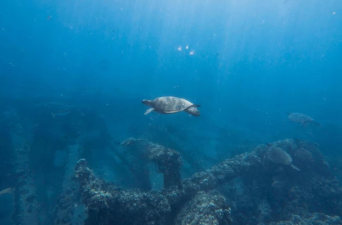
The High Seas Treaty, formally known as the Biodiversity Beyond National Jurisdiction (BBNJ) agreement, will come into force in January 2026 after ratification by over 60 countries. This landmark treaty aims to safeguard marine biodiversity in international waters. It addresses critical threats such as climate change, overfishing and pollution. The treaty provides a new framework for managing and preserving ocean resources beyond national borders.
Background and Development
The treaty’s origins trace back to 2004 when the UN General Assembly recognised gaps in the 1982 UN Convention on the Law of the Sea (UNCLOS). UNCLOS lacked clear rules on protecting biodiversity beyond national jurisdiction. Negotiations began in earnest by 2011, focusing on four main areas – Marine Genetic Resources (MGRs), Area-Based Management Tools (ABMTs), Environmental Impact Assessments (EIAs), and capacity building with technology transfer. After four Intergovernmental Conference sessions between 2018 and 2023, an agreement was reached in March 2023 and formally adopted in June 2023.
Key Provisions of the Treaty
The treaty recognises marine genetic resources as the common heritage of humankind. It insists on fair and equitable sharing of benefits derived from these resources. Area-Based Management Tools include Marine Protected Areas to conserve biodiversity and enhance climate resilience. Environmental Impact Assessments are mandatory for activities that may affect marine ecosystems, especially when impacts cross national boundaries or accumulate over time. The treaty also promotes the integration of scientific knowledge with indigenous practices to improve ocean stewardship.
Challenges and Ambiguities
The treaty faces challenges in balancing the common heritage of humankind principle with the freedom of the high seas. The former supports equitable sharing of resources, while the latter allows unrestricted navigation and research. This partial application creates legal ambiguity, particularly in benefit-sharing from MGRs. Developing countries fear exclusion from profits, while developed nations worry about restrictions. The treaty’s benefit-sharing mechanisms lack detailed guidelines on calculation and distribution. Additionally, major powers like the United States, China and Russia have yet to ratify the treaty, putting its global effectiveness at risk.
Interaction with Existing Institutions
The treaty must coexist with existing organisations such as the International Seabed Authority and Regional Fisheries Management Organisations. Coordination is essential to avoid overlap and legal conflicts. The BBNJ agreement aims to complement UNCLOS and other international treaties. However, managing multiple frameworks remains complex and could lead to fragmented ocean governance.
Future Prospects and Implementation
The treaty enhances UNCLOS by emphasising science-based management of marine resources. Effective implementation will require dynamic management of Marine Protected Areas and continuous monitoring. Linking ocean biodiversity with climate action will be vital for resilience. Capacity building and technology transfer to developing nations will support equitable participation. The treaty marks a major step in global ocean governance but demands sustained political will and cooperation.
Questions for UPSC:
- Critically analyse the significance of the Biodiversity Beyond National Jurisdiction (BBNJ) agreement in global ocean governance and its challenges in implementation.
- Explain the principles of common heritage of humankind and freedom of the high seas. How do these principles conflict and affect international maritime law?
- What are Marine Protected Areas (MPAs)? Discuss their role in climate resilience and biodiversity conservation with suitable examples.
- Comment on the role of multilateral institutions like the International Seabed Authority and Regional Fisheries Management Organisations in managing high seas resources. How can coordination among these bodies be improved?
Answer Hints:
1. Critically analyse the significance of the Biodiversity Beyond National Jurisdiction (BBNJ) agreement in global ocean governance and its challenges in implementation.
- BBNJ treaty fills gaps in UNCLOS by providing a legal framework for marine biodiversity beyond national jurisdiction.
- Recognizes Marine Genetic Resources (MGRs) as common heritage, promoting equitable benefit-sharing.
- Introduces Area-Based Management Tools (ABMTs) including Marine Protected Areas (MPAs) for biodiversity conservation and climate resilience.
- Mandates Environmental Impact Assessments (EIAs) for activities affecting high seas ecosystems, considering cumulative and transboundary impacts.
- Challenges include ambiguous language on MGRs, partial application of common heritage principle, and lack of detailed benefit-sharing mechanisms.
- Major powers (US, China, Russia) have not ratified, risking treaty’s global effectiveness and enforcement.
2. Explain the principles of common heritage of humankind and freedom of the high seas. How do these principles conflict and affect international maritime law?
- Common heritage of humankind principle advocates equitable access and benefit-sharing of marine resources for all states.
- Freedom of the high seas principle allows unrestricted navigation, resource use, and scientific research by all states.
- Conflict arises as common heritage calls for regulated, shared benefits, while freedom principle supports open access without restrictions.
- This contradiction creates legal ambiguity in governance, especially regarding Marine Genetic Resources (MGRs) exploitation and benefit-sharing.
- Partial application of common heritage in BBNJ shows compromise, leading to unclear guidelines and potential disputes.
- International maritime law struggles to balance these principles, complicating treaty implementation and enforcement.
3. What are Marine Protected Areas (MPAs)? Discuss their role in climate resilience and biodiversity conservation with suitable examples.
- MPAs are designated zones in oceans where human activity is regulated or restricted to protect marine biodiversity.
- They help preserve critical habitats, endangered species, and maintain ecosystem services.
- MPAs enhance climate resilience by protecting carbon sinks like mangroves, seagrasses, and coral reefs.
- By conserving biodiversity, MPAs support food security and livelihoods dependent on marine resources.
- Examples include the Papahānaumokuākea Marine National Monument (USA) and the Great Barrier Reef Marine Park (Australia).
- Dynamic management and integration of indigenous knowledge improve MPA effectiveness under changing climate conditions.
4. Comment on the role of multilateral institutions like the International Seabed Authority and Regional Fisheries Management Organisations in managing high seas resources. How can coordination among these bodies be improved?
- International Seabed Authority (ISA) regulates mineral-related activities on the ocean floor beyond national jurisdiction.
- Regional Fisheries Management Organisations (RFMOs) manage fish stocks and regulate fishing activities in specific ocean regions.
- These bodies operate under different mandates but share the goal of sustainable ocean resource use.
- Coordination is essential to avoid overlapping jurisdictions, legal conflicts, and fragmented governance.
- Improvement can come from formal mechanisms for information sharing, joint scientific assessments, and harmonized regulations.
- BBNJ treaty aims to complement existing institutions, requiring integrated frameworks and cooperation for holistic ocean governance.