
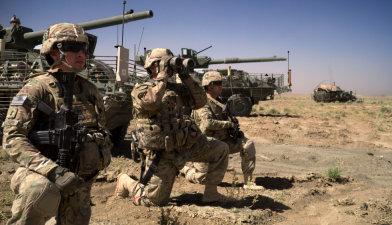
Recent global conflicts have exposed critical shifts in warfare and international power dynamics. The Russia-Ukraine war has revealed new military tactics and technologies that are reshaping modern combat. This transformation is part of a broader Revolution in Military Affairs (RMA), now accelerated by artificial intelligence and advanced weaponry. Nations, including India, are adapting to these changes by developing new capabilities and doctrines to prepare for future conflicts.
About the Revolution in Military Affairs (RMA)
RMA signifies a fundamental change in how wars are fought. It involves new technologies, organisational structures, and strategies. The aim is to achieve rapid, precise, and overwhelming effects on the battlefield. Past RMAs included innovations like railways, aircraft, and nuclear weapons. Today, AI and digital tools define this revolution by enabling faster decision-making and lethal precision.
Impact of AI and Advanced Technologies
Artificial intelligence now plays a central role in data analysis, surveillance, and autonomous systems. Technologies such as drones, loitering munitions, and directed-energy weapons provide unprecedented strike capabilities. Cyber warfare and information operations have become key elements, disrupting enemy systems and influencing public perception. These tools make warfare faster, more complex, and less predictable.
India’s Strategic Adaptation
India’s Operation Sindoor demonstrated the need to prepare for future wars, not past ones. The swift success against a nuclear-armed adversary showed India’s growing military competence. The country is investing heavily in technology, research, and human capital to build advanced defence capabilities. National initiatives aim to enhance indigenous production and innovation, reducing dependence on external sources.
Challenges in Global Security and Governance
Despite international institutions, the global order struggles to enforce rules. Powerful nations often prioritise might over right, weakening collective security. Trade wars, cyber attacks, and covert operations complicate diplomacy. This environment demands new strategies and a unified national security approach to safeguard sovereignty and interests.
Future Trends in Warfare
Future conflicts will be shaped by AI-driven decision-making, unmanned systems, cyber operations, and information warfare. Precision strikes deep inside enemy territory will become common. Economic tools like tariffs and sanctions will be used aggressively. Social and psychological tactics targeting populations will also rise. Nations must adapt doctrines and policies continuously to remain secure and effective.
Need for Integrated National Security Strategy
A coherent National Security Strategy is essential to align military, political, scientific, and bureaucratic efforts. Continuous dialogue and coordination among all stakeholders will strengthen preparedness. Investing in research, production, and skilled manpower is critical. Such a strategy ensures a holistic approach to emerging threats and global challenges.
Questions for UPSC:
- Critically discuss the role of artificial intelligence in transforming modern warfare and its implications for global security.
- Examine the challenges faced by international institutions like the United Nations in maintaining peace during contemporary conflicts and propose reforms.
- Analyse how cyber warfare and information operations influence international relations, and estimate their impact on national security policies.
- Point out the significance of a comprehensive National Security Strategy for a country like India, and discuss the role of inter-agency coordination in its success.
Answer Hints:
1. Critically discuss the role of artificial intelligence in transforming modern warfare and its implications for global security.
- AI enables rapid data synthesis, real-time surveillance, and autonomous decision-making in warfare.
- It enhances precision targeting and speed, allowing decisive strikes before adversaries react.
- AI-driven systems include drones, loitering munitions, and cyber tools, increasing battlefield complexity.
- Raises ethical concerns about autonomous lethal systems and accountability in conflict.
- AI proliferation risks destabilizing global power balances and escalating arms races.
- Necessitates new international norms and regulations to manage AI-enabled warfare responsibly.
2. Examine the challenges faced by international institutions like the United Nations in maintaining peace during contemporary conflicts and propose reforms.
- UN often hampered by veto powers of permanent Security Council members, limiting decisive action.
- Global order weakened by powerful nations prioritizing might over international law and norms.
- Lack of enforcement mechanisms to prevent or stop aggression in conflicts like Ukraine and Gaza.
- Need for reforming veto system and enhancing UN’s peacekeeping mandates and rapid response.
- Greater inclusivity and representation of emerging powers in decision-making processes.
- Strengthening collaboration with regional organizations and improving conflict prevention strategies.
3. Analyse how cyber warfare and information operations influence international relations, and estimate their impact on national security policies.
- Cyber warfare enables espionage, sabotage, and disruption of critical infrastructure remotely and covertly.
- Information operations, including deepfakes and propaganda, manipulate public opinion and destabilize societies.
- These tactics blur traditional war-peace boundaries, complicating attribution and response.
- National security policies now prioritize cyber defense, resilience, and offensive cyber capabilities.
- Require integrated approaches combining intelligence, military, and civilian agencies.
- Impact global diplomacy by increasing mistrust and prompting cyber arms control discussions.
4. Point out the significance of a comprehensive National Security Strategy for a country like India, and discuss the role of inter-agency coordination in its success.
- A unified National Security Strategy aligns political, military, scientific, and bureaucratic efforts for coherent policy.
- Helps anticipate and prepare for multi-domain threats including conventional, cyber, and information warfare.
- Facilitates efficient resource allocation across R&D, production, and human capital development.
- Inter-agency coordination ensures timely intelligence sharing and synchronized operational responses.
- Supports continuous doctrinal adaptation and strategic dialogue among stakeholders.
- Enhances India’s capability to safeguard sovereignty and respond effectively to evolving global challenges.