
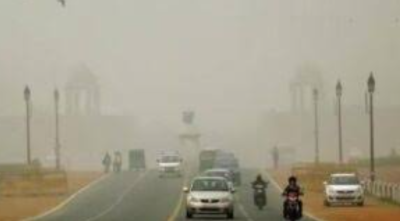
Road dust is a major source of particulate pollution in India’s urban areas. With the National Clean Air Programme (NCAP) targeting a 40% reduction in PM₁₀ by 2025-26, controlling road dust has become urgent. Studies show road dust contributes to PM₁₀ and PM₂.₅ levels across many cities. Efforts to reduce dust include road paving, greening, mechanised sweeping, and regulatory measures. However, challenges remain due to fragmented responsibilities, inadequate infrastructure, and lack of standardised guidelines.
Extent and Impact of Road Dust
Road dust mainly consists of PM₁₀ and coarse particles. It forms a large portion of urban air pollution. Source apportionment studies in 17 cities reveal road dust contributes 20-52% of PM₁₀ and 8-25% of PM₂.₅. Northern cities have heavier silt loads, making them dustier than southern cities. Delhi’s average street silt load is 14.47 g/m², with some cities recording up to 111.2 g/m². This dust worsens respiratory health and reduces air quality.
Government Initiatives and Funding
Since 2019, ₹19,711 crore has been allocated under NCAP for air quality improvement in 131 cities. Nearly 64% of these funds have been spent on road dust control, more than on biomass burning or vehicular pollution. The Union Environment Ministry mandated dust mitigation at construction sites in 2018. The Commission for Air Quality Management (CAQM) established Dust Control and Management Cells in 2021. These cells work on paving, greening, road repairs, and mechanised sweeping.
Challenges in Policy and Implementation
Despite funding and policies, road dust pollution remains high. Many cities report rising PM₁₀ levels. Responsibility for road maintenance is spread across multiple agencies. For example, Delhi has 12 agencies maintaining roads, causing coordination issues. Only 8,000 km of Delhi’s 19,000 km roads are mechanised swept, with 85 machines available instead of the required 200. Lack of standard operating procedures for dust disposal and dust suppressant use limits effectiveness.
Need for Scientific and Coordinated Measures
Road dust control requires scientific strategies and clear guidelines. Dust suppressant chemicals exist but lack thorough impact studies. Disposal of collected dust must prevent re-suspension. A GIS-based platform can improve coordination among agencies and enable real-time monitoring. Integration with apps like Green Delhi and Swachhata can enhance accountability. Road cleaning methods should be customised by road type, traffic, and season.
Future Directions for Sustainable Air Quality
A holistic approach is needed, linking dust control with urban planning. Regulatory mechanisms should mandate cleaner road construction and maintenance. Open roadsides and air quality must be part of infrastructure design. Consistent implementation of dust control can improve public health and urban resilience. Sustainable cities depend on reducing road dust pollution alongside other air quality measures.
Questions for UPSC:
- Taking example of the National Clean Air Programme (NCAP), discuss the challenges in implementing multi-agency environmental policies in India.
- Examine the role of particulate matter (PM₁₀ and PM₂.₅) in urban air pollution and its impact on public health with suitable examples.
- Analyse the importance of scientific urban planning in controlling air pollution. How can technology like GIS improve pollution management?
- Discuss in the light of India’s air pollution control measures, the significance of inter-agency coordination and accountability for effective environmental governance.
Answer Hints:
1. Taking example of the National Clean Air Programme (NCAP), discuss the challenges in implementing multi-agency environmental policies in India.
- Multiple agencies (e.g., Municipal Corporation, DDA, CPWD, NHAI) share road maintenance, causing fragmented responsibility.
- Diffused accountability leads to inefficient fund utilization and lack of coordinated action.
- Inadequate infrastructure and resources – e.g., Delhi needs 200 mechanised sweepers but has only 85.
- Absence of standard operating procedures for dust disposal and suppressant use hampers effectiveness.
- Jurisdictional overlaps create confusion in policy implementation and monitoring.
- Limited real-time coordination tools and data-sharing platforms among agencies.
2. Examine the role of particulate matter (PM₁₀ and PM₂.₅) in urban air pollution and its impact on public health with suitable examples.
- Road dust contributes 20-52% of PM₁₀ and 8-25% of PM₂.₅ in many Indian cities.
- PM₁₀ and PM₂.₅ penetrate respiratory system causing asthma, bronchitis, cardiovascular diseases.
- Higher silt loads in northern cities (e.g., Delhi average 14.47 g/m²) worsen air quality.
- Fine particles (PM₂.₅) can enter bloodstream, increasing mortality and morbidity.
- Vulnerable groups like children, elderly suffer disproportionately from particulate pollution.
- Persistent high PM levels correlate with increased hospital admissions and reduced life expectancy.
3. Analyse the importance of scientific urban planning in controlling air pollution. How can technology like GIS improve pollution management?
- Urban planning integrating road dust control ensures cleaner infrastructure and reduced resuspension.
- Scientific guidelines help select appropriate road cleaning methods based on road type, traffic, and climate.
- GIS platforms enable real-time monitoring, mapping of dust hotspots, and coordination among agencies.
- GIS integration with apps (Green Delhi, Swachhata) enhances complaint resolution and accountability.
- Digital mapping aids in precise resource allocation and maintenance scheduling.
- Long-term planning reduces fragmented efforts and supports sustainable air quality improvements.
4. Discuss in the light of India’s air pollution control measures, the significance of inter-agency coordination and accountability for effective environmental governance.
- Multiple agencies involved in road maintenance require clear role demarcation to avoid overlaps and gaps.
- Coordination ensures optimal use of allocated funds and resources (e.g., NCAP’s ₹19,711 crore allocation).
- Lack of accountability leads to persistent high PM levels despite investments (29 cities report rising PM₁₀).
- Joint monitoring and reporting improve transparency and policy effectiveness.
- GIS-based platforms and integrated apps can facilitate better communication and faster response.
- Strong governance frameworks encourage sustained pollution control and public trust.