
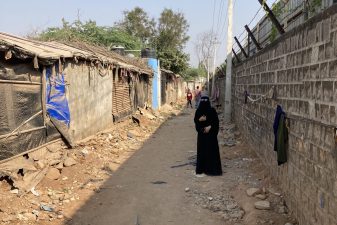
In recent weeks, India’s treatment of Rohingya refugees has sparked a deeper constitutional and moral debate. Oral remarks made by the Supreme Court describing the Rohingya as “intruders” have raised concerns among legal scholars and civil society about India’s commitment to fundamental rights, humanitarian principles, and its own constitutional jurisprudence. At stake is not merely a refugee policy question, but the meaning of dignity, life, and justice under the Indian Constitution.
Who Are the Rohingya and Why They Fled
The Rohingya are one of the world’s most persecuted and stateless communities. Denied citizenship in Myanmar and subjected to systematic violence, discrimination, and displacement, they have fled in large numbers to neighbouring countries, including India, seeking safety. Their movement across borders has been driven not by economic choice, but by the compulsion to escape genocidal conditions.
Seen in this light, the Rohingya in India are not “intruders” but asylum seekers whose presence is rooted in survival rather than strategy.
The Supreme Court Remarks That Triggered the Debate
On December 2, a two-judge bench of the Supreme Court led by Chief Justice Surya Kant made strong oral observations while hearing a habeas corpus petition filed by academic and activist Rita Manchanda. The petition concerned the unexplained custodial disappearance of five Rohingya last known to be in the custody of the Delhi Police.
The bench reportedly referred to the Rohingya as “illegal intruders”, questioned why they should not be sent back if they were not officially recognised as refugees, and invoked domestic poverty to argue against extending protection. Although these remarks do not constitute binding law, they have generated unease because of the authority the Court commands in shaping public discourse.
A Pattern of Judicial Reluctance on Rohingya Deportations
This was not an isolated episode. In May, another bench including Justice Kant declined to pass interim orders to stop alleged deportations of Rohingya refugees, describing claims of abandonment in international waters as “fanciful”. However, such practices have been documented by international human rights organisations such as Human Rights Watch and Amnesty International, and reported in multiple media investigations.
The gap between judicial scepticism and documented evidence has intensified concerns about access to remedies for vulnerable non-citizens.
Why Legal Experts Have Raised Alarm
Following the December 2 hearing, legal professionals and civil society groups addressed an open letter to the Chief Justice, warning that such remarks undermine constitutional values. They stressed a key principle of international refugee law: refugee status is declaratory, not constitutive. In other words, individuals do not become refugees because a state recognises them; they are recognised because they already meet the criteria of a refugee.
The letter also cautioned against framing refugee protection as competing with the welfare of India’s poor, arguing that constitutional justice does not permit the denial of one group’s rights to justify another’s deprivation.
Non-Refoulement and Article 21 of the Constitution
A central legal issue in the debate is the principle of non-refoulement, which prohibits returning individuals to places where they face serious threats to life or freedom. Indian courts have previously interpreted this principle as flowing from Article 21 of the Constitution, which guarantees the right to life and personal liberty.
Deportation or prolonged detention without individualised assessment, legal critics argue, violates this constitutional protection. The Rohingya case thus tests whether Article 21 is truly universal in its application or contingent on citizenship and political convenience.
Politics, Perception, and the Risk of Dehumanisation
Although oral remarks have no precedential value, they carry symbolic weight. When the highest court echoes the executive’s language of “infiltrators” or “illegal foreigners”, it risks legitimising harsher administrative practices and reinforcing public hostility toward refugees.
Security concerns are frequently cited, yet there is little publicly available evidence to show that Rohingya refugees pose a systemic threat. Instead, policy appears driven more by political narratives than by demonstrable risk assessments.
What This Moment Reveals About India’s Democratic Ethos
India is not a signatory to the 1951 Refugee Convention, but its constitutional framework and judicial precedents have historically offered protection to non-citizens facing grave harm. How the Rohingya are treated today reflects whether those traditions endure.
As philosopher and refugee scholar Costas Douzinas observed, refugees represent those without political voice or legal shelter. The challenge before India’s institutions is whether constitutional compassion can withstand political pressure.
What to Note for Prelims?
- Who are the Rohingya and why they are stateless
- Principle of non-refoulement
- Article 21 and its interpretation for non-citizens
- Difference between refugee recognition and refugee status
What to Note for Mains?
- Constitutional protection of refugees in India despite absence of refugee law
- Judiciary’s role in balancing sovereignty, security, and human rights
- Implications of judicial rhetoric on executive action and public opinion
- Ethical and legal dimensions of refugee governance in India