
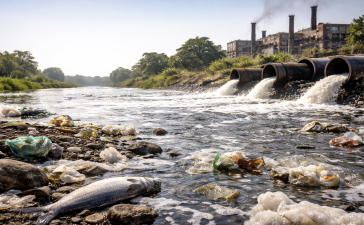
An online petition to the Prime Minister’s Office has brought renewed attention to pollution in the Bhavani River, a key tributary of the Cauvery that supplies drinking water to Coimbatore, Tirupur and surrounding regions. Filed by an RTI activist from Mettupalayam, the petition seeks criminal, departmental and regulatory action against officials allegedly responsible for failing to prevent sewage and industrial effluent discharge into the river. The issue underscores persistent challenges in urban wastewater management and industrial compliance in rapidly growing regions of Tamil Nadu.
Why the Bhavani River Is Crucial
The Bhavani River originates in the Western Ghats and flows through ecologically sensitive and agriculturally productive areas before joining the Cauvery. It supports:
- Drinking water supply to Coimbatore and Tirupur
- Irrigation for agricultural lands
- Groundwater recharge
- Aquatic biodiversity and riparian ecosystems
Any degradation of water quality directly affects public health, farming livelihoods, and ecological stability.
Allegations of Sewage and Industrial Effluents
The petition alleges that untreated sewage from local bodies in and around Mettupalayam is being discharged directly into the river. Additionally, certain industrial units are accused of releasing untreated or inadequately treated effluents.
Such discharges can result in:
- Elevated Biological Oxygen Demand (BOD) levels
- Presence of heavy metals and toxic chemicals
- Decline in dissolved oxygen affecting aquatic life
- Contamination of groundwater through seepage
Tirupur, known for its textile industry, has historically faced scrutiny over effluent discharge and river pollution, highlighting the regulatory complexity in industrial clusters.
Public Health and Ecological Implications
Contaminated river water poses multiple risks:
- Water-borne diseases for communities dependent on untreated sources
- Reduced crop productivity due to polluted irrigation water
- Impact on fish populations and wetland biodiversity
- Long-term soil and aquifer contamination
Given that river systems serve interconnected ecological and economic functions, pollution in one stretch can have cascading downstream effects.
Legal and Regulatory Framework
River pollution in India is governed by:
- The Water (Prevention and Control of Pollution) Act, 1974
- Environment (Protection) Act, 1986
- Monitoring by State Pollution Control Boards (SPCBs)
- Oversight by the Central Pollution Control Board (CPCB)
The petitioner has sought a joint inspection by central and state authorities, including detailed scrutiny of industries located along the riverbanks. Such inspections are critical to assess compliance with effluent treatment norms and Sewage Treatment Plant (STP) functionality.
Governance Challenges in River Conservation
Despite strong legal frameworks, enforcement gaps persist due to:
- Inadequate sewage treatment infrastructure
- Weak monitoring capacity
- Political and administrative delays
- Rapid urbanisation outpacing environmental planning
River conservation requires integrated watershed management, continuous water quality monitoring, and strict compliance mechanisms.
Way Forward: Integrated River Management
Saving the Bhavani River demands coordinated action:
- Upgrading and expanding sewage treatment capacity
- Strict industrial effluent audits and zero-liquid discharge enforcement
- Community monitoring and transparency in pollution data
- Riverbank zoning and ecological restoration
- Strengthening accountability mechanisms for officials
Sustainable river governance is not merely an environmental priority but a public health and economic imperative.
What to Note for Prelims?
- Bhavani River is a tributary of the Cauvery in Tamil Nadu.
- Governed under the Water (Prevention and Control of Pollution) Act, 1974.
- Pollution Control Boards monitor industrial and sewage discharges.
- Key issues: untreated sewage and industrial effluents.
What to Note for Mains?
- Discuss challenges in urban wastewater management in India.
- Examine enforcement gaps in environmental regulations.
- Analyse the impact of river pollution on public health and agriculture.
- Suggest measures for integrated river basin management.