
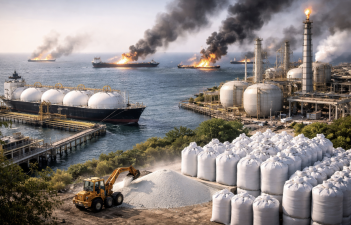
The 2026 West Asia conflict has caused major disruptions in global energy trade. This has led to shortages of Liquefied Petroleum Gas (LPG) and a rise in crude oil prices. India’s supply of Liquefied Natural Gas (LNG) and urea production are particularly at risk. India depends heavily on imported LNG, which is crucial for producing ammonia and urea fertilizers. The conflict threatens these supplies and could affect India’s agrarian economy.
India’s LNG Import Dependence
India is the world’s fourth largest importer of natural gas. Recently, over 50% of its natural gas came from international markets. More than 40% of these imports come from Qatar under long-term contracts. The LNG cargoes pass through the Strait of Hormuz, a critical chokepoint now affected by the conflict. The UAE and Oman also supply LNG via this route. Over 60% of India’s imported LNG could be disrupted if the Strait closes.
Impact on Urea Production
Natural gas is the main feedstock for ammonia, which is used to make urea fertilizer. About 30% of India’s LNG supply goes to fertilizer production. India’s urea plants have shifted from fuel oil to natural gas due to lower emissions and higher efficiency. Domestic urea production in 2025 was 306 lakh metric tonnes, but demand was 387 lakh metric tonnes. India imports the shortfall, mostly from West Asia, making supply vulnerable.
Geopolitical Risks and Government Response
The West Asia conflict threatens both domestic urea production and imports. Recently, 71% of India’s urea imports came from Oman, Saudi Arabia, Qatar, and the UAE—all dependent on the Strait of Hormuz. To manage the crisis, the Government of India included the fertilizer sector in its priority list under the Natural Gas (Supply Regulation) Order, 2026. Urea reserves have been increased ahead of the Kharif sowing season to buffer supply shocks.
Broader Economic and Energy Implications
The conflict has caused Indian urea plants to operate at half capacity. Petronet LNG Ltd declared force majeure, causing supply cuts by major gas distributors like GAIL and Indian Oil. This affects industries, power generation, and city gas networks. The crisis marks India’s vulnerability to global energy shocks and the need for diversified energy sources.
Topics for Prelims:
Liquefied Natural Gas (LNG)
- India is the fourth largest LNG importer globally.
- Over 50% of India’s natural gas is imported.
- More than 40% of LNG imports come from Qatar.
- LNG cargoes pass through the Strait of Hormuz.
- Over 60% of India’s LNG imports could be disrupted by Strait closure.
Urea Fertilizer Production
- Urea is India’s most widely used fertilizer.
- Natural gas is the main feedstock for urea production.
- India produced 306 lakh metric tonnes of urea in 2025.
- National consumption was 387 lakh metric tonnes in 2025.
- 71% of India’s urea imports come from West Asia.
Strait of Hormuz
- It is a key global oil and gas shipping chokepoint.
- Located between the Persian Gulf and Gulf of Oman.
- Critical for LNG shipments from Qatar, UAE, Oman.
- Conflict in the region threatens global energy supply.
- Closure would severely disrupt India’s LNG and urea imports.
Questions for Mains:
- Discuss in the light of India’s energy security, the risks of overdependence on imported Liquefied Natural Gas (LNG) from geopolitically unstable regions. [GS-III-Economic Development]
- Critically examine the role of natural gas in India’s fertilizer industry and its impact on agricultural productivity and sustainability. [GS-III-Economic Development]
- Explain the strategic importance of the Strait of Hormuz in global energy trade and assess the implications of its closure on India’s economy and international relations. [GS-II-International Relations]
- With suitable examples, discuss India’s policy measures to mitigate supply chain disruptions in critical sectors during international conflicts and their effectiveness. [GS-II-Governance]
Answer Hints:
1. Discuss in the light of India’s energy security, the risks of overdependence on imported Liquefied Natural Gas (LNG) from geopolitically unstable regions. [GS-III-Economic Development]
- India imports over 50% of its natural gas, making it highly dependent on external sources.
- More than 40% of LNG imports come from Qatar, with shipments passing through the geopolitically sensitive Strait of Hormuz.
- Conflict in West Asia, especially involving Iran and Israel, threatens LNG supply routes and volumes.
- Disruptions lead to domestic industrial slowdowns, including fertilizer production and power generation.
- Overdependence exposes India to price volatility, supply shocks, and strategic vulnerabilities.
- Need for diversification of energy sources and increased domestic production to enhance energy security.
2. Critically examine the role of natural gas in India’s fertilizer industry and its impact on agricultural productivity and sustainability. [GS-III-Economic Development]
- Natural gas is the primary feedstock for ammonia, which is essential for urea fertilizer production.
- India’s urea plants have shifted from fuel oil/naphtha to natural gas for efficiency and lower emissions.
- Urea is the most widely used fertilizer in India, critical for sustaining high agricultural productivity.
- Domestic production (306 lakh metric tonnes in 2025) falls short of demand (387 lakh metric tonnes), necessitating imports.
- Supply disruptions in natural gas directly affect fertilizer availability, impacting crop yields and food security.
- Use of cleaner natural gas supports sustainability by reducing carbon footprint compared to traditional feedstocks.
3. Explain the strategic importance of the Strait of Hormuz in global energy trade and assess the implications of its closure on India’s economy and international relations. [GS-II-International Relations]
- Strait of Hormuz is a critical chokepoint connecting the Persian Gulf to the Gulf of Oman and the Arabian Sea.
- Over 20% of global oil and portion of LNG shipments (including 60%+ of India’s LNG imports) pass through this narrow waterway.
- Closure due to conflict or blockade disrupts energy supply chains, causing global price spikes and shortages.
- India’s economy would face fuel shortages, increased import costs, and risks to fertilizer production and power generation.
- Diplomatic challenges arise as India balances relations with West Asian countries and global powers involved in the conflict.
- Highlights India’s vulnerability and need for strategic energy partnerships and alternative routes/sources.
4. With suitable examples, discuss India’s policy measures to mitigate supply chain disruptions in critical sectors during international conflicts and their effectiveness. [GS-II-Governance]
- Inclusion of fertilizer sector in priority list under the Natural Gas (Supply Regulation) Order, 2026 to ensure steady gas supply.
- Building and maintaining higher urea reserves (61.51 lakh metric tonnes in 2026) ahead of sowing seasons to buffer shocks.
- Force majeure declarations by companies like Petronet LNG show challenges; government coordination is crucial.
- Efforts to diversify LNG suppliers and promote domestic production to reduce import dependence.
- Past examples include strategic petroleum reserves and import diversification policies to handle global supply disruptions.
- Effectiveness limited by geopolitical realities, infrastructure constraints, and time required for diversification.