
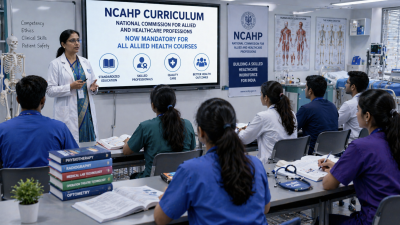
The National Commission for Allied and Healthcare Professions (NCAHP) has mandated the implementation of its curriculum framework for all allied health courses across India. This move aims to standardise education and training in the allied health sector, which includes a wide range of healthcare professionals other than doctors and nurses. The decision is expected to enhance the quality of allied health education and ensure uniformity in skills and knowledge nationwide.
Background of NCAHP
The National Commission for Allied and Healthcare Professions was established under the National Commission for Allied and Healthcare Professions Act, 2021. It regulates and monitors allied health education and services. The commission’s role includes framing standards for education, maintaining a central register of professionals, and promoting research and innovation in allied health fields. The allied health sector covers professions such as physiotherapy, optometry, medical laboratory technology, radiography, and more.
Significance of the Curriculum Implementation
The mandatory implementation of the NCAHP curriculum ensures that all allied health courses follow a uniform syllabus and training methodology. This standardisation will improve the competency of allied health professionals, making them better equipped to support healthcare delivery. It also facilitates mutual recognition of qualifications across states, aiding mobility and employment opportunities for graduates. The curriculum focuses on practical skills, ethical practices, and patient-centric care.
Impact on Allied Health Education Institutions
Institutions offering allied health courses must revise their syllabi to align with the NCAHP framework. They need to ensure faculty training, infrastructure upgrades, and adherence to prescribed evaluation methods. The commission will conduct periodic inspections and audits to enforce compliance. This will raise the overall quality of education and reduce disparities between institutions. Students will benefit from updated course content that reflects current healthcare needs and technologies.
Challenges and Future Prospects
Implementing a uniform curriculum across diverse institutions poses challenges such as resistance to change, resource constraints, and the need for faculty development. However, the long-term benefits include improved healthcare outcomes through competent allied health professionals. The NCAHP plans to introduce continuous professional development programmes and update the curriculum regularly to keep pace with advancements in healthcare. This initiative is a step towards strengthening India’s healthcare system by empowering allied health workers.
What to Study for UPSC Exams?
- Healthcare Regulatory Bodies
- Allied Health Professions
- Medical Education Reforms
- National Health Policy 2017
- Skill Development in Healthcare
Healthcare Regulatory Bodies
Healthcare regulatory bodies oversee standards and quality in health services and education. The World Health Organization (WHO) provides global guidelines but does not regulate directly. In India, bodies like the Medical Council of India (now replaced by the National Medical Commission) and the Dental Council regulate respective professions. These bodies maintain professional registers, accredit institutions, and enforce ethical practices to ensure public safety and service quality.
Allied Health Professions
Allied health professions include over 300 distinct roles supporting diagnosis, treatment, and prevention. Examples are physiotherapists, radiographers, and medical laboratory technologists. They constitute approximately 60% of the healthcare workforce globally. Training often combines theoretical knowledge with clinical practice, and many allied health roles require certification or licensure for legal practice.
Medical Education Reforms
Medical education reforms focus on competency-based curricula, integration of technology, and early clinical exposure. The Flexner Report (1910) was a landmark reform in the US, standardizing medical education. Recent reforms emphasize interprofessional education and community health to address evolving healthcare needs. Digital tools like simulation and e-learning are increasingly incorporated to enhance learning outcomes.
National Health Policy 2017
India’s National Health Policy 2017 aims for universal health coverage and increased public health expenditure to 2.5% of GDP by 2025. It emphasizes preventive healthcare, strengthening primary care, and promoting AYUSH systems. The policy advocates for health workforce expansion, digital health initiatives, and improved access to essential medicines and diagnostics.
Skill Development in Healthcare
Healthcare skill development targets upgrading competencies to match technological advances and patient needs. The World Health Organization promotes continuous professional development to maintain clinical skills. In India, schemes like the Pradhan Mantri Kaushal Vikas Yojana (PMKVY) include healthcare modules. Simulation-based training and telemedicine skills are emerging focus areas for workforce readiness.
Last Modified: April 10, 2026