
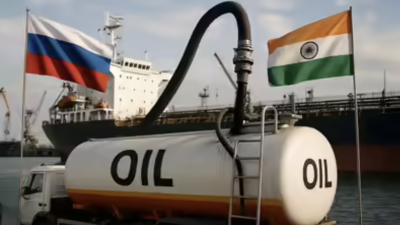
India has decided to maintain its imports of crude oil from Russia despite global sanctions. The move involves purchasing Russian crude at discounted rates to meet domestic energy demands. The imports are expected to continue through state-owned and private oil firms.
Import Volumes and Pricing
India’s crude oil imports from Russia averaged around 1 million barrels per day in recent months. The oil is procured at discounts ranging from 20 to30 per barrel compared to benchmark prices. This pricing strategy aims to reduce India’s overall import costs.
Major Importers and Infrastructure
State-owned companies like Indian Oil Corporation, Bharat Petroleum, and Hindustan Petroleum are key importers. Private firms such as Reliance Industries also participate in Russian oil imports. The crude is transported mainly via maritime routes to Indian ports on the west coast.
Government Policy and Strategic Reserves
The Indian government has allowed continued imports under existing trade agreements. It has also utilised strategic petroleum reserves to manage supply fluctuations. Policy adjustments have been made to accommodate sanctions on Russia while ensuring energy security.
Global Sanctions and Trade Mechanisms
India’s imports occur despite sanctions imposed by Western countries on Russia. Transactions are often conducted through alternative payment mechanisms, including non-dollar currencies. This approach helps bypass restrictions on international banking systems.
What to Study for UPSC Exams?
- India-Russia Energy Relations
- International Sanctions Mechanisms
- India’s Energy Security Policies
- Global Crude Oil Trade Patterns
India-Russia Energy Relations
India and Russia have cooperated on energy since the Soviet era, with long-term oil supply agreements. Russia is a major supplier of crude oil, natural gas, and nuclear fuel to India. The two countries also collaborate on hydrocarbon exploration and joint ventures in Arctic energy projects.
International Sanctions Mechanisms
Sanctions restrict trade with targeted nations using financial restrictions, asset freezes, and trade bans. They often involve secondary sanctions penalizing third parties for violations. Mechanisms include SWIFT bans and alternative payment systems like barter or non-dollar currencies to circumvent restrictions.
India’s Energy Security Policies
India’s energy security focuses on diversification of sources, strategic petroleum reserves, and boosting renewable energy. The government promotes domestic production and international partnerships to reduce import dependence. Policies include fuel subsidies and infrastructure development for stable supply.
Global Crude Oil Trade Patterns
Crude oil trade centers around major producers like OPEC countries, Russia, and the US. Key trade routes include the Strait of Hormuz and Malacca Strait. Pricing benchmarks are set by Brent, WTI, and Dubai crude, influencing global market dynamics.
Last Modified: April 11, 2026