
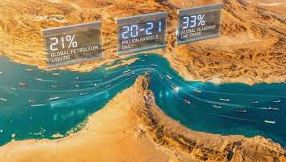
The Strait of Hormuz has become a war zone following a US-Israeli attack on Iran on 28 February. The waterway, located between Iran and Oman, handles nearly 20% of global oil and 25% of liquefied natural gas (LNG) trade. Iran’s coastal missile batteries, drone swarms, and sea mines have deterred most commercial shipping. Marine insurance premiums for the route have surged from 400% to 600%. Iran demands transit tolls of up to $1 per barrel of oil.
Strategic Importance of Maritime Choke Points
Maritime choke points are narrow waterways critical for global shipping. Control over these points enhances naval power projection. Historical examples include British dominance over Gibraltar and Singapore and the Dardanelles Strait in World War I. The Greenland-Iceland-UK (GIUK) Gap is a key Arctic naval corridor for Russia and a potential route for China’s Maritime Silk Road.
Legal Framework Governing Navigation
The 1982 United Nations Convention on the Law of the Sea (UNCLOS) defines territorial waters up to 12 nautical miles. It establishes “Innocent Passage” for vessels through territorial waters and “Transit Passage” for international straits. Transit Passage cannot be suspended or obstructed by coastal states. The Strait of Hormuz qualifies as an international strait under UNCLOS. Iran has signed but not ratified UNCLOS and applies the more restrictive Innocent Passage regime, conflicting with Transit Passage rights.
Current Conflict and Iran’s Position
Iran’s naval capacity has been weakened, but it uses asymmetric tactics to control the Strait. The country faces economic embargoes and infrastructure damage. Iran’s control over the Strait serves as a strategic lever to extract concessions. Any mining or kinetic interference with shipping would violate UNCLOS and the UN Charter.
Implications for India and Global Trade
The Strait of Hormuz is critical for India’s energy security and economic stability. Disruption threatens national and regional security. India maintains diplomatic ties with the US, Israel, and Iran but has declined a mediatory role. The ongoing crisis risks broader economic distress, especially in the Global South.
What to Study for UPSC Exams?
- Maritime Choke Points and Security
- United Nations Convention on the Law of the Sea (UNCLOS)
- Geopolitics of Arctic Sea Routes
- Energy Security and International Trade
Maritime Choke Points and Security
Maritime choke points are narrow passages like the Strait of Hormuz and Panama Canal, crucial for global trade. About 50% of global oil passes through six major choke points. Control over these areas allows nations to influence international shipping and military movements, often becoming flashpoints during conflicts.
United Nations Convention on the Law of the Sea (UNCLOS)
UNCLOS, effective since 1994, defines maritime zones including territorial seas (12 nautical miles) and exclusive economic zones (200 nautical miles). It codifies “Innocent Passage” and “Transit Passage” rights. Over 160 countries are parties; notable absentees include the US. It governs resource rights, navigation, and dispute resolution at sea.
Geopolitics of Arctic Sea Routes
Arctic routes like the Northern Sea Route reduce Asia-Europe shipping times by up to 40%. Melting ice has increased accessibility but sparked territorial claims by Russia, Canada, Denmark, and the US. The GIUK Gap remains vital for NATO to monitor Russian naval activity in the North Atlantic.
Energy Security and International Trade
Energy security depends on stable supply routes; 80% of global oil trade moves via sea. Disruptions at chokepoints like the Strait of Hormuz can spike oil prices globally. LNG trade has grown rapidly, with Asia as a major importer. Countries diversify suppliers and routes to mitigate risks.
Last Modified: April 12, 2026