
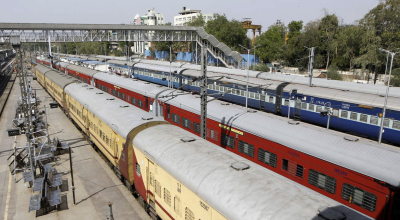
Indian Railways approved infrastructure projects worth ₹1.53 lakh crore to enhance network capacity and modernise facilities. These projects cover track doubling, electrification, station redevelopment, and introduction of new train services across India.
Project Scope and Funding
The ₹1.53 lakh crore investment includes track doubling over 3,000 km and electrification of 5,000 km routes. Funding sources comprise the railway budget, central government allocations, and multilateral loans. Project timelines range from 2024 to 2030.
Track Doubling and Electrification
Track doubling aims to reduce congestion on busy routes, particularly in Maharashtra, Uttar Pradesh, and West Bengal. Electrification will replace diesel locomotives on key freight and passenger corridors, targeting net-zero carbon emissions by 2030. Over 90% of the existing broad-gauge network will be electrified post-project completion.
Station Redevelopment and Modernisation
Redevelopment plans cover 150 major stations, including New Delhi, Mumbai Central, and Howrah. Upgrades include enhanced passenger amenities, digital information systems, and improved accessibility features. The projects also integrate multimodal transport hubs for seamless connectivity.
New Train Services and Rolling Stock
Introduction of 50 new train services will connect underserved regions, focusing on the Northeast and central India. Procurement of 1,200 modern coaches and 200 electric locomotives is planned to increase speed and capacity. High-speed rail corridors are not part of this phase.
What to Study for UPSC Exams?
- Railway Electrification Technology
- Infrastructure Financing Models
- Transport Network Integration
- Carbon Emission Reduction Strategies
Railway Electrification Technology
Railway electrification uses overhead lines or third rails to power trains, reducing reliance on diesel. The first electrified railway opened in 1881 in Germany. Modern systems employ 25 kV AC for efficiency and lower transmission losses. Regenerative braking in electric trains feeds energy back to the grid, enhancing energy efficiency.
Infrastructure Financing Models
Infrastructure financing includes public funding, private investments, and public-private partnerships (PPP). Multilateral development banks often provide concessional loans. Innovative models like green bonds and infrastructure trusts (InvITs) mobilize capital while spreading risk among investors.
Transport Network Integration
Transport network integration connects multiple modes—rail, road, air, and waterways—for seamless travel. Integrated ticketing systems simplify transfers. Multimodal hubs reduce transit times and improve urban mobility. Data sharing between agencies enhances network efficiency.
Carbon Emission Reduction Strategies
Carbon reduction strategies include switching to renewable energy, electrification of transport, and energy-efficient technologies. Carbon capture and storage (CCS) mitigates industrial emissions. Behavioral changes like modal shifts to public transport also lower carbon footprints.
Last Modified: April 13, 2026