
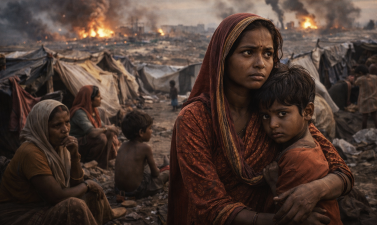
The United Nations Development Programme (UNDP) released a report stating that the ongoing West Asia conflict may push 2.5 million Indians below the poverty line. The report highlights the economic and social impact of the conflict on Indian migrant workers and their families.
Impact on Indian Migrant Workers
Approximately 8 million Indians reside in West Asia, with a majority employed in Gulf Cooperation Council (GCC) countries. The conflict has led to job losses, salary cuts, and delayed remittances. Reduced income has directly affected the livelihoods of these workers and their dependents in India.
Economic Consequences in India
The report estimates a potential increase in poverty rates in Indian states with high migrant populations, such as Kerala, Tamil Nadu, and Uttar Pradesh. The decline in remittances could reduce household incomes, aggravating food insecurity and access to healthcare.
UNDP Recommendations
UNDP suggests strengthening social protection schemes for migrant workers and their families. It calls for enhanced bilateral cooperation between India and West Asian countries to safeguard migrant rights and employment. The report also recommends skill development and alternative employment opportunities in India.
Conflict and Regional Stability
The report links prolonged conflict in West Asia to broader regional instability affecting oil prices and global supply chains. It highlights the need for diplomatic efforts to resolve tensions to stabilise economic conditions for migrant workers.
What to Study for UPSC Exams?
- India-GCC Economic Relations
- Social Protection for Migrant Workers
- Impact of Remittances on Indian Economy
- Conflict and Global Supply Chains
India-GCC Economic Relations
The Gulf Cooperation Council (GCC) includes six Middle Eastern countries: Saudi Arabia, UAE, Kuwait, Oman, Qatar, and Bahrain. India is one of the largest trading partners of the GCC, with energy imports constituting over 60% of India’s total crude oil imports. Remittances from Indian expatriates in GCC countries form a significant part of India’s foreign exchange earnings, exceeding 30 billion annually. </p> <h5>Social Protection for Migrant Workers</h5> <p> Social protection for migrant workers includes access to healthcare, legal aid, and social security benefits. Many Gulf countries lack comprehensive labor laws for low-skilled migrants, leading to vulnerabilities. India has bilateral agreements with some GCC states to safeguard worker rights, yet enforcement gaps remain, especially in informal employment sectors. </p> <h5>Impact of Remittances on Indian Economy</h5> <p> India is the world’s largest recipient of remittances, with inflows exceeding100 billion annually. Remittances contribute about 3% to India’s GDP and support millions of households, especially in rural areas. These funds improve education, healthcare, and consumption but can create dependency and reduce labor force participation locally.
Conflict and Global Supply Chains
West Asia conflicts disrupt oil supply routes, affecting global energy prices and manufacturing costs. The Strait of Hormuz, a critical chokepoint, handles about 20% of the world’s petroleum trade. Prolonged instability can delay shipments of raw materials and finished goods, impacting industries worldwide from electronics to automotive.
Last Modified: April 14, 2026