
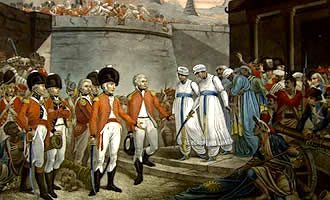

The Poligar Revolt, also known as the Palayakkarars Revolt, occurred in southern India from 1799 to 1805. It represents one of the earliest movements against British colonial rule in India. The term “Poligars” refers to local feudal lords who governed fortified territories granted by the Nayakas. The revolt was a reaction to the oppressive policies of the British East India Company, which aimed to undermine local authority and exploit resources.
Background of the Poligars
The Poligars were figures in Tamil Nadu’s politics during the 17th and 18th centuries. They were divided into two blocs – the Eastern Palayams, led by Kattabomman, and the Western Palayams, led by Puli Thevar. Both factions resisted British tax collection and interference in local governance. The British, through the Carnatic Treaty of 1792, gained the right to collect taxes, leading to increased tensions.
First Poligar War (1799)
The First Poligar War began in 1799. It was ignited by the British imposition of a new land tax system. Veerapandya Kattabomman, the ruler of Panchalankurichi, emerged as a key leader. He refused to pay the new taxes, symbolising the defiance of the Poligars. Despite his resistance, the British forces ultimately defeated the Poligars, marking a setback for local governance.
Second Poligar War (1801)
The Second Poligar War erupted after imprisoned Poligars escaped from Palamcotta Fort. They captured Tuticorin and allied with the Maruthu Brothers, who led the Maruthu Rebellion. This phase was more organised, with widespread support from local peasants. The revolt was driven by anger over oppressive taxation and the loss of local authority. The conflict concluded with the capture of the Marudhu brothers in 1801.
Key Leaders of the Revolt
Several prominent figures emerged during the Poligar Wars.
- Veerapandya Kattabomman: The ruler of Panchalankurichi, Kattabomman became a symbol of resistance against British rule. His refusal to pay taxes led to his execution in 1799.
- Marudu Pandiar Brothers: Periyar Marudu and Chinna Marudu were influential leaders from Sivaganga. They played important role in the Second Poligar War and were executed in 1801.
Causes of the Revolt
The Poligar Revolt was driven by multiple factors:
- Direct Annexation: The British annexed Poligar lands, stripping them of military rights and weakening their power.
- Religious Interference: The British disrupted local religious practices, causing resentment among the populace.
- Land Reforms: New land policies increased the tax burden on Poligars, leading to widespread discontent.
Impacts of the Revolt
The Poligar Wars impacted Tamil Nadu. The signing of the Carnatic Treaty in 1801 marked the end of the Poligar system and British control over the region. The revolt raised awareness about British exploitation and intensified resentment against colonial rule. It contributed to the early seeds of Indian nationalism.
Notable Figures
Several key individuals played very important roles in the revolt.
- Puli Thevar: A pioneer in resisting British rule, he fought against both the British and the Nawab of Arcot.
- Velu Nachiyar: The queen of Sivagangai, she led a successful revolt against the British and is celebrated as the first queen to fight colonial power.
- Dheeran Chinnamalai: A notable Palayakkarar from Kongu, he engaged in guerrilla warfare against the British.
The Role of the Nawab of Arcot
The Nawab of Arcot played a critical role in the dynamics of power in southern India. After the decline of the Vijayanagar Empire, the Nawabs acted as representatives of the Mughals. The British gained control over tax collection in the region through the Carnatic Treaty, which increased tensions with local rulers like Kattabomman.
The Confederacy of Palayakkarars
During the revolt, the South Indian Confederacy was formed, led by Marudu Pandiar. This alliance aimed to unite various Palayakkar factions against British rule. Their proclamation, known as the Tiruchirappalli Proclamation, called for unity against the British, marking moment in the fight for independence.
Major Battles and Events
Key battles and events shaped the course of the Poligar Revolt:
- Battle of Kallarpatti: A clash where Kattabomman’s forces faced defeat, leading to his eventual capture.
- Fall of Panchalamkuruchi: Major Bannerman’s forces besieged Kattabomman’s stronghold, leading to its capture in 1799.
- Execution of Leaders: Following the defeat, Kattabomman and the Marudu brothers were executed, symbolising the harsh British response to rebellion.
The Legacy of the Poligar Revolt
The Poligar Revolt is remembered as important episode in India’s struggle for independence. It brought into light the early resistance against British colonialism and inspired future generations. The sacrifices of leaders like Kattabomman and the Marudu brothers are celebrated in Tamil folklore and history.
The Role of Guerrilla Warfare
Guerrilla warfare played role in the Poligar Revolt. Leaders like Dheeran Chinnamalai employed unconventional tactics to resist British forces. This form of warfare allowed local leaders to engage the British in a manner that leveraged their knowledge of the terrain.
Cultural Impact
The Poligar Revolt has had a lasting cultural impact in Tamil Nadu. Folk songs and ballads recount the bravery of leaders like Kattabomman. These narratives serve to keep the memory of resistance alive and inspire pride in local heritage.
Conclusion of the Revolt
The Poligar Revolt ultimately failed to achieve its goals. The British solidified their control over Tamil Nadu through military might and strategic alliances. However, the revolt marked an important chapter in the history of resistance against colonial rule in India.
Historical Significance
The Poligar Revolt is for its role in shaping the early nationalist movements in India. It set a precedent for future uprisings against British rule and contributed to the growing sentiment of Indian independence. The revolt remains a symbol of local resistance and the fight for autonomy.
Further Developments Post-Revolt
After the revolt, the British implemented stricter controls over Tamil Nadu. The abolishment of the Poligar system marked shift in governance. The legacy of the revolt continued to influence subsequent movements for independence throughout the 19th and 20th centuries.


