

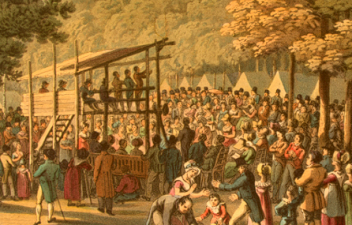
The 19th century in India saw numerous socio-religious reform movements. These movements aimed to modernise society by addressing social injustices and religious practices. They emerged in response to British colonial rule and the changing socio-economic landscape. The reformers recognised the link between religious beliefs and social issues, advocating for change through education and awareness.
Key Reformers and Movements
- Raja Rammohun Roy – Known as the father of modern India, he founded the Atmiya Sabha in 1814 to discuss monotheism. He established the Brahmo Samaj in 1828, promoting rationalism and condemning idolatry.
- Henry Vivian Derozio – Leader of the Young Bengal Movement, he inspired students to challenge authority and advocate for women’s rights and education.
- Debendranath Tagore – He reorganised the Brahmo Samaj, promoting widow remarriage and women’s education through the Tattvabodhini Sabha.
- Ishwar Chandra Vidyasagar – A champion for women’s rights, he played a key role in the Widow Remarriage Act of 1856 and promoted female education.
- Jyotiba Phule – He dedicated his life to fighting social inequality, establishing schools for girls and lower castes, and founding the Satyashodhak Samaj.
- Savitribai Phule – A pioneer in women’s education, she co-founded schools and led movements against social injustices.
- Swami Vivekananda – A disciple of Ramakrishna Paramhansa, he promoted social action and spiritual Hinduism, establishing the Ramakrishna Mission.
- Dayanand Saraswati – Founder of Arya Samaj, he advocated for women’s rights and education while opposing idolatry.
Raja Rammohun Roy
Raja Rammohun Roy is a very important figure in Indian reform. He founded the Brahmo Samaj, promoting monotheism and rational thought. His efforts included:
- Criticism of idolatry and caste rigidity.
- Establishment of modern educational institutions like Hindu College in 1817.
- Promotion of journalism through publications like Sambad Kaumudi.
Young Bengal Movement
Led by Henry Vivian Derozio, this movement encouraged radical thinking. Key aspects included:
- Challenging traditional authority and customs.
- Advocating for women’s rights and education.
- Public agitation for social reforms.
Debendranath Tagore
Debendranath Tagore was instrumental in the revival of the Brahmo Samaj. His contributions included:
- Formation of the Tattvabodhini Sabha in 1839.
- Promotion of Vedantism and indigenous culture.
- Support for women’s education and rights.
Ishwar Chandra Vidyasagar
Vidyasagar was a reformer in education and women’s rights. His actions included:
- Advocacy for the Widow Remarriage Act of 1856.
- Establishment of the first girls’ school in India.
- Promotion of a modern prose style in Bengali literature.
Jyotiba Phule
Jyotiba Phule dedicated his life to social reform. His notable achievements included:
- Establishment of schools for girls and lower castes.
- Formation of the Satyashodhak Samaj, promoting equality.
- Publication of works critiquing social inequality.
Savitribai Phule
Savitribai Phule was a pioneer in women’s education. Her contributions included:
- Co-founding schools for girls.
- Leading movements against widowhood practices.
- Establishing an orphanage for abandoned women.
Swami Vivekananda
Swami Vivekananda was a major proponent of Hindu philosophy. His work included:
- Promotion of social action through the Ramakrishna Mission.
- Advocacy for religious tolerance and universalism.
- Critique of caste rigidity and superstitions.
Arya Samaj
Founded by Swami Dayanand Saraswati, Arya Samaj aimed to reform Hindu society. Its principles included:
- Promotion of Vedic teachings and opposition to idolatry.
- Advocacy for women’s education and inter-caste marriages.
- Establishment of schools and colleges for social upliftment.
Prarthana Samaj
Founded by Atmaram Pandurang and Mahadev Govind Ranade, this movement sought to revise Hindu practices. Key features included:
- Advocacy for monotheism and elimination of caste discrimination.
- Influence from Buddhism and Christianity.
- Promotion of social reforms and educational initiatives.
Theosophical Society
Founded by Madame Blavatsky and Colonel Olcott, this society aimed to promote ancient religions. Its impact included:
- Revival of Hinduism and other ancient philosophies.
- Promotion of women’s rights and social equality.
- Encouragement of national pride among educated Indians.
Deccan Education Society
Established in 1884, this society aimed to promote education in Maharashtra. Its achievements included:
- Founding of Fergusson College, educational institution.
- Advancement of social reform initiatives.
- Engagement of leaders like Tilak and Agarkar in education and reform.
Muslim Reform Movements
Several movements emerged among Muslims in the 19th century, including:
- Wahabi Movement – Focused on religious reform and social justice.
- Faraizi Movement – Aimed at uniting farmers against landlord oppression.
- Aligarh Movement – Led by Sayyid Ahmed Khan, promoting modern education and social reform.