
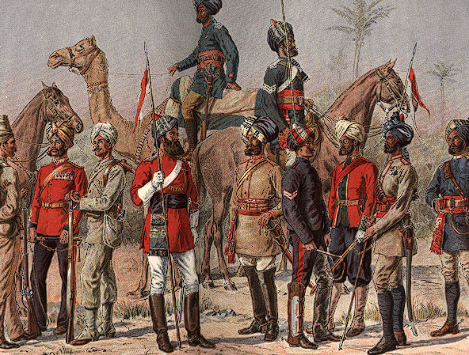
The political landscape of pre-1947 India was split between British Provinces under direct colonial rule and 565 semi-autonomous Princely States. Under British Paramountcy, native rulers managed internal administration while surrendering external sovereignty, defense, and communications to the British Crown. This system insulated rulers from internal rebellion through British military guarantees. Consequently, it fostered absolute autocracies devoid of the rule of law, independent judiciaries, or representative assemblies.
Socio-Economic Drivers of Mobilisation
While British Indian provinces gradually secured constitutional concessions via the Government of India Acts of 1919 and 1935, the princely states faced systemic stagnation. Public discontent stemmed from specific institutional practices:
- Exorbitant Agrarian Extractions: Rulers enforced heavy land revenue demands alongside arbitrary cesses known as Lag-Bag.
- Institutionalized Forced Labor: The practices of Begar and Bethi compelled peasants and tribal groups to provide unpaid labor to state authorities and feudal landlords.
- Suppression of Civil Liberties: Severe restrictions prevented freedom of speech, public assembly, press operations, and the formation of political organizations.
- Regressive Fiscal Priorities: Rulers directed state revenues toward personal luxury, leaving public healthcare, literacy, and basic infrastructure severely underfunded.
Early Local Formations (Praja Mandals)
The political awakening generated in British India during the Non-Cooperation and Khilafat Movements (1920–1922) eventually crossed into princely territories. Local intelligentsia, peasants, and regional leaders organized nationalist committees to protest local grievances. These grassroots associations were termed Praja Mandals (People’s Associations) or Lok Parishads. They initially functioned independently, demanding responsible governance under the aegis of the rulers, the protection of civil liberties, and the abolition of agrarian abuses.
Institutional Consolidation via AISPC
Foundation and Objectives
To unify the fragmented struggles of independent regional Praja Mandals, the All India States People’s Conference (AISPC) was established on December 17, 1927, in Bombay. The inaugural session brought together over 1,500 delegates representing more than 70 princely states. The conference aimed to advocate for constitutional reforms within the states, bridge the political divide between British India and native states, and pressure the British government to treat state subjects on par with British Indian citizens.
Key Organizational Facts of AISPC
- First President: Dewan Bahadur M. Ramachandra Rao.
- Key Architects and Founders: Balwantrai Mehta, Maniklal Kothari, and G.R. Abhayankar.
- Headquarters: Established in Bombay to handle pan-India coordination.
- Official Constitution: Formally drafted and adopted in June 1939 during the Ludhiana session to streamline regional branches.
- Dissolution and Merger: On April 25, 1948, the AISPC formally dissolved, merging its constituent regional units directly into the Indian National Congress (INC).
Shift in Indian National Congress (INC) Policy
Phase of Non-Intervention (1920–1935)
During the early phases of the nationalist movement, the INC maintained a policy of strict non-interference in the internal administration of the Princely States. The Nagpur Session (1920) passed a resolution calling upon princely rulers to grant responsible government but explicitly barred political agitations within the states under the Congress banner. Senior leaders like Mahatma Gandhi argued that state subjects must develop their own internal strength, and aimed to avoid a simultaneous confrontation with both the British Empire and native rulers.
Transition and Radicalization (1936–1939)
The rise of left-wing socialist factions within the Congress, led by Jawaharlal Nehru and Subhas Chandra Bose, forced a radical re-evaluation of this non-interventionist stance. The Lucknow Session (1936) declared that the people of the Princely States possessed the identical right to self-determination and sovereignty as those in British India. The Haripura Session (1938), presided over by Subhas Chandra Bose, explicitly incorporated the Princely States within its ultimate goal of Purna Swaraj (Complete Independence). Finally, the Tripuri Session (1939) completely abandoned the non-intervention policy, authorizing direct political intervention and joint agitations.
Institutional Integration
Jawaharlal Nehru assumed the Presidency of the AISPC at its Ludhiana Session in 1939 and retained the post until 1946, creating a direct personal and institutional link between the INC and the states’ movements. During the Quit India Movement (1942), the operational slogan “Do or Die” was officially extended to state subjects, urging them to declare themselves citizens of a free Indian nation and refuse allegiance to autocratic rulers.
Regional Dynamics of Mobilisation
Rajputana States (Rajasthan)
The region witnessed widespread mobilization due to the deeply entrenched Jagirdari system and heavy agrarian taxation.
- Jaipur Praja Mandal: Founded in 1931 by Kapurchand Patni and reorganized in 1936 under Jamnalal Bajaj and Hiralal Shastri. It launched civil disobedience movements demanding the registration of citizen groups and civil rights.
- Mewar Praja Mandal: Established in 1938 by Manikya Lal Verma. It actively supported the prolonged Bijolia and Begun peasant movements against unlawful cesses.
- Marwar Praja Mandal: Set up in Jodhpur in 1934 by Jai Narayan Vyas and Bhanwar Lal Saraf to protest administrative corruption and the suppression of local newspapers.
Punjab Hill and Plains States
- Punjab Riyasti Praja Mandal: Founded in 1928 by Sewa Singh Thikriwala, who died in Patiala jail during a hunger strike in 1935. The movement targeted the tyrannical rule of Maharaja Bhupinder Singh of Patiala, demanding land revenue cuts and the abolition of royal monopolies.
- Dhami Satyagraha (1939): Located in the Himalayan Hill States, a peaceful march organized by the Dhami Prem Pracharini Sabha and led by Bhagmal Sautha was fired upon by state authorities at the Dhami border, resulting in multiple casualties.
- Pajhota Movement (1942): An offshoot of the Quit India Movement in Sirmaur state, led by Vaid Surat Singh. Peasants formed a parallel governance structure and launched the non-cooperation slogan “Bhai Do Na Pai Do” (Provide no soldier to the British war effort, pay no cash revenue to the ruler).
Orissa Garjat States
- Garjat Praja Mandal: Active across the internal tributary states of Orissa under the leadership of Sarangadhar Das, Radhanath Rath, and Harekrushna Mahatab.
- Martyrdom of Baji Rout (1938): During a brutal police crackdown against Praja Mandal agitators in Dhenkanal state, a 12-year-old boatboy named Baji Rout refused to ferry state police troops across the Brahmani River. He was shot dead, becoming the youngest recorded martyr of the Indian freedom struggle.
Southern States (Hyderabad, Mysore, and Travancore)
- Hyderabad State Congress: Formed in 1938, it was immediately declared illegal by the Nizam. Led by Swami Ramanand Tirth, it launched a powerful satyagraha for democratic rights. This movement later intertwined with the radical anti-feudal Telangana Peasant Armed Rebellion (1946).
- Travancore State Congress: Formed in 1938 under Pattom Thanu Pillai to challenge the authoritarian Dewan, Sir C.P. Ramaswami Iyer. Accamma Cherian organized a massive march of thousands to demand the release of jailed leaders. Post-1945, it resisted the Dewan’s “Independent Travancore” proposal, culminating in the armed Punnapra-Vayalar uprising.
- Mysore Chalo Movement (1947): Launched immediately after India’s independence under K. Chengalaraya Reddy. When the Maharaja of Mysore hesitated to join the Indian Union, Praja Mandal volunteers organized a massive march toward Bangalore, forcing the ruler to sign the Instrument of Accession and set up a responsible democratic ministry.
Comprehensive Reference Guide of Key Praja Mandals
| State / Region | Praja Mandal / Association | Year of Formation | Key Leaders and Organizers | Significant Agitations and Historic Context |
| Baroda | Baroda Praja Mandal | 1916 | Abbas Tyabji, Kasturba Gandhi | One of the earliest associations; focused on primary education and land revenue reforms. |
| Patiala / Punjab States | Punjab Riyasti Praja Mandal | 1928 | Sewa Singh Thikriwala, Bhagwan Singh Longowalia | Organized Akali peasants against the personal extravagances of the Patiala Maharaja. |
| Jaipur | Jaipur Praja Mandal | 1931 | Kapurchand Patni, Jamnalal Bajaj, Hiralal Shastri | Launched Satyagraha in 1939 against the state ban on political activities. |
| Marwar (Jodhpur) | Marwar Praja Mandal | 1934 | Jai Narayan Vyas, Barkatullah Khan | Protested against the feudal extraction of resources and the lack of judicial independence. |
| Mewar (Udaipur) | Mewar Praja Mandal | 1938 | Manikya Lal Verma, Bhurilal Baya | Mobilized the Bhil and Meena tribal communities against forced labor (Begar). |
| Hyderabad | Hyderabad State Congress | 1938 | Swami Ramanand Tirth, Melkote | Fought the Nizam’s communal restrictions, demanding responsible government and Urdu-Telugu parity. |
| Travancore | Travancore State Congress | 1938 | Pattom Thanu Pillai, Accamma Cherian, T.M. Varghese | Protested against the American-model constitution proposed by the Dewan to bypass popular vote. |
| Kashmir | All Jammu and Kashmir National Conference | 1939 (Converted from Muslim Conference) | Sheikh Muhammad Abdullah, Afzal Beg | Launched the radical “Quit Kashmir” movement in 1946 against the Dogra Dynasty ruler Maharaja Hari Singh. |
| Indore | Indore Praja Mandal | 1940 | S.B. Khode, Mishrilal Gangwal | Actively participated in the Quit India movement, disrupting communication networks. |
Historical Impact and Role in Integration
Popularization of Democratic Ideals
The States People’s Movement dismantled the socio-political isolation of the Princely States. By introducing modern political ideas such as constitutionalism, representative governance, fundamental rights, and the rule of law into highly conservative feudal pockets, the Praja Mandals transformed local agitations into a democratic movement.
Institutional Weakening of Royal Hegemony
Persistent agitations throughout the 1930s and 1940s forced many rulers to sign statutory concessions, lower land revenue structures, establish legislative assemblies (Dhira Sabhas), and pass laws abolishing forced labor. This diluted the traditional absolute authority of the native durbars.
Smooth Territorial Integration of India
The network of the Praja Mandals proved vital during the post-independence integration of India handled by Sardar Vallabhbhai Patel and V.P. Menon. The presence of well-organized pro-India democratic associations within the states neutralized the attempts of several rulers (such as those of Hyderabad, Travancore, and Junagadh) to declare independence or join Pakistan. The Praja Mandals mobilized local public opinion in favor of integration, providing the necessary political leverage to incorporate the princely territories into the dominion of free India.
Last Modified: June 15, 2026