
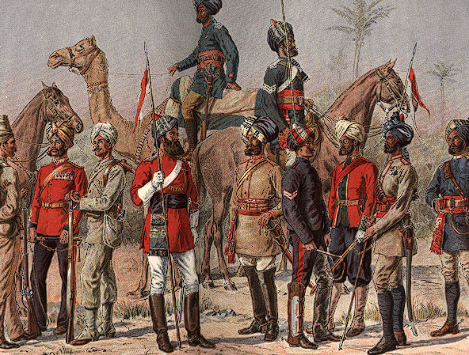
Tribal movements during the colonial era constitute a vital chapter in modern Indian history. Unlike the urban-led national movement, tribal uprisings were spontaneous, highly militant, and localized. They emerged as a direct response to the socio-economic transformations introduced by the British East India Company and the subsequent British Raj, which disrupted the centuries-old isolation and self-sustaining ecosystem of indigenous communities.
Classification of Tribal Movements
For systematic historical analysis, tribal movements are structurally classified into geographic zones and chronological phases.
Geographic Classification
Mainland Tribal Revolts
These occurred in Central India, Bihar, Jharkhand, Odisha, Madhya Pradesh, and the Western Ghats. They targeted the structural changes in land tenure, influx of non-tribal settlers, and the introduction of colonial administrative systems.
Frontier Tribal Revolts
These took place along the North-Eastern frontier borders (Assam, Manipur, Nagaland, Meghalaya). These movements were characterized by a strong political undertone aimed at defending regional autonomy against British territorial annexation, rather than issues solely related to agrarian revenue systems.
Chronological Phases
Phase I (1778–1860)
Coincided with the rise and expansion of the British East India Company. These revolts were typically led by traditional tribal elites whose administrative and economic privileges were dismantled.
Phase II (1860–1920)
Triggered primarily by intensive colonial exploitation, commercialization of forest resources, and the legislative reservation of tribal forests. Leadership shifted from traditional chiefs to charismatic, messianic figures who mobilized entire communities.
Phase III (1920–1947)
Marked by the integration of tribal grievances with the mainstream nationalist movements, such as the Non-Cooperation Movement and Civil Disobedience Movement, adopting broader socio-religious reform objectives.
Core Causes of Tribal Uprisings
Agrarian and Land Structural Changes
The introduction of the Permanent Settlement (1793) extended the zamindari system into tribal heartlands, transforming collective tribal lands into alienable private property. The customary joint-ownership system, such as the Khuntkatti system of the Mundas, was systematically replaced by individual land tenure, reducing landlords to tenants.
Influx of Dikus (Outsiders)
Colonial administration facilitated the migration of non-tribal traders, moneylenders (mahajans), and revenue farmers into tribal belts. These elements used high-interest debt traps to seize tribal lands, causing large-scale land alienation and forcing tribals into bonded labor (vethi).
Forest Legislation and Commercialization
The enactment of the Indian Forest Act of 1865 and the Indian Forest Act of 1878 established a state monopoly over forest tracts. Shifting cultivation (Jhum) and the collection of minor forest produce (timber, grazing grass, mahua) were criminalized, depriving the tribes of their primary livelihoods.
Socio-Religious and Cultural Interference
The legal protection granted to Christian missionaries allowed intensive proselytization in tribal areas. This, combined with the colonial ban on deep-seated traditional customs (such as the Meriah system or human sacrifice among the Khonds), created a collective psychological threat of cultural erasure.
Major Mainland Tribal Revolts
| Revolt & Timeline | Geographic Region | Key Leadership | Primary Causes & Distinct Outcomes |
| Pahariya Rebellion (1778) | Rajmahal Hills (Jharkhand/Bihar) | Raja Jagannath & Tilka Manjhi | Triggered by British encroachment on sacred hill territories. Led to the British ‘Pacification Policy’ creating Damin-i-Koh tracts. |
| Chuar Uprising (1766–1816) | Midnapore, Bankura (West Bengal) | Durjan Singh, Jagannath Singh | Against enhanced land revenue demands and economic distress caused by the Permanent Settlement. |
| Bhil Uprisings (1818–1831 & 1913) | Western Ghats, Khandesh, Rajasthan | Govind Guru (1913) | Against the East India Company’s occupation. Re-organized in 1913 via the Bhagat Movement for a sovereign Bhil Raj. |
| Kol Mutiny (1831–1832) | Chotanagpur (Ranchi, Singhbhum, Palamau) | Budho Bhagat, Joa Bhagat | Prompted by the transfer of tribal lands to Sikh and Muslim farmers. Suppressed via massive military deployment. |
| Khond Uprising (1837–1856) | Hilly tracts from Odisha to Andhra Pradesh | Chakra Bisoi | Sparked by British attempts to ban Meriah (human sacrifice) and the imposition of new transit taxes. |
| Santhal Hool (1855–1856) | Rajmahal Hills (Damin-i-Koh) | Sido Murmu, Kanhu Murmu, Chand, Bhairav | Armed resistance against Diku exploitation. Resulted in the creation of the Santhal Pargana via Act XXXVII of 1855. |
| Koya Revolt (1879–1880) | Eastern Godavari (Andhra Pradesh) | Tomma Sora, Raja Anantayyar | Against forest regulations, denial of toddy-tapping rights, and police atrocities. |
| Munda Ulgulan (1899–1900) | South of Ranchi (Jharkhand) | Birsa Munda (Dharti Aba) | Against destruction of the Khuntkatti land system. Directly forced the passage of the Chotanagpur Tenancy Act, 1908. |
| Tana Bhagat Movement (1914–1919) | Chotanagpur Region | Jatra Bhagat, Sibu Bhagat | Started as a socio-religious monotheistic reform among Oraon tribals, later integrated with Gandhian Satyagraha. |
| Rampa Rebellion (1922–1924) | Godavari Agency (Andhra Pradesh) | Alluri Sitarama Raju | Guerilla warfare resisting the Madras Forest Act, 1882 (Podu cultivation ban). |
Major Frontier Tribal Revolts
| Revolt & Timeline | Geographic Region | Key Leadership | Primary Causes & Distinct Outcomes |
| Ahom Revolt (1828–1833) | Assam | Gomdhar Konwar | Launched because the British failed to withdraw from Assam after the First Anglo-Burmese War. |
| Khasi Revolt (1829–1833) | Jaintia and Garo Hills (Meghalaya) | U Tirot Sing Syiem | Against British construction of a military road linking Brahmaputra valley with Sylhet through Khasi lands. |
| Singpho Rebellion (1830s–1843) | Assam / Arunachal Border | Chief Nirang Phidu | Armed assaults against British garrisons to stop the structural annexation of local oil and tea lands. |
| Kuki Revolt (1917–1919) | Manipur Hills | Tribal Clan Chiefs | Prompted by British policy forced-recruitment of tribals into the Labour Corps during World War I. |
| Naga Movement (1905–1931) | Manipur | Haiphou Jadonang, Rani Gaidinliu | Aimed at setting up an independent Naga Raj. Led to the formation of the Heraka cult; supported the Civil Disobedience Movement. |
Historical Outcomes and Legislative Impacts
Chotanagpur Tenancy Act (1908)
Enacted as a direct consequence of the Munda Ulgulan. It legally prohibited the sale and transfer of tribal land ownership to non-tribals (Dikus), providing institutional protection to indigenous land rights.
Santhal Parganas Tenancy Act (1876)
Following the Santhal Hool, the colonial administration carved out a distinct administrative zone called the Santhal Pargana. The act criminalized illegal land transfers and made it a non-transferable holding system.
Exclusion and Scheduled Districts Act (1874)
Recognizing that uniform British civil laws sparked tribal unrest, the colonial government passed the Scheduled Districts Act of 1874. This laid the legislative framework for treating tribal pockets as “Excluded” or “Partially Excluded” areas, a design that inspired the Fifth and Sixth Schedules of the Constitution of India.
Key Historical Trivia for Prelims
First Tribal Martyr
Baba Tilka Manjhi led the Tilka Manjhi Revolt (1784–1785) against British official Augustus Cleveland. Manjhi was executed by hanging in 1875 in Bhagalpur, making him the first recorded tribal freedom fighter to take up arms against the East India Company.
Title of Rani
Gaidinliu, a Naga spiritual leader who led the Heraka movement against British rule at the age of 13, was arrested in 1932. Jawaharlal Nehru met her in Shillong jail and gave her the title of “Rani” (Queen) for her courage.
Meaning of Ulgulan
The term Ulgulan literally translates to “The Great Tumult” or “The Great Rebellion” in the Mundari language, representing a total political and social overhaul.
The Concept of Jal, Jangal, Zameen
Coined during the tribal resistance in Central India by Gond leader Komaram Bheem, this slogan asserted that indigenous communities have sovereign rights over water, forests, and land.
Last Modified: June 13, 2026