
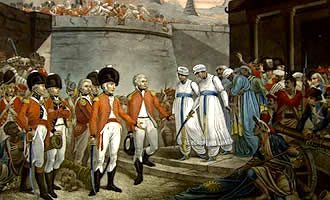

The Revolt of 1857, also known as the Sepoy Mutiny, marked turning point in Indian history. It was a response to British colonial rule. The Indian population, largely united by culture and religion, felt increasingly discontented. The Mughal Emperor symbolised a thread of unity among Indians. However, British disrespect towards the Emperor heightened tensions, particularly among Muslims.
Economic Exploitation
India’s economy was primarily agrarian, supplemented by small industries. British policies exploited Indian resources. Raw materials were exported to Britain, while local industries suffered. The “Doctrine of Lapse” led to the annexation of princely states, devastating local economies. Artisans lost their livelihoods, and poverty spread across the population.
Military Discontent
Indian soldiers, or sepoys, served in the British Army under poor conditions. Their salaries were low, ranging from Rs. 7 to Rs. 9. Discrimination against Indian soldiers encourageed resentment. The ratio of Indian soldiers to British officers was approximately 6:1. Many sepoys were from high-caste backgrounds, which intensified feelings of injustice.
Religious Sentiments
The British policies often disregarded Indian religious customs. The introduction of the Enfield rifle, with cartridges greased in animal fat, offended both Hindus and Muslims. This act ignited long-standing grievances. The British also attempted to undermine traditional practices, such as adoption and sati, causing further outrage.
Social Unrest
The British administration’s aggressive policies alienated various social classes. The abolition of certain customs and the seizure of religious grants angered many. Christian missionaries’ efforts to convert Indians created suspicion and resentment. The spread of Western education and culture was viewed with distrust, as it threatened traditional Indian values.
Immediate Causes of the Revolt
The immediate catalyst for the revolt was the introduction of the Enfield rifle and its cartridges. The greasing of these cartridges with cow and pig fat was particularly offensive. On 29 March 1857, sepoy Mangal Pandey fired the first shot of the rebellion in Bengal, sparking widespread unrest.
Unity in Diversity
The revolt saw participation from various social groups, including Hindus and Muslims. Zamindars, artisans, and soldiers united against British rule. Leaders like Bahadur Shah II, Rani Laxmibai, and Nana Sahib emerged, rallying diverse factions under a common cause. The call for unity transcended communal divides.
Key Leaders
Prominent figures in the revolt included:
- Bahadur Shah II
The last Mughal Emperor - Nana Sahib
Adopted son of the last Peshwa - Rani Laxmibai
Queen of Jhansi - Tantia Tope
Key military leader - Begum Hazrat Mahal
Leader in Oudh
These leaders played very important roles in mobilising support against British forces.
Spread of the Revolt
The revolt spread rapidly across North and Central India. Civil populations, displaced peasants, and discontented sepoys united against British oppression. Major uprisings occurred in Delhi, Kanpur, and Lucknow. Each region developed its own leaders and strategies.
British Response
The British response was brutal. They employed severe measures to suppress the revolt. Villages suspected of supporting the rebels were destroyed. Thousands of rebels were killed, and many more faced harsh reprisals. The British aimed to instil fear and restore control over the region.
Regional Variations
Not all regions supported the revolt. Some princely states, such as Punjab and Gujarat, remained loyal to the British. Wealthy landowners and certain sections of the educated elite sided with the British, fearing loss of power. This division complicated the rebellion.
The Role of Media
Indian newspapers played important role in shaping public opinion. Publications like “Sombad Probhakor” and “Sombad Bhaskar” critiqued the revolt. They often portrayed it as a movement driven by Muslim interests. This narrative brought into light communal divisions, impacting perceptions of the rebellion.
Aftermath of the Revolt
The revolt ultimately failed to overthrow British rule. However, it marked the end of the East India Company’s control. In 1858, the British Crown assumed direct control over India. The revolt brought into light the need for reform in British policies and governance.
Legacy of the Revolt
The Revolt of 1857 is often regarded as the first war of independence. It ignited a sense of nationalism among Indians. The sacrifices made during the revolt laid the groundwork for future movements against colonial rule. The call for unity and freedom resonated deeply within Indian society.
Nationalism and Independence
The ideas of freedom and unity encourageed during the revolt continued to inspire future generations. Nationalist leaders drew upon the legacy of 1857 in their struggles against British rule. The revolt’s spirit was reflected in subsequent movements, ultimately leading to India’s independence in 1947.


