Employment and unemployment are critical indicators of an economy's health, reflecting the utilization of human resources. In the Indian context, these concepts are analyzed through the lens of...
Human poverty shifts the focus from a lack of income to a lack of fundamental human capabilities. While Income Poverty is defined by a specific "poverty line" (expenditure...
Social justice in the Indian economic context refers to the equitable distribution of resources, opportunities, and privileges within society. It is the constitutional mandate of the State to...
Inclusive Growth is defined by the OECD and UNDP as economic growth that creates opportunities for all segments of the population and distributes the dividends of increased prosperity...
In the Indian economic discourse, inequality is analyzed through two distinct lenses: Income Inequality, which refers to the disparity in the flow of money (wages, interest, dividends) received...
Inequality in India is a multifaceted challenge, extending beyond simple income disparity to include wealth concentration, regional imbalances, and social stratification. According to the World Inequality Report 2024,...
Poverty alleviation in India has evolved from a "trickle-down" approach in the early planning years to direct targeted interventions. The strategies are broadly classified into three categories: Asset...
Poverty in the Indian context is defined by the inability of an individual to attain a minimum standard of living. While the Rangarajan Committee (2014) and Lakdawala Committee...
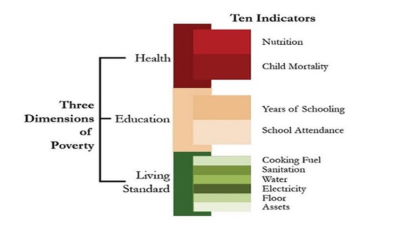
The Multidimensional Poverty Index (MPI) marks a paradigm shift from traditional income-based poverty estimation to a deprivation-based approach. It recognizes that poverty is not just a lack of...
In the Indian economy, the shift from calorie-based poverty estimation to a broader "standard of living" approach was spearheaded by two landmark committees: the Suresh Tendulkar Committee (2009)...