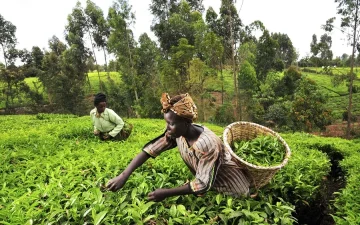
Income distribution refers to how the nation’s total Gross Domestic Product (GDP) is distributed among its population. In India, the structure of income distribution is characterized by a...
The urban-rural divide refers to the socio-economic disparity between urban centers and rural hinterlands. In India, this dualism is a defining characteristic of the economic structure, where the...
Regional imbalance refers to the wide disparity in economic development, per capita income, and social infrastructure across different geographical regions of India. Historically, the British "Drain of Wealth"...
Structural transformation refers to the long-term shift in the fundamental structure of an economy, typically characterized by the movement of labor and resources from low-productivity sectors (Agriculture) to...
The Indian economy is fundamentally characterized by a dualistic structure. The classification into organized and unorganized sectors is based primarily on the scale of operation, the nature of...
The Indian economy is characterized by a "dualistic" structure where a modern, regulated formal sector coexists with a massive, unregulated informal sector. In India, informality is not just...
Occupational structure refers to the distribution of the working population across different sectors of the economy, namely Primary, Secondary, and Tertiary. In the Indian context, the occupational structure...
At the time of independence in 1947, the Indian economy was predominantly agrarian, with agriculture contributing over 50% to the GDP. Over the decades, India experienced a structural...
The Indian economy is traditionally classified into three primary sectors based on the nature of economic activity: Primary (Agriculture and Allied), Secondary (Industry), and Tertiary (Services). While the...
Launched by the Prime Minister in January 2018, the Aspirational Districts Programme (ADP) is a flagship initiative aimed at transforming 112 of India's most under-developed districts. It represents...