
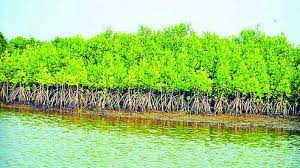
Mangroves, often referred to as the “green gold” of coastal ecosystems, are vital for the environment and communities they support. West Bengal, home to nearly 40% of India’s mangrove forests, has taken a significant step towards their conservation by establishing a dedicated ‘Mangrove Cell.’ This initiative comes as a much-needed boost to safeguard these unique habitats on the occasion of the International Day for the Conservation of the Mangrove Ecosystem.
What are Mangroves?
Mangroves are extraordinary coastal ecosystems found in tropical and subtropical regions across the globe. They thrive in intertidal zones, where land and sea meet, characterized by salt-tolerant, dense trees and plants. These habitats are typically found in sheltered coastal areas, lagoons, estuaries, and tidal flats, playing a crucial role in maintaining the balance of the ecosystem.
One remarkable aspect of mangroves is their ability to survive under extreme conditions, such as low oxygen levels. Their root system plays a vital role in this regard, as it absorbs oxygen from the atmosphere. Mangroves have special roots called pneumatophores or breathing roots, equipped with pores that facilitate the entry of oxygen into the underground tissues.
Moreover, mangroves are exceptional carbon sequesters. They can store carbon up to 400 per cent faster than land-based tropical rainforests, making them vital in the fight against climate change. Additionally, mangroves play a critical role in improving water quality by filtering pollutants and trapping sediments from the land, thus reducing coastal erosion.
Mangroves in India
India boasts a substantial share of the total mangrove cover in South Asia, contributing significantly to the global conservation of these ecosystems. According to the India State of Forest Report, 2021, the country’s total mangrove cover spans 4,992 square kilometers, accounting for 0.15 per cent of its total geographical area.
Among all Indian states, West Bengal stands out as the leader in mangrove cover, primarily due to the Sundarbans, the largest mangrove forest in the world. With the establishment of the ‘Mangrove Cell,’ the state reaffirms its commitment to preserving this valuable natural resource. Following West Bengal, other states like Gujarat and Andaman and Nicobar Islands also contribute significantly to India’s mangrove cover.
West Bengal’s Mangrove Cell Initiative
In recognition of the importance of mangroves, West Bengal Chief Minister announced the establishment of a ‘Mangrove Cell’ within the state. This dedicated platform aims to ensure continuity in the state government’s efforts towards mangrove management and conservation. With an annual action plan for mangrove plantation, the Cell will focus on the maintenance of existing mangrove areas and collaborate with non-governmental organizations (NGOs) to enhance conservation efforts.
The West Bengal Forest Department has already taken considerable strides in mangrove conservation. Between 2020 and 2021, they planted an impressive 15.56 crore mangrove saplings across approximately 10,398 acres of land. This massive plantation initiative highlights the state’s determination to protect and expand mangrove habitats.
Last Modified: February 22, 2024