
In January of this year, a contentious issue between India and Pakistan resurfaced as Pakistan unilaterally initiated arbitration proceedings at the Permanent Court of Arbitration (PCA) in The Hague, regarding the interpretation and application of the Indus Waters Treaty (IWT). India, however, raised objections to this move, asserting that the Court of Arbitration was not competent to address Pakistan’s concerns and that these questions should be resolved through a neutral expert process.
About Indus Waters Treaty
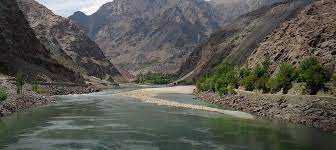
The Indus Waters Treaty, signed in 1960 between India and Pakistan with the mediation of the World Bank, remains a pivotal agreement governing the utilization of waters from the Indus River system. The treaty delineates the rights and responsibilities of both nations in regard to the use of these waters. Specifically, it grants India control over the three ‘eastern rivers’ – the Beas, Ravi, and Sutlej, while giving Pakistan control over the three ‘western rivers’ – the Indus, Chenab, and Jhelum. Additionally, the treaty permits India to employ the waters of the western rivers for limited irrigation and unrestricted non-consumptive purposes, including power generation, navigation, and fish culture, subject to detailed regulations.
India’s Decision to Modify IWT
In January, India publicly expressed its desire to amend the 62-year-old IWT with Pakistan, citing Pakistan’s perceived unwillingness to address disputes concerning the Kishanganga and Ratle hydropower projects, both situated in Jammu and Kashmir. These two hydroelectric projects have been a source of prolonged contention between the two nations. India invoked Article XII (3) of the IWT, which allows provisions of the treaty to be modified for specific purposes by mutual agreement between the governments.
Pakistan’s Decision to Approach Arbitration Court
Pakistan initiated arbitration proceedings at the PCA, seeking clarification on the IWT’s interpretation and application regarding certain design elements of the Kishanganga and Ratle hydroelectric projects. Pakistan’s concerns regarding these projects date back to 2006 and 2012, respectively, with claims that India’s plans do not align with the IWT.
India’s Objection to Arbitration
India vehemently objected to Pakistan’s unilateral approach to the PCA, contending that the Court of Arbitration was not competent to address Pakistan’s concerns. India argued that such questions should be resolved through the neutral expert process rather than arbitration.
Outcome of the Arbitration
In 2013, the Court of Arbitration (CoA) issued its final judgment, affirming that the Kishanganga hydroelectric project qualifies as a run-of-river dam. It acknowledged that India, under the IWT, had the right to divert water from the Kishanganga/Neelum river for power generation. However, the CoA specified that India must maintain a minimum flow of nine cusecs (cubic meters per second) in the Kishanganga/Neelum river.
Despite this resolution, the two countries failed to reach an amicable settlement on three other issues related to pondage and spillway configuration during subsequent talks between the Indus Water Commissioners. Consequently, Pakistan turned to the World Bank, accusing India of violating the IWT and the CoA’s verdict.
Rejection of India’s Objections to the Arbitration
On July 6, 2023, the PCA unanimously rejected India’s objections, asserting its competence to consider and determine the disputes raised in Pakistan’s Request for Arbitration. However, India chose not to participate in the PCA proceedings, arguing that it could not be compelled to engage in “illegal and parallel proceedings” not envisioned by the Treaty. India continued its participation in the neutral expert process.
Way Forward
The Indus Waters Treaty is often cited as a remarkable example of cooperation between two historically contentious neighbors. It has withstood the test of time, surviving several conflicts and periods of strained relations. The World Bank, being a signatory to the IWT, has the potential to facilitate transnational dialogue among epistemic communities, fostering convergence in state policies. Therefore, revisiting the IWT appears to be a necessary step.
- Addressing the Issue of Trust Deficit: Given the deep-seated mistrust between India and Pakistan, the prospect of Pakistan accepting India’s request to renegotiate IWT provisions is uncertain. Thus, any revision necessitates improved bilateral relations and trust.
- Involvement of Local Stakeholders: To address shared water issues effectively, it is imperative to involve local stakeholders. A joint group comprising technocrats, climate experts, water management professionals, and scientists from both countries could delve into the core of the problem.
- Recognizing Common Interests and Amendments: As the IWT was established over 60 years ago, it may require amendments to adapt to changes in the Indus River Basin region. Both countries must acknowledge their shared interest in the optimal development of the Indus Rivers System.
UPSC Mains Questions
- How has the historical context of conflict between India and Pakistan influenced their approaches to resolving water disputes under the Indus Waters Treaty?
- What role does the World Bank play in mediating disputes related to the Indus Waters Treaty, and how can it facilitate cooperation between the two nations?
- What are the potential implications of the Permanent Court of Arbitration’s rejection of India’s objections for future international dispute resolution mechanisms?