
India requires over $4.5 trillion infrastructure investment by 2030 to sustain economic growth aspirations and improve citizen quality of life. However, significant public funding constraints coupled with execution challenges has impacted infrastructure project delivery. To bridge the gap, India has actively adopted alternative models tapping private sector capital and efficiencies through public-private partnerships (PPP).
- Popular Public-Private Partnership (PPP) model for infrastructure projects
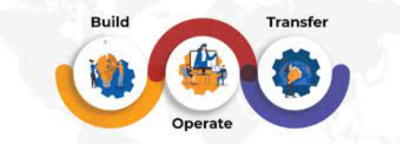
- Private entity builds, finances project, operates for period, transfers asset back to government
- Used globally across transport, power, telecom, oil and gas sectors
BOT in the Indian Context
India first adopted the Build-Operate-Transfer (BOT) framework in the 1990s as a radical policy shift to leverage private sector participation and bridge public infrastructure gaps which were constraining economic growth aspirations. With the government struggling to fund large-scale capital-intensive infra demands across power, transport and utilities via traditional public procurement models within tight fiscal constraints, BOT emerged as an innovative solution.
- Launched in 1990s to tap private sector expertise to develop infrastructure
- Major projects in roads, ports, airports, energy using BOT structure
- Estimated 10-15% of India’s infrastructure projects use BOT
Key Benefits of the BOT Approach
- Expedites project delivery by leveraging private capital and skills
- Optimizes life-cycle costs using private sector efficiencies
- Higher asset quality and tech leverage via private partners
Critical Aspects of Effective BOT Projects
As India expands BOT investments across transport, energy, water and communications sectors, it is vital to assimilate global best practices on critical planning, contracting, financing and technology deployment aspects. Robust project identification aligning with public priorities and having long-term viability ensures high asset utility and manageable risks.
Robust Project Identification and Planning
- Aligned with public needs and financial viability
- Balances risk sharing between partners
Water-tight Contractual Agreements
- Clearly defines roles, obligations, quality standards
- Performance linked payout metrics
- Dispute resolution mechanisms
Prudent Financial Engineering
- Ensures adequate project funding mix
- Debt payment aligned with revenue streams
- Lowers user charges through subsidies
Advanced Technology Adoption
- Design innovation, efficient engineering processes
- Smart operations, predictive analytics
- Energy optimization, automation
BOT Sectoral Performance
Over 25 years since its introduction, India’s build-operate-transfer (BOT) approach has seen relatively greater adoption in certain infrastructure sectors while facing limitations in others. Assessing this variance can reveal key enablers and barriers influencing BOT’s expansion.
Transport
- Roads, airports usage outpaced targets, ports playing catch-up
- EV infrastructure, regional airports emerging areas
Energy
- Renewables adoption expedited
- Gas pipeline completion lagging
Water Infrastructure
- Sewage treatment, desalination projects operational
- Rural drinking water needs concerted impetus
Telecom
- Digital connectivity towers installation successful
- Fiberization must leverage PPP models
Reforms to Unlock BOT’s Full Potential
While India has seen moderate adoption of the BOT model for infrastructure delivery, sub-optimal policy and regulatory ecosystems have inhibited it from unleashing the full potential of this public-private partnership approach. Aspects like bureaucratic delays in approvals, complex land acquisition processes, ad-hoc risk allocation and unbalanced contracts have marred bankability and private sector interest across infrastructure projects.
Streamlined Approvals
- Single window green clearances
- Land acquisition facilitation
Standardized Processes
- Model concession agreements by sector
- Online project lifecycle management
Financial Sustainability
- Monetization of mature assets
- Securitize user fee receivables
The BOT model offers immense opportunity to fast-track India’s infrastructure goals across transport networks, sustainable energy, drinking water connectivity, and digital public utilities to serve rising demand. As global best practices demonstrate, optimizing the policy ecosystem for private sector collaboration is pivotal to maximize BOT’s advantages.
Last Modified: February 10, 2024