
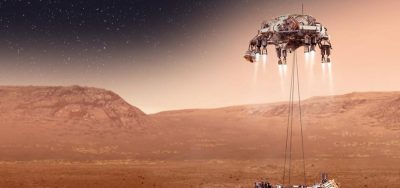
NASA has introduced the Mars Chopper, a successor to the Ingenuity helicopter. This new drone-like vehicle is designed for advanced exploration of Mars. It is upgrade from Ingenuity, which operated successfully for nearly three years. The Mars Chopper aims to enhance scientific capabilities on the Martian surface.
Design and Specifications
The Mars Chopper is approximately the size of an SUV. It features six rotors, each with six blades. This design is more compact than Ingenuity’s but allows for increased lift. The Chopper can carry a payload of five kilograms over distances of up to three kilometres. This capability enables it to transport scientific instruments for imaging and analysis.
Scientific Applications
The Mars Chopper will facilitate the study of large terrain areas. It can access regions that are hazardous for rovers. This drone will enable scientists to gather data more efficiently. The ability to cover extensive areas quickly is advantage for future missions.
Comparison with Ingenuity
Ingenuity was a lightweight helicopter, weighing 1.8 kilograms. It was designed for five flights but completed 72 over its operational period. The success of Ingenuity sets a high benchmark for the Mars Chopper. However, Ingenuity faced challenges, including a crash due to navigation system failures. The Chopper aims to avoid such issues with improved technology.
Challenges Ahead
Despite its advanced design, the Mars Chopper will encounter challenges. The Martian environment is unpredictable. The navigation system must effectively adapt to various terrains. NASA engineers have learned from Ingenuity’s experience to improve the Chopper’s functionality.
Future Prospects
The Mars Chopper is poised to revolutionise Martian exploration. Its enhanced capabilities will allow for more detailed studies of the planet’s surface. This technology could also be applicable to other celestial bodies with similar conditions. NASA is optimistic about the potential discoveries that the Chopper will enable.
Ongoing Contributions of Ingenuity
Even after its crash, Ingenuity continues to contribute valuable data. It transmits weather and avionics information to the Perseverance rover weekly. This ongoing communication is vital for future missions and helps refine exploration strategies.
Conclusion
NASA’s Mars Chopper represents leap in planetary exploration. Its advanced design and capabilities promise to expand our understanding of Mars. The lessons learned from Ingenuity will guide future innovations in space exploration technology.
Questions for UPSC:
- Critically analyse the impact of aerial drones on planetary exploration missions.
- What are the technological advancements in Mars exploration since the Ingenuity helicopter? Discuss their implications.
- Explain the challenges faced by robotic missions on Mars and how they can be mitigated.
- What is the role of payload capacity in the success of extraterrestrial exploration vehicles? How does it affect mission outcomes?
Answer Hints:
1. Critically analyse the impact of aerial drones on planetary exploration missions.
- Aerial drones enhance data collection capabilities, allowing for detailed terrain analysis.
- They can access hazardous regions that are unsafe for rovers, expanding exploration areas.
- Drones provide real-time data, improving decision-making during missions.
- They enable rapid surveys of large areas, increasing mission efficiency.
- The use of drones can reduce costs associated with ground-based exploration methods.
2. What are the technological advancements in Mars exploration since the Ingenuity helicopter? Discuss their implications.
- The Mars Chopper features improved rotor design for better lift and payload capacity.
- Enhanced navigation systems aim to prevent failures experienced by Ingenuity.
- Increased autonomy allows drones to operate in more complex terrains.
- Advanced imaging and analysis tools enable more detailed scientific research.
- These advancements could lead to discoveries about Mars’ geology and atmosphere.
3. Explain the challenges faced by robotic missions on Mars and how they can be mitigated.
- Robotic missions face unpredictable environmental conditions, such as dust storms.
- Navigation difficulties arise from complex terrain, requiring advanced sensors and algorithms.
- Communication delays with Earth necessitate increased autonomy for robots.
- Power supply issues can limit operational time; thus, solar technology improvements are essential.
- Learning from past missions, like Ingenuity, can inform better designs and strategies.
4. What is the role of payload capacity in the success of extraterrestrial exploration vehicles? How does it affect mission outcomes?
- Higher payload capacity allows for more scientific instruments to be carried, enhancing research capabilities.
- It enables the transportation of tools necessary for sample collection and analysis.
- Increased capacity can facilitate multi-purpose missions, improving overall mission efficiency.
- Payload flexibility can adapt to different mission objectives and terrains.
- Adequate payload capacity is crucial for achieving mission goals and maximizing data collection.