
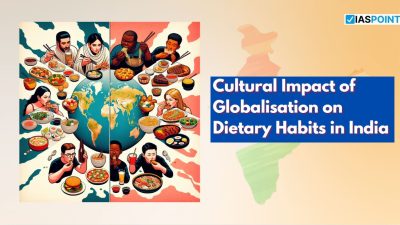
Definition of Dietary Habits
Dietary habits refer to the patterns of food consumption and preferences shaped by cultural, social, economic, and environmental factors. These habits play important role in determining health, nutrition, and cultural identity.
Traditional Indian Dietary Habits
India exhibits a rich diversity of dietary practices influenced by regional, religious, and cultural factors. Primary staples include rice, wheat, and millets, while pulses and legumes serve as protein sources. A considerable portion of the Indian population adheres to vegetarianism, largely due to religious beliefs, particularly Hinduism and Jainism. The use of spices such as turmeric, cumin, coriander, and chili is integral to Indian cuisine.
Impact of Globalisation on Dietary Habits
Globalisation has led to increased consumption of fast food and processed foods, including burgers and pizzas. Changing preferences have emerged, with a noticeable shift towards convenience foods and ready-to-eat meals, driven by urbanisation and busy lifestyles. This transformation has raised health concerns, as the prevalence of lifestyle diseases like obesity and diabetes has been linked to altered dietary patterns. Fusion cuisine has also gained popularity, blending traditional Indian foods with global cuisines, such as Indo-Chinese and Tex-Mex.
Economic Factors
Global supply chains have improved access to a variety of international foods, boosted by enhanced logistics and trade agreements. The food processing industry and retail sector have expanded, including the rise of supermarkets and online grocery shopping. Economic growth has increased disposable income, allowing for more diverse dietary choices among consumers.
Cultural Exchange and Dietary Habits
Migration has facilitated the exchange of culinary practices between the Indian diaspora and host countries. Global food festivals promote cross-cultural culinary experiences, while social media platforms like Instagram and YouTube popularise global food trends and recipes. These platforms have influenced dietary preferences among the Indian population.
Health and Nutrition
A nutritional transition has occurred, with a shift from traditional diets to Western diets leading to nutritional imbalances. Public health campaigns have been initiated to promote traditional diets and healthy eating habits. There is also a growing awareness and demand for organic foods and sustainable agricultural practices.
Regional Variations
Dietary habits in urban areas tend to adopt more globalised influences compared to rural areas, which often maintain traditional practices. Regional cuisines continue to be preserved amidst global influences, with distinct culinary identities such as South Indian, Punjabi, and Bengali cuisines.
Policy and Regulation
Food safety standards have been implemented to ensure quality in the face of globalisation. Various nutrition programmes, such as the Mid-Day Meal Scheme, aim to improve dietary habits among vulnerable populations, addressing nutritional deficiencies and promoting healthy eating.
Analytical Topics on Dietary Habits in Indian Society
Cultural resilience versus global influence examines how traditional dietary practices are preserved or transformed amidst globalisation. Health implications of dietary shifts focus on the rise of lifestyle diseases linked to changing diets and the effectiveness of public health initiatives. Economic disparities and food accessibility analyse how economic growth has affected dietary choices across socio-economic groups. The role of technology and social media investigates the influence of digital platforms on dietary habits and the adoption of global cuisines, impacting traditional cooking practices and community eating habits.
Questions for UPSC:
- Critically analyze the impact of globalization on traditional dietary practices in India, denoting the challenges and opportunities that arise from this cultural exchange.
- What are the health implications of the shift from traditional diets to Western dietary patterns in India? Discuss the role of public health initiatives in addressing lifestyle diseases.
- Explain the economic factors that influence food accessibility and dietary choices among different socio-economic groups in India amidst globalization.
- With suitable examples, analyze how technology and social media are shaping contemporary dietary trends and preferences in Indian society, and assess their impact on traditional cooking practices.
Answer Hints:
1. Critically analyze the impact of globalization on traditional dietary practices in India, denoting the challenges and opportunities that arise from this cultural exchange.
- Globalization has led to the introduction of diverse cuisines, enriching traditional diets.
- Challenges include the risk of cultural homogenization and loss of indigenous food practices.
- Opportunities arise from increased awareness of global dietary trends and fusion cuisine.
- Economic factors may favor processed foods over traditional, impacting local agriculture.
- Consumer preferences are shifting, leading to a blend of traditional and modern diets.
2. What are the health implications of the shift from traditional diets to Western dietary patterns in India? Discuss the role of public health initiatives in addressing lifestyle diseases.
- Western diets often lead to increased consumption of sugars and unhealthy fats, contributing to obesity.
- Traditional diets are generally more balanced and nutrient-rich compared to Western alternatives.
- Lifestyle diseases such as diabetes and hypertension are on the rise due to dietary shifts.
- Public health initiatives focus on promoting traditional diets and educating about healthy eating.
- Government programs aim to reduce lifestyle diseases through awareness campaigns and nutritional guidelines.
3. Explain the economic factors that influence food accessibility and dietary choices among different socio-economic groups in India amidst globalization.
- Income levels directly affect purchasing power and access to diverse food options.
- Urbanization increases availability of processed and imported foods, often at higher costs.
- Subsidies for certain crops can distort food prices, affecting dietary choices.
- Global supply chains can make some foods more accessible while marginalizing local produce.
- Education and awareness also play a key role in influencing dietary choices across socio-economic groups.
4. With suitable examples, analyze how technology and social media are shaping contemporary dietary trends and preferences in Indian society, and assess their impact on traditional cooking practices.
- Social media platforms promote food trends and viral recipes, influencing consumer choices.
- Technology enables access to global cuisines, encouraging experimentation in cooking.
- Home delivery apps have increased the popularity of restaurant-style meals over home cooking.
- Digital platforms provide a space for sharing traditional recipes, helping preserve them.
- However, reliance on convenience foods may lead to a decline in traditional cooking skills.