
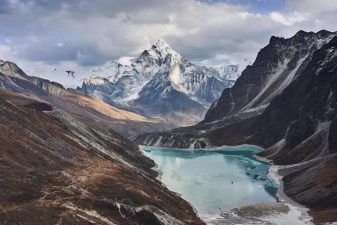
The Hindu Kush Himalaya (HKH) region is facing unprecedented glacier thinning due to climate change. A recent United Nations report marks that glaciers in this area are retreating 65 per cent faster from 2011 to 2020 than in the previous decade. The HKH region spans eight countries and is home to approximately 100,000 km² of glaciers, often referred to as the “Water Tower of Asia.” The glaciers are vital for over two billion people who depend on the water they provide.
Impact of Climate Change on Glaciers
The HKH glaciers are projected to lose 30-50 per cent of their volume by 2100 if global temperatures rise between 1.5°C and 2°C. If temperatures exceed 2°C, the loss could reach 45 per cent. This decline threatens freshwater supplies and increases the risk of natural disasters like Glacial Lake Outburst Floods (GLOFs).
Global Context of Glacier Loss
Globally, around 1.1 billion people live in mountainous regions. If temperatures rise between 1.5°C and 4°C, mountain glaciers worldwide may lose 26 to 41 per cent of their total mass by 2100. Changes in these glaciers affect global water resources and ecosystems.
Hydrological Changes and Natural Disasters
Warming trends are altering hydrological systems. Increased total runoff is expected in monsoon-dominated basins. However, the impacts vary by river basin. Glacier melt contributes to natural disasters such as flash floods and landslides, threatening human settlements and infrastructure. Since the 1990s, the number of glacial lakes has increased, raising the risk of GLOFs, which have already claimed thousands of lives.
Mountain Industries and Climate Change
Mountain-based industries, such as lithium mining and hydropower, are both contributors to and victims of climate change. For instance, lithium extraction requires water resources, stressing local communities. Unregulated hydropower development has led to river drying in places like Georgia. Climate change directly affects hydropower generation, complicating the relationship between energy needs and glacier health.
Governance Challenges in Mountain Regions
Water governance in mountainous areas is weaker than in lowland regions. The HKH suffers from a lack of effective transboundary cooperation, which hinders data sharing essential for disaster risk reduction. Mistrust among countries impedes collective action for sustainable water management.
Recommended Actions for Sustainability
The report outlines six key actions for the HKH region. These include encouraging cooperation at all levels, prioritising local needs, and taking concerted climate action to limit global warming. It also stresses the importance of enhancing ecosystem resilience, improving data sharing, and increasing funding for mountain communities.
Questions for UPSC:
- Critically analyse the impact of climate change on freshwater resources in the Hindu Kush Himalaya region.
- Estimate the potential consequences of glacier melt on agricultural practices in downstream communities.
- Point out the relationship between hydropower development and environmental sustainability in mountainous regions.
- What are the governance challenges in managing transboundary water resources? How can these be addressed effectively?
Answer Hints:
1. Critically analyse the impact of climate change on freshwater resources in the Hindu Kush Himalaya region.
- Glaciers in the HKH region are retreating rapidly, threatening freshwater supplies.
- Projected glacier volume loss of 30-50% by 2100 due to rising temperatures.
- Over two billion people depend on rivers fed by HKH glaciers for drinking and agriculture.
- Altered hydrological systems could lead to increased runoff and changes in water availability.
- Natural disasters like GLOFs further threaten water resources and human settlements.
2. Estimate the potential consequences of glacier melt on agricultural practices in downstream communities.
- Glacier melt provides critical irrigation water for agriculture in downstream regions.
- Reduced glacier volume may lead to water shortages, impacting crop yields.
- Increased frequency of floods and landslides can damage agricultural infrastructure.
- Changing water availability may necessitate shifts in planting seasons and crop types.
- Food security for millions could be jeopardized due to these water-related challenges.
3. Point out the relationship between hydropower development and environmental sustainability in mountainous regions.
- Hydropower is a major industry in mountainous regions, but often leads to ecological stress.
- Excessive water extraction for hydropower can deplete river systems and harm local ecosystems.
- Climate change impacts hydropower generation through altered precipitation and glacier melt.
- Unregulated hydropower projects can lead to environmental degradation, such as river drying.
- Balancing energy needs with environmental sustainability is crucial for long-term viability.
4. What are the governance challenges in managing transboundary water resources? How can these be addressed effectively?
- Lack of effective transboundary cooperation limits data sharing and joint management efforts.
- Mistrust among riparian countries hampers collaborative water resource management.
- Weak governance structures in mountainous regions complicate effective water management.
- Establishing agreements for data sharing and joint disaster risk reduction is essential.
- Incentives for local communities and prioritizing their needs can encourage cooperation.