
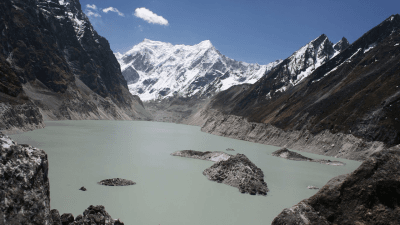
Glaciers are one of the most magnificent natural phenomena on earth, and their significance in regulating the planet’s climate cannot be overstated. However, as global temperatures rise, glaciers are melting faster than ever, causing a host of problems. One such problem is the formation of glacial lakes, which are dammed by glaciers and can cause catastrophic flooding if they burst. This phenomenon is known as a glacial lake outburst flood (GLOF).
What Causes Glacial Lake Outburst Floods?
As glaciers melt, they produce large amounts of meltwater. This water can collect behind natural or artificial dams, such as moraines or ice dams, forming glacial lakes. These lakes are held back by the dams, which are often made of ice, and can be very unstable. As a result, they can burst suddenly, releasing vast amounts of water into downstream areas. These floods can be extremely dangerous, destroying homes, infrastructure, and even entire communities.
The Threat of GLOFs
According to a study titled ‘Glacial lake outburst floods threaten millions globally,’ around 15 million people around the world are vulnerable to GLOFs. More than half of the vulnerable population live in India, Pakistan, Peru, and China. These countries are particularly vulnerable because they have high levels of poverty, poor infrastructure, and limited resources to deal with natural disasters.
In recent years, there have been several devastating GLOFs around the world. In 2018, a GLOF in the Indian state of Uttarakhand caused massive flooding, killing hundreds of people and causing widespread damage to infrastructure. In 2020, a similar flood occurred in Pakistan, killing several people and destroying homes and infrastructure.
Preventing GLOFs
Preventing GLOFs is a complex task that requires cooperation between governments, local communities, and scientists. One of the most effective ways to prevent GLOFs is to monitor the glacial lakes and to ensure that they are drained before they become too large. This can be done using satellite imagery and other monitoring techniques.
Another way to prevent GLOFs is to strengthen the natural or artificial dams that hold back the glacial lakes. This can be done by reinforcing the dams with rocks, concrete, or other materials, or by building new dams that can withstand the pressure of the water.
Last Modified: February 20, 2024