
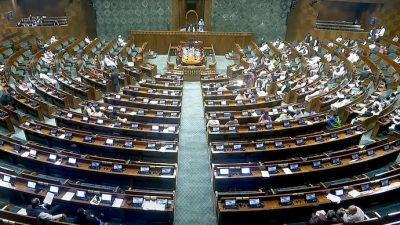
The ongoing debate over delimitation in India has intensified, particularly among the southern States. The Joint Action Committee, representing these States, has urged the Central Government to either delay the delimitation process by 25 years or remove population as a criterion. This demand stems from fears that using population growth as a basis for delimitation will diminish the political influence of the southern States, which have actively pursued family planning initiatives.
About Delimitation
Delimitation refers to the process of redrawing boundaries for electoral constituencies. This is crucial for ensuring fair representation in legislative bodies. In India, delimitation is governed by Article 81(2)(a) of the Constitution, which mandates that the allocation of Lok Sabha seats be proportional to each State’s population.
Current Context of Delimitation
The last delimitation exercise occurred in 1973, freezing the number of Lok Sabha seats at 543. The Centre is considering increasing this number to 753 based on state-wise population growth. This proposal has raised concerns among southern States, which fear losing political power.
Implications for Southern States
Southern States like Tamil Nadu and Kerala have successfully controlled their population growth. If the Centre uses population growth as the primary criterion, these States may lose representation. The anticipated increase in seats for populous States like Uttar Pradesh and Bihar further exacerbates these fears.
Arguments for Delaying Delimitation
The Joint Action Committee argues that delaying delimitation is preferable. However, they acknowledge that this could lead to similar issues in the future. A delay does not guarantee that population growth will stabilise across States.
Alternative Approaches to Delimitation
The Decadal Growth Average (DGA) formula is proposed as a more equitable alternative. This method averages population growth rates over five decades, ensuring that States with effective population control are not penalised. The DGA would allow for a reasonable increase in Lok Sabha seats without disproportionately favouring populous States.
Challenges in Implementation
Amending Article 81(2)(a) to accommodate the DGA could protect the interests of all States. However, such changes may face political resistance. Additionally, geographical disparities must be considered, as they impact the ability of MPs to serve their constituencies effectively.
Future of Delimitation
Adopting the DGA formula could lead to a more balanced representation in the Lok Sabha. This approach aligns with the principles of federalism and could prevent disputes in future delimitation exercises. The need for a fair and transparent process is critical in maintaining political stability.
Questions for UPSC:
- Discuss the significance of delimitation in ensuring fair representation in a democracy.
- Critically examine the implications of using population growth as a sole criterion for delimitation in India.
- Explain the Decadal Growth Average formula and its potential benefits for the delimitation process.
- Comment on the challenges faced by Members of Parliament in representing their constituencies effectively, considering geographical disparities.
Answer Hints:
1. Discuss the significance of delimitation in ensuring fair representation in a democracy.
- Delimitation redraws electoral boundaries to reflect population changes and ensure equal representation.
- It prevents over-representation of certain areas and maintains the principle of “one person, one vote.”
- Regular delimitation helps adapt to demographic shifts and social changes over time.
- It enhances accountability by ensuring that elected representatives accurately reflect their constituents’ needs.
- Delimitation is essential for maintaining the legitimacy of the electoral process and public trust in democracy.
2. Critically examine the implications of using population growth as a sole criterion for delimitation in India.
- Using population growth may disadvantage States with successful family planning, reducing their political power.
- It risks creating disparities, favoring populous States while marginalizing those with controlled growth.
- Population growth is influenced by various factors, leading to inconsistencies across States.
- It could exacerbate regional tensions and feelings of neglect among underrepresented areas.
- This approach may overlook other important factors like economic development and social progress.
3. Explain the Decadal Growth Average formula and its potential benefits for the delimitation process.
- The Decadal Growth Average (DGA) calculates average population growth over five decades, providing a balanced approach.
- DGA prevents penalization of States that have successfully controlled their population growth.
- It promotes equitable seat allocation across all States, ensuring fair representation.
- The formula reduces the risk of disputes by applying a uniform growth rate across regions.
- Implementing DGA could lead to a more stable and fair political landscape in future delimitations.
4. Comment on the challenges faced by Members of Parliament in representing their constituencies effectively, considering geographical disparities.
- Geographical disparities can hinder MPs’ accessibility to constituents, especially in remote areas.
- Varied population densities complicate the representation, with some MPs managing larger populations than others.
- Infrastructure issues in rural or isolated regions can impede effective communication and service delivery.
- MPs in geographically challenging constituencies may struggle to meet the needs of diverse populations.
- Addressing these challenges requires a tailored approach to constituency management and resource allocation.