
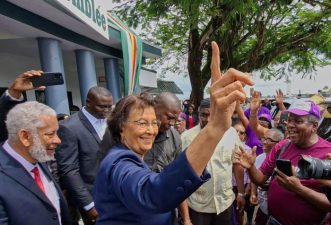
Suriname’s Parliament elected Jennifer Geerlings-Simons as the country’s first female President on 6 July 2025. The physician and politician won unopposed after her party formed a coalition to replace the incumbent government. This change comes as Suriname prepares to benefit from major offshore oil discoveries expected to boost its economy from 2028.
Election and Political Context
Geerlings-Simons was chosen by the National Assembly, which requires a two-thirds majority for presidential elections. Her National Democratic Party led a coalition following a May 2025 election that produced no clear winner. The coalition aimed to remove President Chandrikapersad Santokhi, whose term was marked by corruption scandals and economic difficulties.
Economic Background and Challenges
Santokhi’s government sought help from the International Monetary Fund to stabilise Suriname’s fragile economy. Public debt was restructured and subsidies cut, leading to austerity measures that caused public unrest. Despite macroeconomic improvements, the population suffered from reduced government support and rising social tension.
Geerlings-Simons’ Priorities
The new President, aged 71, has pledged to stabilise public finances and improve state revenue. She plans to enhance tax collection, including in the small-scale gold mining sector, part of Suriname’s informal economy. Her running mate Gregory Rusland supports these fiscal reforms to prepare for the country’s oil wealth.
Oil Discovery and Future Prospects
Suriname discovered large offshore oil reserves, with production expected by 2028. This resource promises a major boost to the economy but also presents challenges. The government must manage incoming wealth carefully to avoid the resource curse and ensure sustainable development.
Debt and Financial Constraints
Suriname faces an annual debt repayment of about $400 million. Although the previous government rescheduled debts, this only delayed payments. Experts warn Geerlings-Simons will have to address these financial burdens before oil revenues arrive. Balancing debt servicing with investment in public welfare will be critical.
Significance of Female Leadership
Jennifer Geerlings-Simons is the first woman to hold the presidency in Suriname. She acknowledges the added responsibility this brings. Her leadership marks a historic moment for gender representation in the country’s politics and may inspire greater inclusion in governance.
Questions for UPSC:
- Taking example of Suriname, discuss the challenges and opportunities faced by resource-rich developing countries in managing newly discovered natural wealth.
- Examine the role of international financial institutions like the International Monetary Fund in stabilising economies of small developing nations. Discuss in the light of Suriname’s recent economic crisis.
- Analyse the impact of political coalition governments on policy stability and economic reforms with suitable examples from South America and beyond.
- Critically discuss the significance of women’s leadership in political transitions and economic governance. How does gender representation influence policy outcomes in developing countries?
Answer Hints:
1. Taking example of Suriname, discuss the challenges and opportunities faced by resource-rich developing countries in managing newly discovered natural wealth.
- Resource wealth can boost economic growth but risks creating dependency (resource curse).
- Challenges include managing volatile commodity prices and avoiding corruption and mismanagement.
- Need for strong institutions to ensure transparent and equitable distribution of wealth.
- Opportunity to invest in infrastructure, social services, and diversify economy before resource depletion.
- Risks of inflation and Dutch disease affecting other economic sectors.
- Suriname’s offshore oil discovery offers future revenue but requires prudent fiscal policies and debt management.
2. Examine the role of international financial institutions like the International Monetary Fund in stabilising economies of small developing nations. Discuss in the light of Suriname’s recent economic crisis.
- IMF provides financial support and policy advice to stabilize macroeconomic imbalances.
- In Suriname, IMF assistance helped restructure public debt and restore fiscal discipline.
- Austerity measures often accompany IMF programs, which can cause social unrest and political challenges.
- IMF’s conditionality aims to improve tax collection, reduce subsidies, and promote economic reforms.
- Long-term success depends on domestic political will and capacity to implement reforms.
- IMF role is crucial but sometimes controversial due to impact on vulnerable populations.
3. Analyse the impact of political coalition governments on policy stability and economic reforms with suitable examples from South America and beyond.
- Coalitions can enhance political inclusivity but may lead to fragile or unstable governments.
- Policy compromises in coalitions can delay or dilute economic reforms.
- In Suriname, coalition formed to oust incumbent amid corruption and economic crisis.
- Examples – Brazil’s coalition governments faced challenges in reform implementation; Chile’s coalitions balanced social demands with economic policies.
- Coalitions can bring diverse perspectives but require strong leadership to maintain coherence.
- Effective coalitions may stabilize governance but risk policy inconsistency if partners have conflicting agendas.
4. Critically discuss the significance of women’s leadership in political transitions and economic governance. How does gender representation influence policy outcomes in developing countries?
- Women leaders often bring inclusive and participatory governance styles.
- Increased gender representation can prioritize social welfare, education, and health policies.
- Women’s leadership challenges traditional power structures and promotes gender equality.
- Suriname’s first female president symbolizes progress and may inspire broader political participation.
- Studies show women in leadership improve transparency and reduce corruption.
- However, impact depends on institutional support and societal attitudes toward gender roles.