
Haryana officially notified its definition of “forest” following Supreme Court instructions. This move aims to clarify forest boundaries for legal and environmental governance. However, the definition has sparked debate over its ecological impact, especially on the Aravalli ridge. The state’s approach reflects judicial precedents but raises concerns among environmentalists about potential exclusion of sensitive forest areas.
Haryana’s Official Forest Definition
Haryana’s Environment, Forest and Wildlife department stated that a forest must cover at least five hectares if isolated, or two hectares if contiguous with government notified forests. It also requires a minimum canopy density of 40%. Linear plantations and orchards outside notified forests are excluded. This definition intends to align with dictionary meanings and Supreme Court rulings but sets a relatively high threshold.
Supreme Court’s Role and Directives
The Supreme Court mandated all states and Union Territories to define “forest” and conduct surveys to identify forest lands. The court ordered expert committees to map forest-like, unclassified, and community forest lands using GIS-based data. This directive follows the 2011 Lafarge Umiam Mining guidelines and aims to ensure uniform forest classification and protection under the Forest (Conservation) Act, 1980 (FCA).
Background – The Godavarman Judgment and FCA
The 1996 Godavarman Thirumulpad case expanded the definition of forests under FCA to include all forested land regardless of size or status. This ruling broadened forest protection but complicated developmental activities. The 2023 FCA amendment narrowed FCA’s scope to notified forests and lands recorded as forest in official documents. This amendment faced legal challenges for diluting forest protections.
Controversy Over Haryana’s Definition
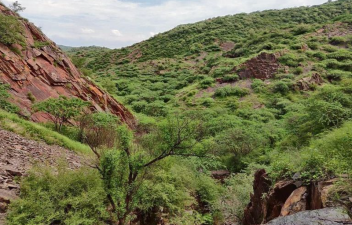
Environmentalists argue Haryana’s canopy density threshold of 40% is too high for dry regions like the Aravalli ridge. The ridge’s thorny, scrub vegetation adapted to low rainfall often falls below this threshold. Critics say this excludes many ecologically sensitive areas from protection. The minimum area criteria of 2 and 5 hectares are also contested as excessive for Haryana’s dry landscape.
Implications for Forest Conservation and Development
Haryana’s definition enables state committees to proceed with forest surveys, crucial for enforcing FCA protections. However, the narrow criteria may leave vulnerable forest patches unprotected, risking illegal mining and real estate encroachment. The Supreme Court continues to review these issues, balancing conservation with developmental needs.
Ongoing Legal and Administrative Developments
The Supreme Court’s next hearing on the FCA amendment and forest definitions is scheduled for September 2025. States are required to submit detailed forest mapping reports to the Centre. Non-compliance may result in personal accountability for officials. This process marks the evolving legal framework governing forest conservation in India.
Questions for UPSC:
- Critically analyse the impact of the Forest (Conservation) Act, 1980 on forest governance and environmental protection in India with suitable examples.
- Explain the significance of the Godavarman Thirumulpad case in expanding the legal definition of forests and its implications on land use policies.
- What are the challenges in balancing forest conservation and developmental needs in ecologically sensitive regions? Discuss with reference to recent legislative amendments.
- Comment on the role of judicial interventions in environmental governance in India. How do Supreme Court directives influence state policies on forest management?
Answer Hints:
1. Critically analyse the impact of the Forest (Conservation) Act, 1980 on forest governance and environmental protection in India with suitable examples.
- FCA restricts diversion of forest land for non-forest purposes without Centre’s prior approval, ensuring centralized oversight.
- It has helped curb rampant deforestation and illegal land use changes, protecting biodiversity hotspots.
- Example – Protection of reserved and protected forests under FCA has prevented large-scale mining and industrial projects in ecologically sensitive zones.
- However, FCA’s broad scope sometimes delays developmental projects, causing conflicts with local needs, e.g., infrastructure or tribal welfare works.
- Recent amendments narrowed FCA’s applicability, raising concerns over dilution of forest protection and governance challenges.
- Overall, FCA remains a key legal tool balancing conservation with regulated development in India’s forest governance framework.
2. Explain the significance of the Godavarman Thirumulpad case in expanding the legal definition of forests and its implications on land use policies.
- The 1996 Godavarman judgment defined ‘forest’ by dictionary meaning, covering all forested lands regardless of size, status, or ownership.
- This broadened the scope of FCA, bringing more lands under forest conservation laws, preventing dereservation and unauthorized diversion.
- It recognized ecological importance beyond notified forests, including community and unclassified forest lands.
- Implications – Stricter scrutiny on land use changes, affecting mining, real estate, and infrastructure projects on forest lands.
- It empowered judicial activism in environmental governance, influencing subsequent forest protection policies and enforcement.
- The ruling also led to challenges balancing conservation with developmental and tribal welfare activities.
3. What are the challenges in balancing forest conservation and developmental needs in ecologically sensitive regions? Discuss with reference to recent legislative amendments.
- Ecologically sensitive areas like Aravalli have unique vegetation adapted to harsh conditions, often excluded by rigid definitions (e.g., canopy density thresholds).
- Developmental needs (infrastructure, mining, housing) often conflict with conservation, causing legal and administrative dilemmas.
- Recent FCA amendments narrow forest definitions to notified forests and recorded lands, potentially excluding important forest-like areas.
- High thresholds for forest area and canopy density can exclude degraded or scrub forests, risking loss of biodiversity and ecosystem services.
- Ensuring tribal welfare and local development (e.g., sanitation, schools) while maintaining forest protections is a persistent challenge.
- Effective balancing requires nuanced definitions, participatory governance, and scientific mapping to protect sensitive zones without stifling sustainable development.
4. Comment on the role of judicial interventions in environmental governance in India. How do Supreme Court directives influence state policies on forest management?
- Judicial interventions have expanded environmental jurisprudence, enforcing stricter conservation norms and accountability (e.g., Godavarman case).
- Supreme Court directives mandate states to define forests, conduct GIS-based surveys, and submit reports, standardizing forest governance.
- Courts hold state officials personally accountable for non-compliance, increasing enforcement rigor.
- Judicial activism balances environmental protection with development, often filling policy and implementation gaps.
- State policies, like Haryana’s forest definition, are shaped to align with judicial expectations but may face criticism for ecological adequacy.
- Overall, judiciary acts as a watchdog and catalyst for progressive environmental governance in India.