
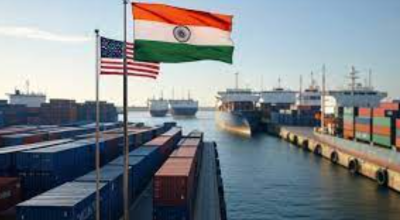
India is set to become the world’s second-largest economy by 2038 in purchasing power parity (PPP) terms. This forecast emerges despite the recent imposition of 50% tariffs by the United States on Indian exports. The August 2025 EY Economy Watch report marks India’s resilience and growth potential amid global economic uncertainties and trade tensions.
India’s Projected Economic Growth
India’s GDP is expected to reach $34.2 trillion by 2038 in PPP terms. The country’s economy is forecast to grow steadily, supported by favourable demographics and strong economic fundamentals. The International Monetary Fund (IMF) projects India’s economy could reach $20.7 trillion by 2030. This growth trajectory places India ahead of Germany and Japan, and second only to China in the global ranking.
Key Drivers of India’s Economic Strength
India benefits from a youthful population with a median age of 28.8 years in 2025. High savings and investment rates fuel capital formation. Fiscal consolidation efforts are reducing government debt from 81.3% of GDP in 2024 to an estimated 75.8% by 2030. Structural reforms like the Goods and Services Tax (GST), Insolvency and Bankruptcy Code (IBC), and financial inclusion initiatives such as the Unified Payments Interface (UPI) enhance economic competitiveness.
Impact of US Tariffs on Indian Economy
The United States imposed 50% tariffs on Indian goods, targeting nearly 0.9% of India’s GDP. The tariffs respond to India’s continued purchase of Russian oil despite global sanctions. Although these tariffs pose challenges, EY estimates the impact on India’s GDP growth will be limited to 0.1 percentage points if India pursues export diversification, strengthens domestic demand, and expands trade partnerships.
Comparative Global Economic Context
China, projected to reach $42.2 trillion GDP by 2030, faces challenges from an ageing population and rising debt. The US economy remains strong but is burdened by debt exceeding 120% of GDP and slowing growth. Germany and Japan have advanced economies but contend with ageing populations and heavy reliance on global trade. India’s youthful demographics and sustainable fiscal outlook provide a distinct advantage in long-term growth potential.
Technological and Infrastructure Advances
India’s public investment in infrastructure and focus on emerging technologies like artificial intelligence, semiconductors, and renewable energy are building economic resilience. Production-linked incentives are boosting industrial competitiveness. These factors position India to advance towards its developmental goals, including the vision of Viksit Bharat by 2047.
Questions for UPSC:
- Discuss in the light of India’s demographic dividend how it can influence economic growth and social development over the next two decades.
- Critically examine the impact of international trade tariffs on emerging economies with reference to India and the United States.
- Explain the role of fiscal consolidation and structural reforms in strengthening India’s economic sustainability and global competitiveness.
- With suitable examples, discuss how advancements in technology and infrastructure can enhance economic resilience in developing countries like India.