
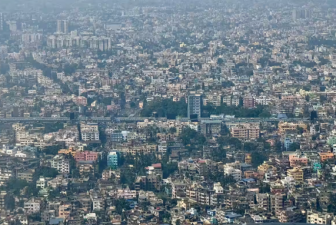
Kerala’s urban landscape is rapidly evolving. By 2025, the State faces accelerated urbanisation, climate risks, and governance challenges. The Kerala Urban Policy Commission (KUPC), launched in December 2023, addresses these issues with a 25-year visionary roadmap. The Commission’s report, submitted in March 2025, proposes a structural reset of urban planning, governance, finance, and climate resilience.
Context and Necessity of KUPC
Kerala is urbanising faster than the national average, with projections of over 80% urban population by 2050. This growth threatens the delicate rurban fabric where villages and towns merge. Simultaneously, climate hazards like floods, landslides, and coastal erosion intensify. The existing planning models were reactive and insufficient. The State government formed KUPC to create a tailored, systemic urban strategy, marking India’s first State-level urban commission.
Commission’s Approach and Methodology
KUPC conducted 33 detailed studies on land use, water systems, finance, and civic health. It engaged 53 district-level dialogues with diverse stakeholders including mayors, NGOs, unions, and resident groups. The final 2,359-page report integrates data from Census, satellite imagery, and real-time environmental sensors with local narratives. This fusion of quantitative and qualitative inputs ensures grounded and inclusive policy recommendations.
Key Recommendations
– Climate and Risk-Aware Zoning – Urban planning must integrate hazard maps for floods, landslides, and coastal threats to enable proactive measures. – Digital Data Observatory – Establish a real-time data centre at Kerala Institute of Local Administration using LIDAR, ground-penetrating radar, tide gauges, and weather data for municipal intelligence. – Green Fees and Climate Insurance – Levy environmental charges on eco-sensitive projects to fund resilience. Introduce parametric insurance for swift disaster payouts. – Municipal and Pooled Bonds – Larger cities to issue municipal bonds; smaller towns to use pooled financial instruments, enhancing fiscal autonomy. – Governance Overhaul – Replace bureaucratic inertia with city cabinets led by elected mayors. Create specialist municipal cells and recruit youth tech talent through the Jnanashree programme. – Place-Based Economic Revival – Promote regional strengths such as FinTech in Thrissur-Kochi and literature in Kozhikode. Designate Palakkad and Kasaragod as smart-industrial zones. – Commons, Culture, and Care – Restore wetlands, waterways, and heritage zones. Form city health councils to support migrants, students, and gig workers.
Innovations and Uniqueness
KUPC’s distinctiveness lies in integrating lived experiences with advanced data systems. Community stories of fishermen, youth water conservation efforts, and market vendor challenges feed into digital platforms. This co-production model replaces top-down planning with a dynamic urban intelligence system. Climate resilience is embedded across all policy pillars. Fiscal empowerment through green levies and bonds enhances local governance capacity. The report redefines governance via elected city cabinets supported by youth technocrats, breaking silos across planning, finance, and administration.
Implications for Other States
Kerala’s model offers valuable lessons – time-bound commissions with broad stakeholder engagement; combining technical data and community narratives; empowering local bodies financially; and involving youth specialists in governance. This approach can inspire other states to adopt systemic, climate-aware, and inclusive urban policies.
Questions for UPSC:
- Critically discuss the role of State-level urban commissions in decentralising urban governance in India, taking the Kerala Urban Policy Commission as an example.
- Analyse the impact of climate change on urban planning in coastal States. How can risk-aware zoning mitigate these effects?
- Examine the significance of integrating community narratives with data-driven governance for sustainable urban development in India.
- With suitable examples, discuss the potential of municipal bonds and green levies in empowering local bodies financially and promoting climate resilience.