
Recent research from the University of Cincinnati has solved a long-standing puzzle in biology and engineering. Scientists struggled to explain how insects and hummingbirds hover steadily despite their small brains and the limits of classical aerodynamics. The study shows that hovering flight is controlled by a simple, real-time feedback system called extremum-seeking (ES). This discovery clarifies how stable hovering can occur without complex computations or detailed aerodynamic models.
Background of Hovering Flight
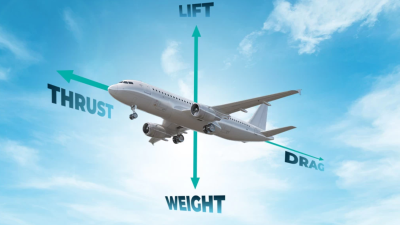
Hovering means staying nearly motionless in the air. It is challenging because the lift force must exactly balance weight. Traditional theories said this balance is unstable and hard to maintain. Insects and hummingbirds flap wings in nonlinear and complex ways. Past models and simulations were accurate but slow. They could not explain how real animals react in milliseconds. Insects rely heavily on sensory feedback like vision and airflow sensing, but their brains are tiny with limited processing power.
Extremum-Seeking Feedback System
The new study proposes hovering works as an extremum-seeking feedback loop. This system uses trial and error to find the best wing-flapping pattern. The insect makes small changes in wing motion and senses the effect on stability. If stability improves, it continues in that direction. If not, it reverses changes. This simple feedback lets the insect find the sweet spot for hovering without knowing detailed physics or using heavy computation.
Verification Through Simulations
Researchers simulated hovering in various species including hawkmoths, craneflies, bumblebees, dragonflies, hoverflies, and hummingbirds. The ES control system maintained constant altitude in all cases. It worked across different sizes and wingbeat frequencies. The predicted wing-flapping amplitudes matched real-world measurements. This confirmed that the simple feedback rule can explain stable hovering flight across diverse species.
Implications for Biology and Engineering
The findings suggest that small flyers do not require complex neural control to hover. Stability can emerge from basic feedback mechanisms. For biologists, it clarifies how minimal brain power achieves flight control. For engineers, it opens new avenues to design bio-inspired drones. These drones could hover stably using simple control rules without heavy sensors or complex algorithms. This may reduce cost and increase efficiency in aerial robotics.
Questions for UPSC:
- Point out the role of sensory feedback in animal locomotion and its significance in the evolution of nervous systems.
- Critically analyse the impact of biomimicry in modern engineering with suitable examples from aerospace technology.
- Estimate the challenges and opportunities in developing autonomous drones for disaster management and environmental monitoring.
- What is extremum-seeking control? How does it differ from traditional control systems in robotics and biological applications?
Answer Hints:
1. Point out the role of sensory feedback in animal locomotion and its significance in the evolution of nervous systems.
- Sensory feedback enables real-time adjustments in movement, ensuring balance and coordination during locomotion.
- It integrates inputs from vision, proprioception, airflow sensors, and balance organs to correct motion errors.
- Insects use limited neural resources efficiently by relying on simple feedback loops rather than complex computations.
- This feedback mechanism enhances survival by improving stability and adaptability in dynamic environments.
- The evolution of nervous systems favored efficient sensory-motor integration to optimize locomotion with minimal energy and processing power.
- Sensory feedback systems laid the foundation for more complex neural circuits, enabling advanced motor control in higher animals.
2. Critically analyse the impact of biomimicry in modern engineering with suitable examples from aerospace technology.
- Biomimicry inspires design solutions by emulating nature’s efficient structures and control mechanisms.
- Examples include flapping-wing drones modeled on insect and bird flight for enhanced maneuverability and energy efficiency.
- The extremum-seeking feedback concept from insect hovering informs simple, robust control systems in aerial robotics.
- Biomimetic materials, like sharkskin-inspired surfaces, reduce drag and improve aerodynamic performance.
- Challenges include replicating complex biological processes and scaling natural mechanisms to engineering requirements.
- Overall, biomimicry accelerates innovation, reduces costs, and improves sustainability in aerospace engineering.
3. Estimate the challenges and opportunities in developing autonomous drones for disaster management and environmental monitoring.
- Challenges include ensuring stable flight in unpredictable conditions with limited onboard computation and sensors.
- Communication and navigation in GPS-denied or cluttered environments remain difficult.
- Energy efficiency and long flight duration are critical constraints for extended missions.
- Opportunities lie in deploying bio-inspired control systems for adaptive, real-time stability without complex hardware.
- Drones can provide rapid situational awareness, mapping, and data collection in inaccessible or hazardous areas.
- Integration with AI and sensor fusion enhances autonomous decision-making and mission flexibility.
4. What is extremum-seeking control? How does it differ from traditional control systems in robotics and biological applications?
- Extremum-seeking control (ES) is a real-time feedback method that uses trial-and-error to find optimal operating points without a model.
- It adjusts inputs incrementally and uses observed outputs to move toward a maximum or minimum objective (extremum).
- Unlike traditional control, ES does not require detailed system equations or predictive models.
- ES is robust to nonlinearities and uncertainties common in biological systems and complex robotics.
- In biology, ES explains how insects stabilize hovering with minimal neural processing and sensory input.
- In robotics, ES enables adaptive control where system dynamics are unknown or change over time.