
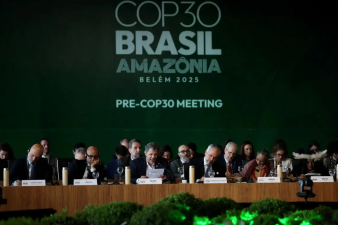
The COP30 climate conference in Belem, Brazil, has opened amid renewed tensions between developed and developing nations. The key issue is international climate finance, specifically the interpretation and implementation of Article 9 of the Paris Agreement. Developing countries, led by India and the Like-Minded Developing Countries (LMDC) group, demand that the obligation of developed nations to provide financial resources be formally addressed. This demand has reignited debates that appeared settled at COP29 in Baku, Azerbaijan.
Background of Climate Finance Obligations
The Paris Agreement’s Article 9 has two distinct clauses. Article 9.1 requires developed countries to provide financial resources to developing countries for climate mitigation and adaptation. Article 9.3 obligates developed nations to lead in mobilising finance, including from private sources. These clauses are related but independent. Developed countries argue that COP29’s agreement, which focused on mobilisation of at least US$300 billion annually by 2035, fulfilled their obligations. Developing countries counter that the provision under Article 9.1 remains unaddressed.
Developing Countries’ Demands
Developing nations want climate finance to be mostly public funds. They insist funds should be new, additional, predictable, and primarily grants or low-interest loans. They reject the current agreement’s focus on mobilisation of funds, which includes private finance. They argue that private finance is unreliable and insufficient for adaptation needs. Their call for increasing annual climate finance from US$100 billion to US$1.3 trillion was rejected at COP29. The US$300 billion mobilisation target was seen as inadequate and disappointing.
Provisional Agenda and Article 9.1 Inclusion
At the June mid-year Bonn conference, developing countries disrupted talks over Article 9.1 obligations. They succeeded in getting the issue included in COP30’s provisional agenda. Bolivia proposed the inclusion on behalf of the LMDC. The agenda’s approval, requiring consensus, may face resistance from developed countries. Past COP meetings have witnessed delays and stand-offs over agenda items, signalling potential early friction at COP30.
Carbon Border Adjustment Mechanism (CBAM) Controversy
The agenda also features trade-restrictive unilateral measures, a reference to the EU’s CBAM. This mechanism imposes tariffs on imports with higher carbon footprints than EU production standards. Developing countries view CBAM as a disguised trade barrier violating international trade rules. The issue caused delays at COP29 and remains unresolved. It is expected to be a contentious topic at COP30, adding to the complexity of negotiations.
Implications for Global Climate Negotiations
The disagreements at COP30 underline the persistent North-South divide in climate talks. Finance remains a core issue. Developing countries’ insistence on public finance and clarity on obligations challenges developed countries’ approach of leveraging private capital. The debate over CBAM marks tensions between climate action and trade fairness. COP30’s outcomes will influence future climate finance architecture and the balance between environmental goals and international economic relations.
Questions for UPSC:
- Discuss the challenges in mobilising climate finance under the United Nations Framework Convention on Climate Change and their impact on developing countries’ adaptation efforts.
- Critically examine the role of public versus private finance in achieving the goals of the Paris Agreement with suitable examples.
- Explain the concept of Carbon Border Adjustment Mechanism and discuss its implications on international trade and climate justice.
- With suitable examples, discuss the significance of consensus-based decision-making in international environmental negotiations and its impact on effective climate action.
Answer Hints:
1. Discuss the challenges in mobilising climate finance under the United Nations Framework Convention on Climate Change and their impact on developing countries’ adaptation efforts.
- Obligation ambiguity – Developed countries must both provide (Article 9.1) and mobilise finance (Article 9.3); distinction often blurred.
- Insufficient funds – Current mobilisation targets (US$100 billion, rising to US$300 billion by 2035) seen as inadequate by developing countries.
- Private vs public finance – Heavy reliance on private finance seen as unreliable and unsuitable for adaptation needs.
- Unpredictability and non-additionality – Finance often not new, additional, or predictable, undermining planning in developing countries.
- Complex approval processes and delays – Consensus-based negotiations cause delays in fund disbursement and clarity.
- Impact – Limited and uncertain finance hampers developing countries’ ability to implement effective adaptation strategies, increasing vulnerability.
2. Critically examine the role of public versus private finance in achieving the goals of the Paris Agreement with suitable examples.
- Public finance (Article 9.1) provides direct government funding, grants, or soft loans critical for adaptation and capacity building.
- Private finance (Article 9.3) mobilised through market mechanisms, investments, and incentives supports large-scale mitigation projects.
- Public funds ensure predictability and focus on vulnerable sectors; private finance is often profit-driven and risk-averse.
- Examples – Green Climate Fund relies on public contributions; private investments dominate renewable energy deployment in markets.
- Challenges – Private finance may neglect adaptation and equity concerns; public finance is limited and politically constrained.
- Balanced approach needed to meet Paris goals; overreliance on private finance risks neglecting adaptation and equity.
3. Explain the concept of Carbon Border Adjustment Mechanism and discuss its implications on international trade and climate justice.
- CBAM is a tariff imposed on imported goods based on their carbon footprint compared to domestic standards (e.g., EU’s steel and aluminum imports).
- Purpose – Prevent carbon leakage and incentivise cleaner production globally by equalising carbon costs.
- Trade implications – Seen by developing countries as a protectionist measure violating WTO rules and restricting trade.
- Climate justice concerns – May disproportionately impact developing countries with less capacity to reduce emissions or bear added costs.
- Unresolved disputes at COP29 and COP30 show tensions between climate policy and fair trade principles.
- Potential to incentivise global emission reductions if designed inclusively, but risks deepening North-South divides.
4. With suitable examples, discuss the significance of consensus-based decision-making in international environmental negotiations and its impact on effective climate action.
- Consensus ensures all parties agree, promoting legitimacy and collective ownership of decisions.
- Examples – COP meetings require consensus on agendas and agreements; delays often occur due to dissent (e.g., COP29 finance talks, agenda approvals).
- Consensus can enable inclusion of diverse interests, preventing domination by powerful countries.
- However, it can lead to lowest-common-denominator outcomes, watered-down commitments, and negotiation deadlocks.
- Disruptions by developing countries on finance issues at Bonn and COP29 show how consensus challenges can stall progress.
- Balancing inclusivity with decision-making efficiency is crucial for timely and ambitious climate action.