
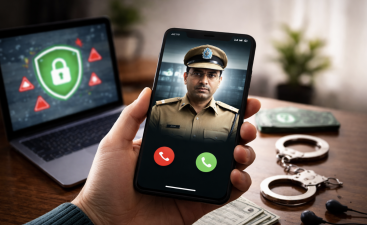
Recent developments in 2026 reveal that WhatsApp is taking strong steps to combat digital arrest scams in India. These scams involve fraudsters impersonating police officers during video calls to extort money. The Union Home Ministry’s Inter-Departmental Committee (IDC) has directed WhatsApp to implement advanced safety features and improve cooperation with law enforcement.
Digital Arrest Scam Overview
Digital arrest scams involve criminals posing as law enforcement officers. They use video calls to intimidate victims, falsely claiming legal trouble. Victims are coerced to transfer money quickly to avoid arrest. Such scams caused losses of nearly Rs 3,000 crore by 2025. Cases have tripled since 2022, prompting Supreme Court concern and government action.
WhatsApp’s Response and Commitments
WhatsApp agreed to several measures after IDC discussions. These include blocking device IDs linked to scams to prevent repeat offences. The platform will retain deleted user data for 180 days as per IT Rules, aiding investigations. It plans to introduce features similar to Skype, such as caller information and scam warnings. AI and machine learning will be expanded to detect impersonation and misuse of police logos.
Technological and Regulatory Measures
WhatsApp is enhancing detection of harmful APK files and synthetic or AI-generated content. It has deployed logo detection systems to remove fake accounts using official insignia. The platform will implement SIM binding, linking accounts to active SIM cards, improving traceability. These steps align with the Department of Telecommunications’ directives to curb anonymous usage and strengthen security.
Impact on Law Enforcement and Users
Improved cooperation between WhatsApp and investigative agencies will enable quicker responses to fraud signals. The platform will comply with updated IT Rules on labelling synthetic media. These efforts aim to reduce scam incidents and protect users from digital extortion. Regular progress reports to the government are expected, ensuring accountability.
Topics for Prelims:
Digital Arrest Scams
- Fraud involving impersonation of police on video calls.
- Victims coerced to transfer money to avoid false arrest.
- Losses estimated at nearly Rs 3,000 crore by 2025.
- Cases tripled between 2022 and 2024.
- Supreme Court expressed grave concern in 2025.
WhatsApp Safety Measures
- Blocking device IDs involved in scams.
- Retention of deleted user data for 180 days.
- AI systems to detect impersonation and fake content.
- SIM binding to active SIM cards for user traceability.
- Logo detection to prevent misuse of police insignia.
Regulatory Framework
- Inter-Departmental Committee under Union Home Ministry.
- Department of Telecommunications’ directives on SIM linkage.
- Information Technology Rules, 2021 on data retention.
- Compliance with synthetic media labelling rules.
- Collaboration between platforms and law enforcement agencies.
Questions for Mains:
- Critically discuss the effectiveness of AI and machine learning in combating cyber frauds like digital arrest scams. [GS-III-Science & Technology]
- Analyse the role of regulatory frameworks such as the IT Rules, 2021, and Department of Telecommunications directives in enhancing digital security in India. [GS-II-Governance]
- With examples, examine the challenges and solutions in protecting citizen data privacy while enabling law enforcement investigations in digital communication platforms. [GS-II-Constitution of India & Polity]
- Discuss in the light of rising cybercrime, how cooperation between private technology firms and government agencies can be strengthened to curb scams effectively. [GS-III-Internal & External Security]
Answer Hints:
1. Critically discuss the effectiveness of AI and machine learning in combating cyber frauds like digital arrest scams. [GS-III-Science & Technology]
- AI/ML detect impersonation, abuse of official logos, and synthetic/AI-generated content in real-time.
- Machine learning models improve over time by analyzing scam patterns and user behavior.
- Limitations include false positives/negatives and evolving scammer tactics to bypass detection.
- AI helps automate large-scale monitoring, reducing manual intervention and speeding up response.
- Integration with platform safeguards (e.g., logo detection) enhances preventive measures.
- Continuous updates and human oversight are essential to maintain effectiveness and adapt to new threats.
2. Analyse the role of regulatory frameworks such as the IT Rules, 2021, and Department of Telecommunications directives in enhancing digital security in India. [GS-II-Governance]
- IT Rules, 2021 mandate data retention (e.g., 180 days for deleted user data) aiding law enforcement investigations.
- DoT directives require SIM binding, linking accounts to active SIMs, improving user traceability and reducing anonymity.
- Frameworks enforce accountability on platforms like WhatsApp to implement safety features and cooperate with authorities.
- Rules on synthetic media labelling address challenges posed by AI-generated deepfakes in scams.
- Regulatory oversight ensures platforms adopt technological safeguards and timely reporting mechanisms.
- These frameworks balance user privacy with national security and cybercrime prevention imperatives.
3. With examples, examine the challenges and solutions in protecting citizen data privacy while enabling law enforcement investigations in digital communication platforms. [GS-II-Constitution of India & Polity]
- Challenge – Retaining deleted user data (180 days) may conflict with privacy rights and data minimization principles.
- Challenge – SIM binding enhances traceability but may raise concerns about surveillance and user anonymity.
- Solution – Implement strict access controls and audit trails for law enforcement data requests to prevent misuse.
- Example – WhatsApp’s commitment to comply with IT Rules while enhancing AI detection balances privacy and security.
- Solution – Transparent policies and judicial oversight can ensure data is used only for legitimate investigations.
- Collaboration between platforms and regulators needed to safeguard privacy without compromising crime prevention.
4. Discuss in the light of rising cybercrime, how cooperation between private technology firms and government agencies can be strengthened to curb scams effectively. [GS-III-Internal & External Security]
- Formal mechanisms like the Inter-Departmental Committee (IDC) facilitate dialogue and coordinated action.
- Timely sharing of flagged signals and scam intelligence enhances rapid response and investigation.
- Joint development of technical safeguards (e.g., device ID blocking, logo detection) improves preventive capacity.
- Compliance with government directives (e.g., SIM binding) ensures regulatory alignment and enforcement support.
- Regular progress reporting and accountability build trust and ensure sustained cooperation.
- Capacity building and information exchange help both sides adapt to evolving cyber threats effectively.