
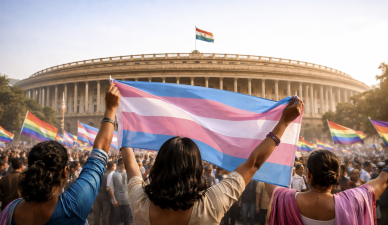
In March 2026, the Government of India introduced a Bill in Lok Sabha to amend the Transgender Persons (Protection of Rights) Act, 2019. The Bill proposes removing the right to self-perceived gender identity for transgender people. This move has sparked widespread criticism from activists and the transgender community. They argue the changes contradict the 2014 Supreme Court NALSA judgment that recognised self-determination of gender as a fundamental right.
Key Changes in Definition and Rights
The Bill redefines transgender person to include specific socio-cultural identities like kinner, hijra, aravani, jogta, and eunuch. It focuses on biological traits and medical conditions related to sex development. The right to self-perceived gender identity is omitted. The Bill excludes persons with different sexual orientations or self-perceived sexual identities from this definition. It also removes the separate definition for people with intersex variations.
Certification and Medical Authority
The Bill introduces a medical board headed by a Chief Medical Officer to verify transgender identity. District Magistrates must consult this authority before issuing transgender certificates. This contrasts with the current law where certificates are issued based on self-declaration without medical examination. The Bill mandates reporting of sex reassignment surgeries by medical institutions to the District Magistrate. It also requires transgender persons to apply for revised gender certificates post-surgery.
Offences and Punishments
The Bill expands offences against transgender persons and children. It introduces graded punishments, including imprisonment up to life and fines up to ₹5 lakh. This aims to strengthen protection but also raises concerns about enforcement and legal processes.
Background and Concerns
The 2014 NALSA judgment affirmed gender self-determination as part of personal liberty under Article 21 of the Constitution. It distinguished gender identity from sexual orientation. The Bill’s removal of self-perceived gender identity is seen as a step back. Activists worry about exclusion of many transgender identities and the imposition of medical authority. There is concern about the Bill’s lack of community consultation and potential social division.
Topics for Prelims:
Transgender Persons (Protection of Rights) Act, 2019
- Recognises transgender identity and rights in India.
- Allows self-declaration of gender identity.
- Includes socio-cultural identities like hijra, kinner.
- Protects from discrimination and violence.
- Mandates certificate issuance by District Magistrate.
NALSA Judgment 2014
- Recognised transgender as third gender.
- Affirmed right to self-determination of gender.
- Distinguished gender identity from sexual orientation.
- Prohibited forced medical procedures for gender recognition.
- Declared gender identity under Article 21 (personal liberty).
Key Terms in Amendment Bill 2026
- Redefines transgender based on biological and medical criteria.
- Introduces medical board for gender certification.
- Omits right to self-perceived gender identity.
- Expands offences and penalties.
- Requires reporting of sex reassignment surgeries.
Questions for Mains:
- Critically discuss the implications of removing the right to self-perceived gender identity from the Transgender Persons (Protection of Rights) Act, 2019. [GS-II-Constitution of India & Polity]
- Examine the role of the 2014 NALSA judgment in shaping transgender rights in India and analyse the challenges posed by the 2026 amendment Bill. [GS-II-Constitution of India & Polity]
- Estimate the social and legal impact of introducing medical boards for gender recognition in the context of transgender rights. How can this affect the autonomy of transgender individuals? [GS-II-Social Justice]
- Point out the significance of expanding offences and penalties against crimes targeting transgender persons and children. Discuss the challenges in enforcement and protection. [GS-III-Internal & External Security]
Answer Hints:
1. Critically discuss the implications of removing the right to self-perceived gender identity from the Transgender Persons (Protection of Rights) Act, 2019. [GS-II-Constitution of India & Polity]
- 2019 Act recognized self-perceived gender identity as a fundamental right under Article 21 (personal liberty).
- Removal undermines autonomy and dignity of transgender individuals in choosing their gender identity.
- Contradicts the Supreme Court’s NALSA judgment (2014) affirming self-determination of gender.
- May lead to exclusion of many transgender people who do not fit the new restrictive biological/medical definitions.
- Increases dependency on medical/administrative authorities for gender recognition, risking gatekeeping and discrimination.
- Potentially violates constitutional guarantees of equality, privacy, and freedom of expression.
2. Examine the role of the 2014 NALSA judgment in shaping transgender rights in India and analyse the challenges posed by the 2026 amendment Bill. [GS-II-Constitution of India & Polity]
- NALSA (2014) recognized transgender as a third gender and affirmed right to self-determination of gender identity.
- Distinguished gender identity from sexual orientation; prohibited forced medical procedures for legal recognition.
- Established gender identity as intrinsic to personal liberty and dignity under Article 21.
- 2019 Act was based on NALSA principles, ensuring self-declaration and protection from discrimination.
- 2026 Bill challenges these by removing self-perceived identity, introducing medical boards, and redefining transgender narrowly.
- Creates legal and social uncertainty, risks community fragmentation, and undermines constitutional safeguards.
3. Estimate the social and legal impact of introducing medical boards for gender recognition in the context of transgender rights. How can this affect the autonomy of transgender individuals? [GS-II-Social Justice]
- Medical boards impose institutional control over gender recognition, replacing self-identification.
- May lead to delays, harassment, and denial of recognition due to subjective medical judgments.
- Undermines bodily autonomy and personal dignity by requiring medical validation.
- Could exclude transgender persons who do not undergo or cannot access surgeries or medical procedures.
- Increases stigma and gatekeeping, possibly violating rights to privacy and freedom of expression.
- Socially, may deepen marginalization and reduce community trust in legal protections.
4. Point out the significance of expanding offences and penalties against crimes targeting transgender persons and children. Discuss the challenges in enforcement and protection. [GS-III-Internal & External Security]
- Expanded offences and stringent penalties (including life imprisonment and fines) signal stronger legal protection.
- Aims to deter violence, discrimination, and hate crimes against transgender persons and children.
- Addresses historical neglect and vulnerability of transgender community to abuse and exploitation.
- Challenges include underreporting due to social stigma and fear of police bias.
- Effective enforcement requires sensitization of law enforcement agencies and judicial system.
- Need for community outreach and support mechanisms to ensure accessibility and trust in legal processes.