
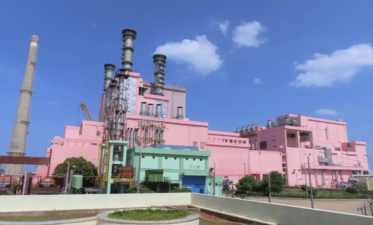
India successfully commissioned the 500 MW Prototype Fast Breeder Reactor (PFBR) at Kalpakkam, Tamil Nadu. The reactor achieved criticality, marking a significant step in India’s three-stage nuclear power programme. The PFBR uses mixed oxide fuel and sodium as a coolant.
Technical Features of PFBR
The PFBR is a sodium-cooled fast neutron reactor with a capacity of 500 MW electrical output. It uses plutonium-based mixed oxide fuel. The reactor employs a closed fuel cycle for breeding fissile material from thorium and uranium. Sodium coolant operates at high temperatures without pressurisation.
Location and Infrastructure
The PFBR is located at the Indira Gandhi Centre for Atomic Research (IGCAR) in Kalpakkam, Tamil Nadu. The site includes advanced facilities for fuel fabrication and reprocessing. The reactor complex integrates safety systems for sodium handling and radiation control.
Role in India’s Nuclear Programme
The PFBR is the second stage in India’s three-stage nuclear power programme. It aims to generate more fuel than it consumes by converting uranium-238 into plutonium-239. The reactor supports the long-term goal of utilising abundant thorium reserves through subsequent reactors.
Operational and Regulatory Aspects
The PFBR underwent extensive testing before achieving criticality. It complies with safety standards set by the Atomic Energy Regulatory Board (AERB). The reactor’s operation is monitored for sodium leaks, temperature control, and neutron flux stability.
What to Study for UPSC Exams?
- Fast Breeder Reactor Technology
- India’s Three-Stage Nuclear Programme
- Atomic Energy Regulatory Board
- Thorium Utilisation in India
Fast Breeder Reactor Technology
Fast breeder reactors use fast neutrons to convert fertile isotopes like uranium-238 into fissile plutonium-239. They typically employ sodium as a coolant due to its excellent heat transfer and low neutron absorption. Breeder reactors can produce more fuel than they consume, enabling a sustainable nuclear fuel cycle.
India’s Three-Stage Nuclear Programme
India’s programme begins with pressurized heavy water reactors using natural uranium, followed by fast breeder reactors producing plutonium-239. The final stage uses thorium-232 to breed uranium-233 for long-term energy security. This strategy leverages India’s abundant thorium reserves.
Atomic Energy Regulatory Board
The Atomic Energy Regulatory Board (AERB) oversees nuclear safety and radiation protection in India. Established in 1983, it sets standards, conducts inspections, and enforces compliance for all nuclear facilities. AERB operates independently under the Department of Atomic Energy.
Thorium Utilisation in India
India holds about 25% of the world’s thorium reserves, mainly in monazite sands. Thorium-232 is fertile, converting to fissile uranium-233 upon neutron absorption. Its use requires advanced reactors like molten salt reactors or fast breeders for efficient energy extraction.
Last Modified: April 11, 2026