
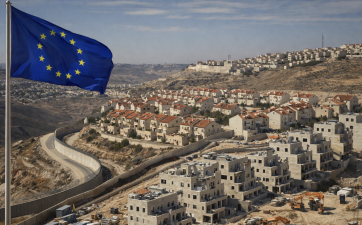
The European Union condemned the expansion of Israeli settlements in the West Bank, citing multiple recent approvals for new housing units. The EU called the moves illegal under international law and urged Israel to halt settlement activities. The statements followed announcements of plans to build over 3,000 new settlement homes.
Details of Settlement Expansion
Israel approved construction plans for more than 3,000 housing units across various West Bank settlements. The settlements include locations near East Jerusalem and other strategic areas. These approvals represent one of the largest settlement expansions in recent years.
EU’s Official Position
The EU reiterated that Israeli settlements in occupied Palestinian territories violate international law, specifically the Fourth Geneva Convention. The Union condemned all settlement activities as obstacles to peace and called for a freeze on new construction. EU representatives urged Israel to comply with international obligations.
International Legal Context
Israeli settlements are widely considered illegal under international law due to their establishment on occupied land. The UN Security Council has passed resolutions demanding the cessation of settlement expansion. The International Court of Justice also ruled against the settlements’ legality in advisory opinions.
Reactions from Other Entities
Several countries, including the United States and members of the Arab League, have expressed concern over settlement growth. Palestinian authorities condemned the expansions as violations of their territorial rights. Some Israeli officials defended the construction as necessary for security and housing needs.
What to Study for UPSC Exams?
- Israeli settlements legality
- EU foreign policy mechanisms
- UN resolutions on Palestine
- Middle East territorial disputes
Israeli settlements legality
Israeli settlements are deemed illegal under Fourth Geneva Convention Article 49, prohibiting transfer of an occupier’s population into occupied territory. The International Court of Justice advisory opinion (2004) affirmed this illegality. Despite UN resolutions, Israel disputes applicability, citing historical and security claims.
EU foreign policy mechanisms
The EU’s foreign policy is coordinated through the Common Foreign and Security Policy (CFSP). The High Representative leads diplomatic actions, supported by the European External Action Service (EEAS). Decisions often require unanimity among member states, limiting rapid responses.
UN resolutions on Palestine
Key UN resolutions include UNSC Resolution 242 (1967) calling for withdrawal from occupied territories and UNSC Resolution 2334 (2016) condemning settlements. The UN General Assembly has passed numerous non-binding resolutions affirming Palestinian rights and condemning occupation.
Middle East territorial disputes
Territorial disputes involve borders shaped by colonial mandates and wars, notably the Israeli-Palestinian conflict, Golan Heights (Israel-Syria), and West Bank. Disputes often hinge on historical claims, religious significance, and resource control, complicating peace processes.
Last Modified: April 11, 2026