
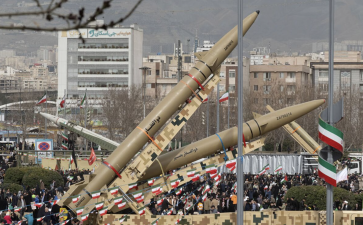
The US intelligence community has assessed that China may supply weapons to Iran. The assessment emerged amid rising tensions in the Middle East and growing US-China strategic rivalry. The report indicates potential military cooperation between Beijing and Tehran involving arms transfers.
Details of the Intelligence Assessment
US intelligence agencies have identified increased Chinese military shipments possibly destined for Iran. The assessment includes satellite imagery, intercepted communications, and logistics tracking. The timeline suggests weapon transfers could occur in the near future.
Types of Weapons and Military Support
The report mentions potential deliveries of missile components, drones, and advanced electronic warfare equipment. These weapons could enhance Iran’s missile capabilities and drone operations. The assessment also notes possible technology sharing agreements.
Geopolitical Context
The US-China rivalry has expanded into the Middle East, with China seeking to deepen ties with Iran. Iran faces international sanctions restricting its arms imports. China’s involvement could alter regional military balances and US strategic calculations.
US Response and Strategic Measures
The US has increased surveillance and intelligence cooperation with allies in the region. Diplomatic efforts to dissuade China from arms transfers are underway. The US Department of Defence is reviewing contingency plans related to Iranian military enhancements.
What to Study for UPSC Exams?
- US-China Strategic Rivalry
- Iran’s Missile Capabilities
- International Arms Control Regimes
- Middle East Geopolitical Dynamics
US-China Strategic Rivalry
The US-China strategic rivalry encompasses competition in military, economic, and technological domains. It intensified post-2010 with China’s military modernization and Belt and Road Initiative. The rivalry extends to influence in regions like the Indo-Pacific and Middle East, involving cyber espionage and space capabilities.
Iran’s Missile Capabilities
Iran’s missile program includes short, medium, and long-range ballistic missiles like the Shahab and Sejjil. It has developed solid-fuel missiles enhancing launch readiness. Indigenous production and reverse engineering from North Korean and Russian designs are notable aspects.
International Arms Control Regimes
Key arms control regimes include the Non-Proliferation Treaty (NPT), Missile Technology Control Regime (MTCR), and Arms Trade Treaty (ATT). These regimes aim to prevent proliferation of nuclear weapons, ballistic missiles, and conventional arms, but enforcement varies by member state compliance and geopolitical interests.
Middle East Geopolitical Dynamics
The Middle East features complex rivalries among states like Saudi Arabia, Iran, and Israel, fueled by sectarian, ethnic, and resource interests. External powers, including the US, Russia, and China, influence conflicts and alliances. Energy resources and control of strategic waterways like the Strait of Hormuz are central factors.
Last Modified: April 11, 2026