
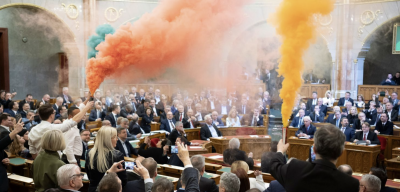
Hungary witnessed a significant political transition with the election of a new Prime Minister in April 2024. The new leader belongs to the opposition coalition that defeated the ruling party after 12 years in power. This change marks a shift in Hungary’s domestic and foreign policy direction. The election turnout was recorded at 68%, the highest in two decades.
Election Results and Political Parties
The opposition alliance, composed of six parties ranging from centre-left to right-wing, secured 54% of parliamentary seats. The incumbent party, Fidesz, led by Viktor Orbán, won 46%. The new Prime Minister, Péter Márki-Zay, is a former mayor and a centre-right politician. The opposition campaign focused on democratic reforms and EU integration.
Domestic Policy Changes
The new government has announced plans to revise the constitution and reduce executive powers. It aims to strengthen the judiciary’s independence and enhance media freedom. Economic policies include increasing foreign investment and revising tax structures to support small and medium enterprises. Social welfare programmes targeting healthcare and education will receive increased funding.
Foreign Relations and EU Integration
Hungary’s new leadership has pledged to restore relations with the European Union and comply with EU regulations. The government intends to end ongoing disputes over rule-of-law issues that had delayed EU funding. It also plans to engage in regional cooperation within the Visegrád Group while seeking closer ties with Western European countries.
Impact on European Politics
Hungary’s political shift affects the balance of power in Central Europe. The new government’s pro-EU stance contrasts with previous Eurosceptic policies. This transition may influence EU decision-making on migration, energy, and security policies. Other European countries will monitor Hungary’s reforms as a potential model for democratic restoration.
What to Study for UPSC Exams?
- European Union Governance
- Central European Geopolitics
- Democratic Institutions Reforms
- Regional Cooperation Mechanisms
European Union Governance
The European Union operates through a complex system of supranational institutions including the European Commission, European Parliament, and European Council. It functions on principles of subsidiarity and proportionality to balance power between the EU and member states. The EU legal order is supreme over national laws in certain policy areas, enforced by the Court of Justice of the European Union.
Central European Geopolitics
Central Europe is a strategic crossroads between Western Europe, Russia, and the Balkans, influencing energy transit and security dynamics. The Visegrád Group (Poland, Hungary, Czech Republic, Slovakia) is a key regional alliance shaping political cooperation. Historical border changes and ethnic diversity contribute to complex diplomatic relations and internal political challenges.
Democratic Institutions Reforms
Reforms in democratic institutions often target judiciary independence, electoral systems, and media freedom to enhance transparency and accountability. Separation of powers and checks and balances are fundamental principles. Anti-corruption bodies and decentralization initiatives are common reform measures to strengthen governance.
Regional Cooperation Mechanisms
Regional cooperation mechanisms include formal alliances like the Visegrád Group and informal platforms such as the Central European Initiative. These frameworks facilitate economic integration, security collaboration, and cultural exchange. They often complement broader EU policies and address transnational challenges like migration and environmental protection.
Last Modified: April 13, 2026