
The Chhattisgarh government reported the surrender of 2,392 Maoist cadres in the Bastar region. The surrenders occurred between 2018 and 2024 under various government rehabilitation schemes. The Bastar region comprises districts including Dantewada, Sukma, Bijapur, and Narayanpur.
Maoist Surrender Details
The surrendered Maoists included active cadres, leaders, and supporters. The government provided monetary assistance, skill training, and employment opportunities to facilitate reintegration. The surrender process was coordinated by the state police and local administration.
Government Rehabilitation Schemes
Schemes such as the Special Central Assistance and the Security Related Expenditure (SRE) funds supported rehabilitation. Financial aid ranged from ₹1 lakh to ₹5 lakh per surrendered individual. Vocational training was offered in agriculture, carpentry, and tailoring.
Security Measures in Bastar
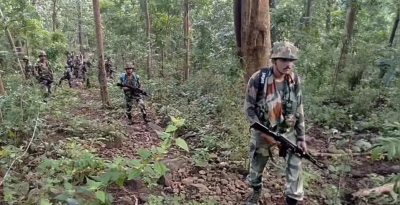
Paramilitary forces and state police conducted joint operations to weaken Maoist influence. The government increased infrastructure development to improve connectivity. Intelligence-based operations targeted Maoist leadership networks.
Impact on Regional Stability
The surrender of cadres contributed to a decline in violent incidents reported in Bastar. The government claimed improved law and order conditions since 2018. Local governance and development projects expanded in previously affected areas.
What to Study for UPSC Exams?
- Left-Wing Extremism in India
- Counter-Insurgency Operations
- Rehabilitation Policies for Insurgents
- Role of Central Armed Police Forces
Left-Wing Extremism in India
Left-Wing Extremism (LWE) in India primarily involves Maoist insurgents, also known as Naxalites, active since the late 1960s. It is concentrated in the “Red Corridor,” spanning parts of central and eastern India. The movement aims to overthrow the state through armed struggle, citing socio-economic inequalities and tribal rights issues.
Counter-Insurgency Operations
Counter-insurgency in India involves coordinated military, police, and intelligence efforts to combat armed rebellions. Techniques include intelligence gathering, area domination, and winning local support. Operations often integrate civic action programs to undermine insurgent influence.
Rehabilitation Policies for Insurgents
Rehabilitation policies offer surrenders monetary aid, vocational training, and employment to reintegrate former insurgents. They aim to reduce violence by addressing economic and social grievances. Programs vary by state but commonly include skill development and psychological counseling.
Role of Central Armed Police Forces
Central Armed Police Forces (CAPFs) like CRPF and CISF provide paramilitary support for internal security, including anti-insurgency operations. They specialize in jungle warfare, intelligence gathering, and maintaining law and order in conflict zones, supplementing state police forces.
Last Modified: April 14, 2026