
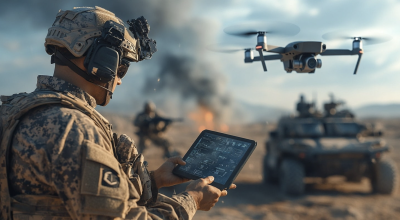
Iran announced increased integration of drones and cyber warfare into its military strategies during recent defence briefings. The Iranian Armed Forces showcased new drone models and cyber capabilities developed domestically. Officials stated the aim is to enhance precision strike and intelligence gathering through unmanned aerial vehicles (UAVs) and cyber operations. Iran’s military exercises included simulated cyber attacks and drone swarm tactics in multiple regions.
Development of Drone Technology
Iran has developed various drone types including reconnaissance, combat, and suicide drones. The Shahed series and Mohajer drones have been upgraded for longer flight duration and payload capacity. Indigenous manufacturing reduced reliance on foreign technology. Drone units are integrated with ground forces for coordinated operations. The military claims drones can conduct surveillance and targeted strikes autonomously.
Cyber Warfare Capabilities
Iran’s cyber units reportedly conduct offensive and defensive operations targeting military and critical infrastructure networks. Cyber strategies include hacking, data disruption, and electronic warfare. The Islamic Revolutionary Guard Corps (IRGC) Cyber Command leads these operations. Iran has developed malware and cyber tools tailored for asymmetric warfare. Cyber drills simulate attacks on communication and command systems.
Integration in Military Exercises
Recent Iranian military drills combined drone sorties with cyber operations to test battlefield coordination. Exercises involved electronic jamming, drone swarm formations, and cyber intrusions on simulated enemy networks. The drills took place in desert and mountainous terrains to assess operational flexibility. Commanders reported improved real-time data sharing between cyber and drone units.
International Context and Strategic Goals
Iran’s focus on drones and cyber warfare aligns with regional defence priorities amid sanctions and conventional arms restrictions. The country aims to deter adversaries and project power in the Middle East. Iranian officials emphasise self-sufficiency in military technology. Export of drone technology to allied groups has been reported in recent years.
What to Study for UPSC Exams?
- Asymmetric Warfare Techniques
- Cybersecurity and National Defence
- Unmanned Aerial Vehicles (UAVs) in Warfare
- Middle East Military Alliances
Asymmetric Warfare Techniques
Asymmetric warfare involves conflict between forces of unequal strength, using unconventional tactics like guerrilla warfare, sabotage, and cyber attacks. It exploits the vulnerabilities of a stronger opponent by targeting critical infrastructure and civilian morale. Historically, it includes insurgencies and terrorism, emphasizing mobility, surprise, and adaptability over direct confrontation.
Cybersecurity and National Defence
Cybersecurity in national defence protects military networks from espionage, sabotage, and cyber attacks. It involves encryption, intrusion detection, and cyber threat intelligence. Nations develop offensive cyber capabilities to disrupt adversaries’ command and control systems. Cyber warfare can disable critical infrastructure without physical combat.
Unmanned Aerial Vehicles (UAVs) in Warfare
UAVs, or drones, conduct reconnaissance, surveillance, and targeted strikes without risking pilots. Military UAVs range from small tactical models to large armed drones with long endurance. They enable real-time intelligence and precision attacks, increasingly integrated with AI for autonomous missions.
Middle East Military Alliances
Middle East military alliances include formal pacts like the Gulf Cooperation Council and informal partnerships based on sectarian, political, or strategic interests. Key players include the US, Saudi Arabia, Iran, and Israel, each supporting proxy groups or coalitions. Alliances often shift due to regional conflicts and external influences.
Last Modified: April 16, 2026